Okinawa Budget Guide 2026: Beaches, Ryukyu Culture & the Cheapest Way to Do Japan's Tropical South
A 2026 budget guide to Okinawa — flights from Tokyo for ¥8,000–14,000, free beaches (Nishihama, Kondoi), Churaumi Aquarium (¥2,200), Kokusai-dori, kerama snorkeling, and the cheapest way to do Japan's tropical island chain.
The short answer: Okinawa is the cheapest tropical beach destination reachable from Tokyo and the most underrated major region in Japan for budget travelers. Flights from Tokyo to Naha are ¥8,000–14,000 (2h 30min). Public beaches are free (Nishihama, Kondoi, Manza). Churaumi Aquarium is ¥2,200. Okinawa soba is ¥500–800. A 5-day Okinawa trip (Naha + 2 island days) costs ¥75,000–95,000 per person including flights, accommodation, food, and one ferry day — 15–20% cheaper than an equivalent Tokyo+Kyoto+Osaka trip, with weather in the 22–30°C range for 10 months of the year.
Okinawa is Japan’s southernmost prefecture — a 1,000km chain of 160+ islands stretching from Kyushu to within 100km of Taiwan. It’s subtropical (think Hawaii, not Tokyo), was an independent kingdom (the Ryukyu Kingdom) for 450 years before being absorbed by Japan in 1879, and was under US military administration from 1945–1972. The result: a distinct culture, food, music, and dialect that has very little in common with mainland Japan.
This guide covers how to get there cheaply, where to base (Naha vs. the outer islands), what to do in each season, and the cheapest routes for the must-see spots — Shuri Castle, Kokusai-dori, Churaumi Aquarium, and the Kerama Islands.
Okinawa at a Glance
- Flight Tokyo → Naha (OKA): ¥8,000–14,000 one-way, 2h 30min (Peach, Jetstar, ANA, JAL)
- Flight Osaka → Naha: ¥7,000–12,000 one-way, 2h 10min
- Flight Fukuoka → Naha: ¥6,000–10,000 one-way, 1h 45min
- Churaumi Aquarium: ¥2,200 adults, free for under 6
- Kerama ferry round-trip (Naha → Zamami): ¥3,700
- Public beaches: Free (Nishihama, Kondoi, Manza, Bibi)
- Naha hostel/night: ¥3,200–4,500 (cheaper than Tokyo in summer)
- Okinawa soba: ¥500–800 (the regional specialty)
- 5-day Okinawa trip budget: ¥75,000–95,000 per person (flights + hotels + food + 1 ferry day)
- Climate: 22–30°C for 10 months; winter (Dec–Feb) still 17–22°C
Okinawa is the only region of Japan where you can swim in the ocean in November, see coral reefs 1 hour from the airport, eat food with US Southern influences (Okinawa taco rice), and stay in a 100-year-old Ryukyuan house — all without a passport. Most mainland travelers skip it; the ones who go usually add 3–5 days to a Tokyo or Osaka trip, or do a standalone 7-day trip.
Getting to Okinawa — Flights, Ferries, and Package Deals
Option 1: Domestic Flight to Naha Airport (OKA) — the budget choice
Naha is Okinawa’s only major airport and the obvious entry point. The Tokyo–Naha route is one of the busiest domestic routes in Japan:
- Peach, Jetstar, Spring Japan: ¥8,000–14,000 one-way if booked 3+ weeks ahead
- ANA, JAL: ¥18,000–28,000 one-way (last-minute, peak dates)
- Skymark: ¥10,000–16,000 (mid-tier)
Best booking strategy: Use Skyscanner or Google Flights with flexible dates. Tuesday and Wednesday flights are typically ¥1,000–3,000 cheaper than Friday/Sunday. Avoid Golden Week (April 29–May 5), Obon (mid-August), and the July–August peak summer break — prices double.
The catch: Budget carriers charge for checked luggage (¥1,500–3,000 per bag). If you’re doing a beach trip with snorkeling gear, factor this in.
Option 2: Ferry from Osaka / Kobe — for car travelers
The overnight ferry from Osaka (or Kobe) to Naha takes 20–40 hours depending on the operator. Cost: ¥10,000–18,000 for a budget berth, ¥25,000–40,000 for a private room. Cars add ¥30,000–50,000.
Best for: Travelers with a car who want to drive Okinawa (the islands are very car-dependent), retirees on a tight budget, anyone who enjoys long ferry rides. Skip if you have 5 days or less — the ferry eats too much of a short trip.
Option 3: Package Deals — sometimes the cheapest
JTB, HIS, and JALPAK offer Tokyo/Osaka → Naha flight + hotel packages for ¥30,000–55,000 per person for 2 nights. Often cheaper than booking the flight and hotel separately. Worth comparing if your dates are flexible.
For full flight strategy and timing, see the travel apps guide.
Naha — Where to Base
Naha is the capital of Okinawa Prefecture and the obvious base for any first visit. The city has 320,000 people, a single monorail line (Yui Rail) connecting the airport to the main areas, and three neighborhoods that matter for visitors.
Kokusai-dori — The Main Street Base
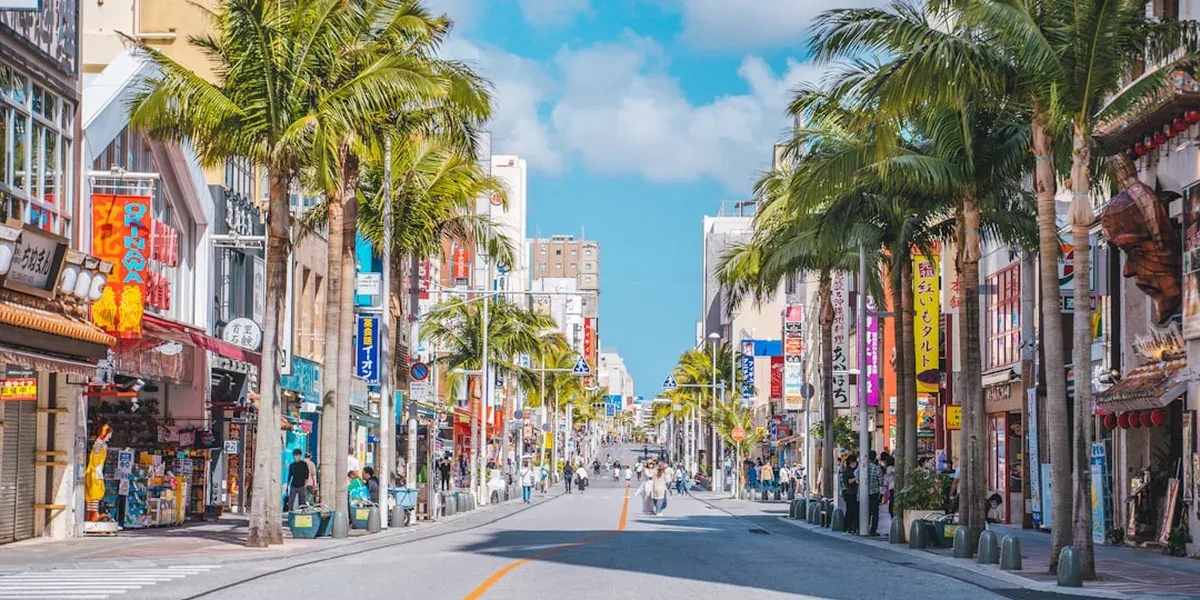
Kokusai-dori (International Street) is the 2km main street of Naha — a mix of souvenir shops, izakaya, okinawa-soba restaurants, and tourist-trap pearl shops. It’s the most convenient base for first-timers.
Where to stay:
- Hostels: Okinawa Hostel Plus — ¥3,200–4,500. Kokusai-dori Hostel — ¥3,500–5,000.
- Mid-range: Hotel Rocore Naha — ¥7,500–11,000.
- Business hotels: Toyoko Inn Naha Kokusai-dori — ¥4,500–6,500.
Where to eat (under ¥1,000):
- Makishi Public Market — ¥500–1,500 for fresh seafood (the okinawa version of Tokyo’s Tsukiji)
- Okinawa soba at any small shop — ¥500–800 for a bowl
- Taco rice — ¥600–900 at any local diner (a US military–era invention: taco filling on rice)
- A&W (the burger chain) — root beer is the regional obsession; burgers ¥500–800
For the full food picture across Japan, see the convenience store food guide and the vegan budget guide — Okinawa has surprisingly good sweet potato and bitter melon options.
Mie / Asato — The Local Base
Just east of Kokusai-dori, the Mie and Asato areas have cheaper accommodation, fewer tourists, and the best restaurants in Naha. The Tsuboya pottery district is also here.
Where to stay:
- Hostels: Emi Fuller Apartment-style — ¥3,500–5,000.
- Machiya rental: Old Ryukyuan houses available for ¥8,000–15,000 per night (best for groups of 4+).
- Mid-range: Hotel Palm Royal Naha — ¥6,500–9,500.
Naha Port / Tomari — The Transit Base
For ferry trips to the Kerama Islands or Kume Island, stay near Tomari Port. The Yui Rail terminus is also here.
Where to stay:
- Hostels: Yui Rail Hostel — ¥3,000–4,200.
- Business hotels: Route Inn Naha — ¥5,000–7,500.
- Capsule hotels: Capsule Hotel Okinawa — ¥3,500–4,800.
For booking strategy and platform comparison, see the hotel booking guide.
Shuri Castle and the Ryukyu Kingdom
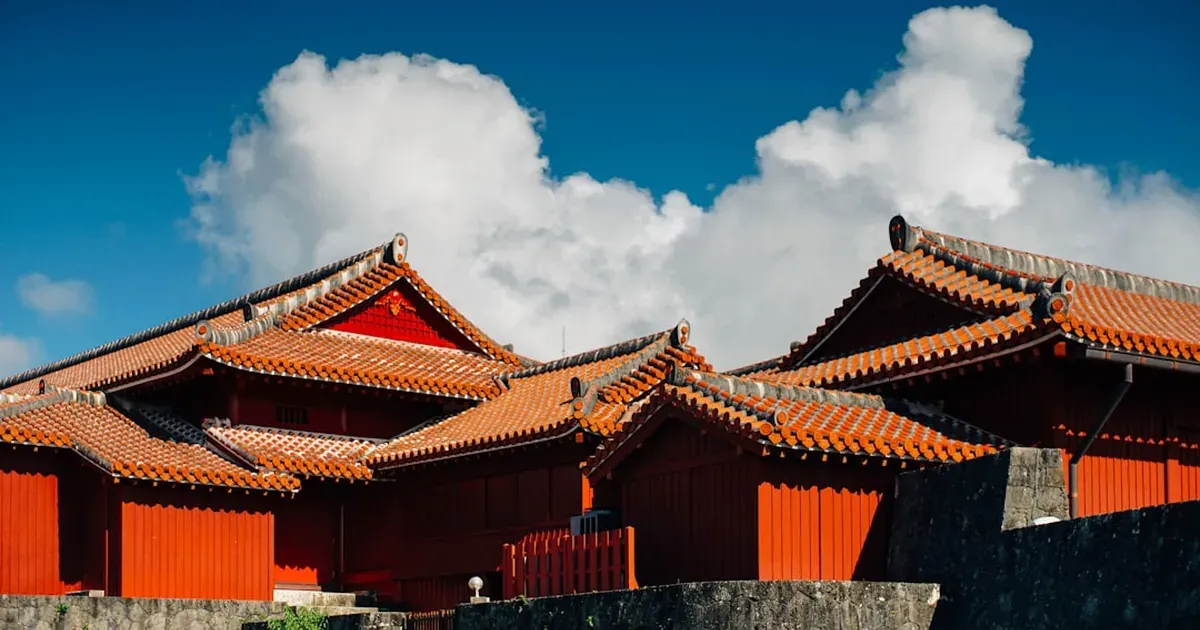
Shuri Castle (首里城) was the seat of the Ryukyu Kingdom for 450 years. The original was destroyed in a 2019 fire; the main hall is being reconstructed (reopening 2026–2027) but the surrounding walls, gates, and gardens are open and free to walk.
Entry: ¥400 (free during reconstruction, donations welcome) Hours: 8:00am–6:00pm (last entry 5:30pm) Getting there: Yui Rail to Shuri Station, 15-minute walk uphill
What to see:
- Shureimon gate — the famous “bridge of nations” gate, the symbol of Okinawa, free
- Kinjo-cho stone-paved road — the preserved path from the gate to the inner castle
- Castle walls and gardens — the outer precincts are well preserved
- Hokori Utaki — the most sacred grove in the Ryukyu Kingdom, 5 minutes from the castle (free)
Why it matters: Okinawa is not “Japan with beaches” — it has a distinct 450-year history as a maritime kingdom that traded with China, Japan, Korea, and Southeast Asia. Shuri Castle is the cultural anchor. The food, music (sanshin), and pottery (Tsuboya) all trace back to this heritage.
The honest downsides: The main hall is under reconstruction. The experience is much smaller than what it was pre-2019. Most visitors spend 1–2 hours; the ticket and queue feel disproportionate to what’s open.
Best for: Anyone with 1 day in Naha, history-focused travelers, photographers. Skip if you have 2 days only and prefer beaches (the main hall is not currently open).
Churaumi Aquarium — The Best in Japan
Churaumi Aquarium (美ら海水族館) in Motobu (90 minutes from Naha by bus) is the most famous attraction in Okinawa and one of the largest aquariums in the world. The main tank holds 7,500 cubic meters of water and houses whale sharks and manta rays.
Entry: ¥2,200 adults, ¥1,200 ages 6–15, free under 6 Hours: 8:30am–6:30pm (last entry 5:30pm) Getting there: Express bus from Naha (¥2,000–2,500, 2 hours) or rental car (¥5,000–7,000/day)
The don’t-miss exhibits:
- Kuroshio Sea tank — the main tank with whale sharks, manta rays, and reef fish. View from the 2nd-floor observation deck.
- Deep sea exhibit — rare deep-sea creatures from the Okinawa Trench
- Coral reef exhibit — living coral tanks
- Manatee and dugong pools — outdoor observation
What to budget for:
- Bus from Naha: ¥2,000–2,500 one-way
- Aquarium entry: ¥2,200
- Lunch at the on-site food court: ¥800–1,500
- Optional: Ocean Culture Museum and Tropical Dream Center (combined tickets ¥1,400 extra)
The honest downsides: The aquarium is crowded. Arrive at 8:30am (when it opens) to see the main tank without 30-minute queues. The bus from Naha is 2 hours — a full day trip.
Best for: Families, anyone who has to see the main tank once, rainy days. Skip if you have scuba plans in the Kerama Islands (the same fish are visible in the wild for a snorkel fee).
For a deeper look at Okinawa family travel, see the family budget guide and the solo travel guide — both have Okinawa-specific sections.
What to Eat in Okinawa — The 5 Can’t-Miss Foods
Okinawa has the most distinctive regional food culture in Japan. Five dishes are worth planning around:
1. Okinawa Soba (¥500–800)
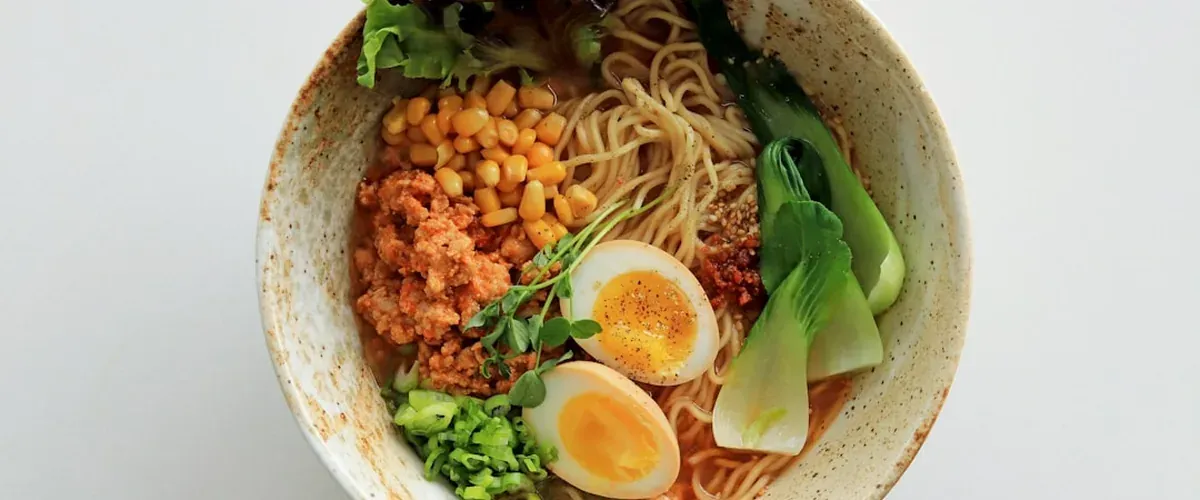
Not the same as mainland soba — Okinawa soba is wheat noodles in a pork-bone broth, typically with sliced pork, fish cake, and green onion. The regional signature. Best at:
- Nuchibuta Soba (Makishi area, ¥600) — the locals’ choice
- Soba-dokoro Kinjo (Naha, ¥700) — broth-focused
- Any stand at Makishi Market — ¥500–800
2. Taco Rice (¥600–900)
A US military–era invention: taco filling (ground beef, lettuce, cheese, tomato, salsa) served on rice instead of a tortilla. Cheap, fast, and surprisingly good. Best at:
- King Tacos (Naha, ¥700) — the original, founded 1984
- Charlie 1st Tacos (American Village, ¥800) — the chain, larger portions
3. Goya Champuru (¥600–900)
Bitter melon stir-fried with tofu, egg, pork, and spam. The most iconic Okinawan home dish. Acquired taste — the bitterness is the point. Best at:
- Any local diner — ¥600–900 for a set meal
- Makishi Market — ¥700
4. Fresh Seafood at Makishi Market (¥800–2,000)
The Makishi Public Market is the food heart of Naha. Pick fresh fish, shellfish, or sea grapes at the ground-floor stalls, then take them upstairs to be cooked (¥500 cooking fee per dish). Best at:
- Any ground-floor stall — pick your own fish
- Second-floor restaurants — cook your market purchase for ¥500 per dish
5. Sata Andagi (¥200–400)
Okinawan doughnuts — fried dough balls, sweet and dense. Available at any market or sweet shop. Cheap and addictive.
For broader food strategy across Japan, see the convenience store food guide and the vegan budget guide.
The Kerama Islands — Day Trip from Naha
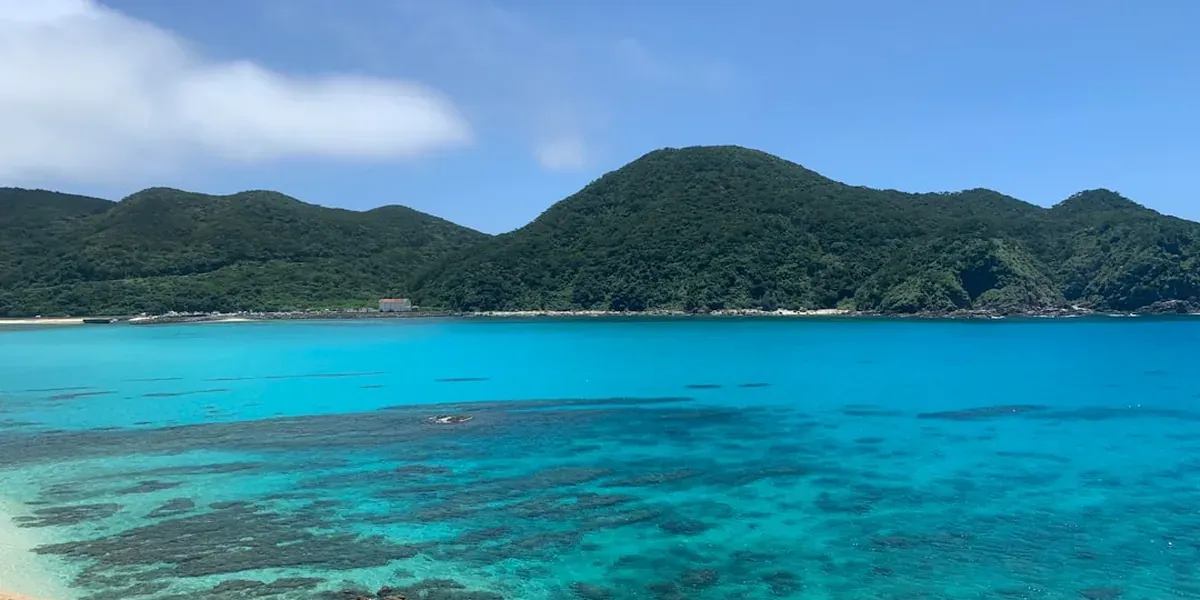
The Kerama Islands (慶良間諸島) are a 30-island archipelago 30–40km west of Naha. The water is the clearest in Japan (visibility 30–50m), the coral reefs are pristine, and ferries are cheap.
The three most-visited islands:
- Zamami Island — the most popular, famous for whale watching (Jan–Mar) and snorkeling
- Aka Island — quieter, fewer tourists, same water clarity
- Kerama Island — the closest to Naha, 1-hour ferry
Getting there:
- Zamami: High-speed ferry from Tomari Port, 50–70 minutes, ¥3,700 round-trip
- Aka: High-speed ferry from Tomari Port, 1 hour, ¥4,200 round-trip
- Kerama: Ferry from Tomari Port, 1 hour, ¥3,200 round-trip
Snorkeling costs:
- Self-snorkel rental: ¥1,500–2,500/day (mask, snorkel, fins)
- Group snorkel tour (3 hours): ¥5,000–8,000 (includes gear, boat, guide)
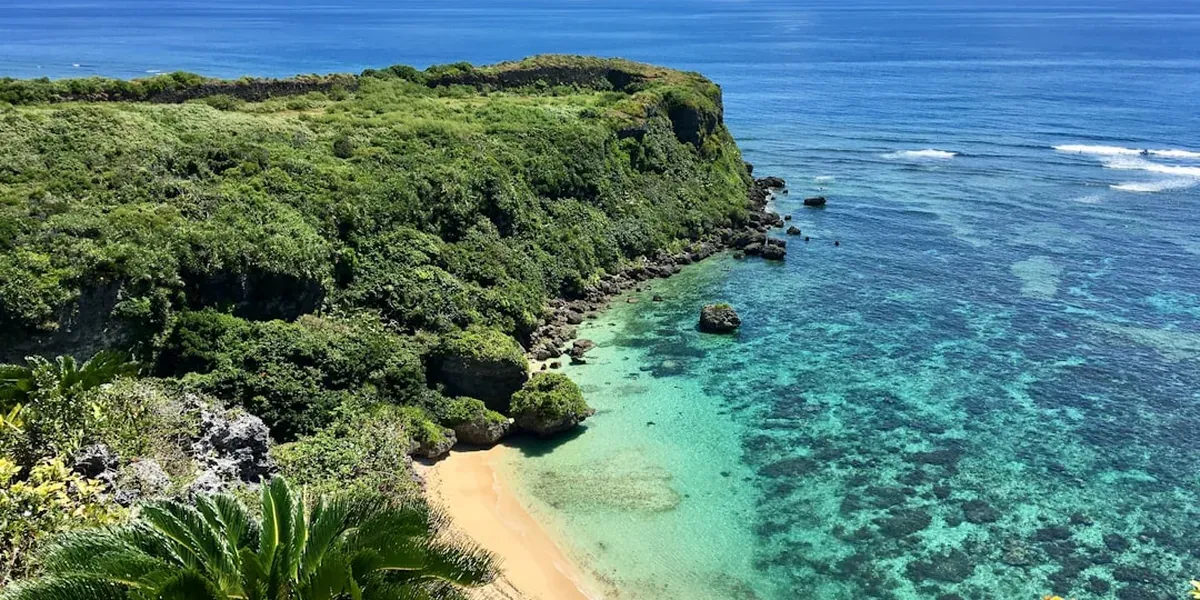
- Beach entry: Free (Furuzamami, Ama beaches are public)
The don’t-miss experience: The Kerama blue — the shade of blue the water turns when the sun is directly overhead. It’s the only place in Japan where the ocean looks like the South Pacific.
The honest downsides: The ferries run only 2–4 times per day, depending on season. Weather delays are common (the boats don’t run in high seas). Book accommodation on Zamami in advance during peak summer (July–August).
Best for: Beach-focused travelers, snorkelers, anyone who needs to see tropical water. Skip in winter (Nov–Mar) if snorkeling is the main goal — water is 22°C and the wind picks up.
For a deeper look at island travel, see the Sapporo & Hokkaido guide — the opposite end of Japan, but similar island-day-trip structure.
Getting Around Okinawa — Cars, Buses, and the Yui Rail
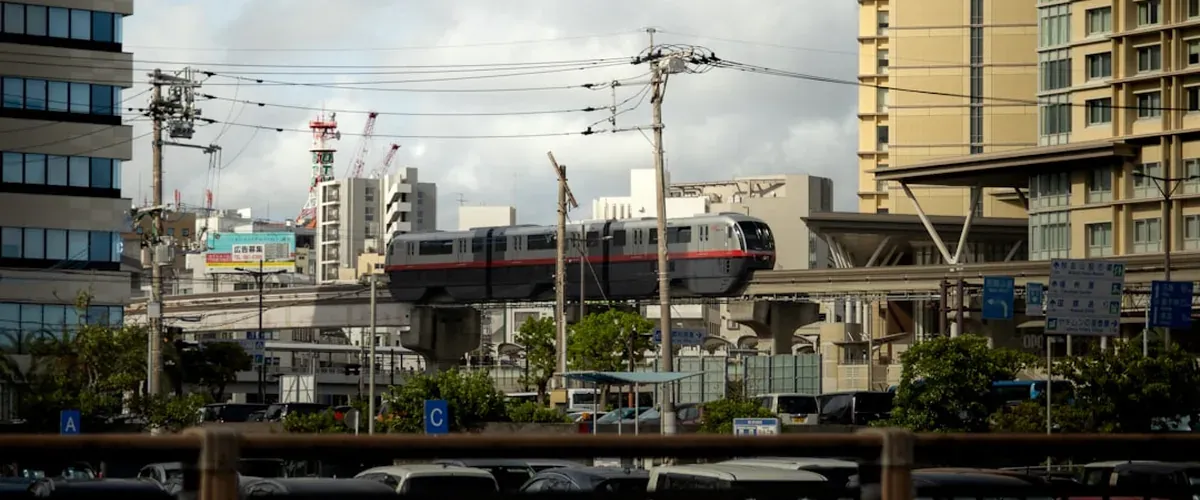
Okinawa is one of the most car-dependent regions in Japan. The Yui Rail monorail in Naha is useful but only runs 19 stations in a 13km line. To get anywhere outside Naha, you need a bus, rental car, or taxi.
In Naha: The Yui Rail Monorail
The Yui Rail runs from Naha Airport to Tedako-Uranishi (19 stations, 27 minutes end to end). Single ride: ¥230–370. Day pass: ¥800.
Best for: Airport → Kokusai-dori, Naha city sightseeing, getting to Shuri Castle.
Outside Naha: Buses and Rental Cars
Express buses connect Naha to:
- Churaumi Aquarium (Motobu): ¥2,000–2,500, 2 hours
- Nago: ¥2,000–2,300, 1h 30min
- Southern beaches: ¥600–1,500, 30–60 min
Rental cars are the best option for 2+ people and give you flexibility:
- Cost: ¥5,000–7,000/day for a compact
- Drive on the left (same as mainland)
- Drivers under 21 cannot rent — international license required for non-Japanese
Ferries to Outer Islands
- Kerama: ¥3,200–4,200 round-trip from Tomari Port
- Kume Island: ¥5,500–7,000 round-trip from Tomari Port
- Miyako Island: ¥15,000–20,000 round-trip (1-hour flight is often cheaper)
For the broader transit strategy across Japan, see the JR Pass guide and the travel apps guide — neither covers Okinawa (no JR), but the apps (Navitime, Japan Travel) include Okinawa transit.
The 3-Day / 5-Day / 7-Day Okinawa Plans
| Day | 3-day itinerary | 5-day itinerary | 7-day itinerary |
|---|---|---|---|
| 1 | Arrive Naha → Kokusai-dori walk → Makishi Market dinner | Arrive Naha → Shuri Castle → Kokusai-dori | Arrive Naha → Shuri Castle + Tsuboya pottery |
| 2 | Kerama Islands day trip (Zamami) | Kerama Islands day trip (Zamami) | Day trip: Churaumi Aquarium + Motobu |
| 3 | Naha → departure | Day trip: American Village + Chatan beaches | Day trip: Nago → Kouri Island |
| 4 | — | Naha food crawl (soba, taco rice, champuru) | Day trip: Southern beaches (Manza, Bibi) |
| 5 | — | Departure | Kerama Islands (Aka or Kerama) |
| 6 | — | — | Naha shopping / day at leisure |
| 7 | — | — | Departure |
The base strategy: Stay in Naha (Kokusai-dori or Mie area) for the entire trip. Day-trip to Kerama, Churaumi, and the southern beaches. Only stay on an outer island if you’re staying 3+ nights (the ferry eats too much time for shorter stays).
Day Trips from Naha
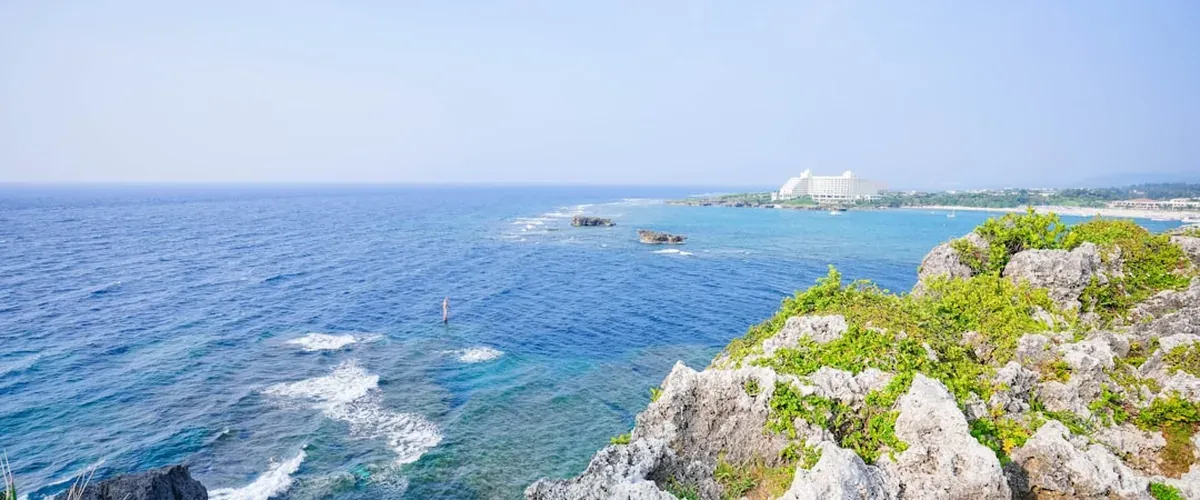
Five day trips earn their place on a 5+ day Okinawa itinerary:
1. Churaumi Aquarium + Motobu Peninsula (full day, ¥4,500–6,000)
- Transport: Express bus from Naha (¥2,000–2,500 round-trip)
- Aquarium entry: ¥2,200
- Lunch: ¥800–1,500 at the on-site food court
- Plus: Bibi Beach (free, 10 min by bus) and Sesoko Bridge (free)
2. American Village in Chatan (half day, ¥1,500–2,500)
- Transport: Bus from Naha (¥700 round-trip, 1 hour)
- Cost: Free to walk around; food and shopping extra
- Why: A replica of an American seaside town, built for US military families. Strange and fascinating.
3. Southern Beaches — Manza, Bibi, Senaga (full day, ¥1,000–2,000)
- Transport: Bus from Naha (¥600–900 round-trip)
- Cost: Free entry, ¥1,500 for umbrella/snorkel rental
- Why: The closest white-sand beaches to Naha. Manza is the most photogenic.
4. Kouri Island & Nago (full day, ¥3,500–5,000)
- Transport: Bus from Naha (¥2,000–2,300 round-trip)
- Cost: Free beaches, ¥1,000–1,500 for heart-shaped rock viewing
- Why: The northernmost accessible point of Okinawa main island. Kouri Bridge is one of the longest free bridges in Japan.
5. Ryukyu Mura (half day, ¥1,500–2,500)
- Transport: Bus from Naha (¥700 round-trip, 30 min)
- Cost: ¥1,500 entry
- Why: A reconstructed traditional Ryukyuan village with traditional dance, music, and craft demos. The best Ryukyu culture experience near Naha.
For day-trip strategy on the mainland, see the Tokyo day trips guide, the Nikko day trip guide, and the Kamakura day trip guide.
Seasonal Breakdown — When to Visit
Spring (March–May)
- Temperature: 20–26°C
- Pros: Cherry blossom in late March (1 month earlier than Tokyo), fewer crowds, reasonable prices
- Cons: Some beach facilities closed, occasional rain
- Best for: Avoiding the peak summer crowds, combining beach + sightseeing
Summer (June–August)
- Temperature: 28–32°C, very humid
- Pros: Best beach and snorkeling weather, festival season (Eisa in August)
- Cons: Peak prices, typhoon risk (July–September), crowded ferries
- Best for: Beach and water activities, families on summer break
Autumn (September–November)
- Temperature: 25–28°C in September, 20–24°C by November
- Pros: Warm water continues through October, fewer crowds, lower prices
- Cons: Typhoon risk continues through September
- Best for: Snorkeling, beach time, avoiding summer crowds
Winter (December–February)
- Temperature: 17–22°C (still warm enough for short sleeves most days)
- Pros: Cheapest prices, whale watching starts in January, no crowds
- Cons: Too cold for swimming (water 20–22°C), some island ferries reduced
- Best for: Budget travelers, whale watching, walking and sightseeing
For a deeper seasonal breakdown, see the cheapest time to visit Japan guide and the cherry blossom guide — both have Okinawa sections. For a mainland alternative with a very different vibe (gardens, samurai districts, geisha alleys), see the Kanazawa budget guide.
Okinawa on a Budget — Money-Saving Tips
Okinawa is generally cheaper than mainland Japan, but the islands have logistics that add up. Eight strategies for keeping costs down:
- Fly, don’t ferry (unless you have a car). The flight is ¥8,000–14,000 vs. ¥10,000–18,000 for a ferry berth (and 40 hours of your life).
- Stay in Naha, not the outer islands. Naha hostels are ¥3,200–4,500/night. Outer island minshuku are ¥5,500–9,000/night, and ferry eats time.
- Eat at Makishi Market and the depachika. The Sogo and DFS depachika in Naha have bento from ¥600. Same quality as restaurants at half the price.
- Buy a 1-day Yui Rail pass if using the monorail 3+ times. ¥800 vs. ¥230–370 per ride. Worth it after 3 trips.
- Use the express bus, not a taxi, for Churaumi. The bus is ¥2,000–2,500 round-trip; a taxi is ¥20,000+. Saves 80%.
- Rent a car only if 2+ people. A car is ¥5,000–7,000/day, split between 2 = ¥2,500–3,500 each. Worth it for flexibility.
- Visit in shoulder season (April, May, October, November). Accommodation is 30–40% cheaper than peak July–August. Weather is still warm enough for the beach.
- Cook your own market purchase at Makishi. Buy fish at the ground floor, take it to the 2nd-floor restaurant for cooking (¥500 fee). Half the price of sitting down directly.
For more budget strategy, see the Japan budget mistakes guide and the hotel booking guide.
Frequently Asked Questions
Is Okinawa expensive?
No — Okinawa is comparable to Tokyo for food and cheaper for accommodation in summer (¥3,200–4,500 Naha hostels vs. ¥4,500–7,000 in Tokyo). The main expense is the flight (¥8,000–14,000) and any outer-island ferries.
How much does a 5-day Okinawa trip cost?
¥75,000–95,000 per person including flights, accommodation, food, and one ferry day. The flight is the biggest cost (¥16,000–28,000 round-trip).
When is the best time to visit Okinawa?
Depends on your goal. April–May for the best balance of weather, prices, and crowds. July–August for peak beach weather. October–November for warm water without the peak summer crowds. January–February for whale watching and budget travel.
Is Okinawa worth visiting if I’ve already been to mainland Japan?
Yes — Okinawa is more different from Tokyo/Kyoto than Tokyo is from Osaka. The food, music, history, and climate are distinct. A 3–5 day Okinawa add-on at the end of a 2-week Japan trip is a very common itinerary.
Can I swim in Okinawa in winter?
Sort of — the water drops to 20–22°C in February, which is swimmable but cold. Most beaches have showers and are open year-round. The southern beaches (Naha side) are warmer than the northern beaches (Nago side) in winter.
Is the Churaumi Aquarium worth it?
Yes for first-timers and families. No for repeat Okinawa visitors who plan to snorkel in the Kerama Islands (you’ll see the same fish in the wild). The aquarium is a 2-hour bus ride from Naha — a full day trip.
How do I get from Naha to the Kerama Islands?
High-speed ferry from Tomari Port (Naha) to Zamami, Aka, or Kerama. ¥3,200–4,200 round-trip, 50–70 minutes each way. Book in advance during peak summer (July–August).
Can I use my JR Pass in Okinawa?
No — there is no JR (Japan Railways) in Okinawa. The Yui Rail is a separate municipal monorail. See the JR Pass guide for the full JR map.
Is Okinawa safe?
Yes — Okinawa is one of the safest regions in Japan. The main risk is sunburn and jellyfish (in summer, enter the water where there are stinger nets). See the solo travel guide for safety tips.
Do I need a car in Okinawa?
For Naha only, no. For the northern main island (Nago, Churaumi), yes — a rental car is the most flexible option. For the outer islands (Kerama, Kume, Miyako), yes unless you’re on a day trip.
Is Okinawa good for families?
Excellent — the beaches are gentle, the aquarium is the best in Japan, and the climate is family-friendly for 10 months. See the family budget guide for more.
Can I see the northern lights in Okinawa?
No — Okinawa is at the same latitude as Hawaii. The aurora is never visible. Don’t confuse Okinawa (subtropical) with Hokkaido (sub-arctic).
What’s the difference between Naha and the outer islands?
Naha is the main city — urban, with monorail, restaurants, Shuri Castle, Kokusai-dori. The outer islands (Kerama, Kume, Miyako) are rural, beach-focused, with limited accommodation and slower pace. Most travelers stay in Naha and day-trip to one outer island.
Is the food in Okinawa different from mainland Japan?
Very different — Okinawa has its own cuisine (Okinawa soba, goya champuru, taco rice, sata andagi, rafute) with influences from China, US, and Southeast Asia. Rice is served with every meal but the side dishes are completely different from Tokyo/Kyoto/Osaka.
Should I stay in Naha or on Zamami Island?
Stay in Naha for 3 days or less. Stay on Zamami for 3+ nights if beach and snorkeling are your priority (the island has limited accommodation and you need to commit). For most first-timers: stay in Naha, day-trip to Zamami.
Are there typhoons in Okinawa?
Yes — typhoon season is June–October, peak August–September. Flights and ferries get cancelled, and outdoor attractions close. Travel insurance covers this — see the travel insurance guide.
Is the water in Okinawa safe to drink?
Tap water is safe but has a mild chlorine taste. Most locals and visitors drink bottled water. Bottled water is ¥100–200 at any convenience store.
What’s the best Okinawa food tour?
The Makishi Market food walk is the most cost-effective “tour” — self-guided for ¥1,500–2,500. For guided options:
- GetYourGuide Okinawa Food Tour: ¥5,500–7,500 for 3 hours
👉 Browse Okinawa food tours on GetYourGuide
Plan Your Okinawa Trip — The 5-Day Loop
Okinawa rewards travelers who pick a season and commit to the islands. The 5-day plan above covers Naha + Kerama + 1 day trip for ¥75,000–95,000 per person.
The 5-step recap:
- Fly into Naha Airport — ¥8,000–14,000 from Tokyo, the cheapest way in
- Stay in Kokusai-dori or Mie area — ¥3,200–4,500 hostels, the central base
- Visit during April–May or October–November — best balance of weather, prices, and crowds
- Day-trip to the Kerama Islands for snorkeling — ¥3,700 round-trip, the must-do experience
- Eat at Makishi Market and the depachika — half the price of restaurants, better quality
For the rest of the trip — how to plan Tokyo before Okinawa, what to pack for tropical weather, and the broader Japan itinerary — see the Japan trip cost 2026 guide, the Tokyo neighborhoods guide, the Kyoto neighborhoods guide, the Osaka neighborhoods guide, the Sapporo & Hokkaido guide, the Kanazawa budget guide, the budget packing list, the travel apps guide, the best eSIM Japan guide, the JR Pass 2026 worth it guide, the hotel booking guide, the money in Japan 2026 guide, the convenience store food guide, the cherry blossom guide, the autumn foliage guide, the hiking budget guide, the travel insurance guide, the solo travel guide, the family budget guide, the vegan budget guide, the budget mistakes guide, and the cheapest time to visit Japan guide.
Prices correct as of August 2026. Exchange rate approximately ¥150 = $1 USD.