Kyoto Neighborhoods Guide 2026: Where to Stay, Eat & Explore in Higashiyama, Arashiyama, Gion & 4 More
A 2026 neighborhood-by-neighborhood guide to Kyoto on a budget — Higashiyama, Arashiyama, Gion, Pontocho, Nishiki Market, Kyoto Station, Fushimi. Where to stay, what to eat, what to skip, and a 3/5/7-day combination plan.
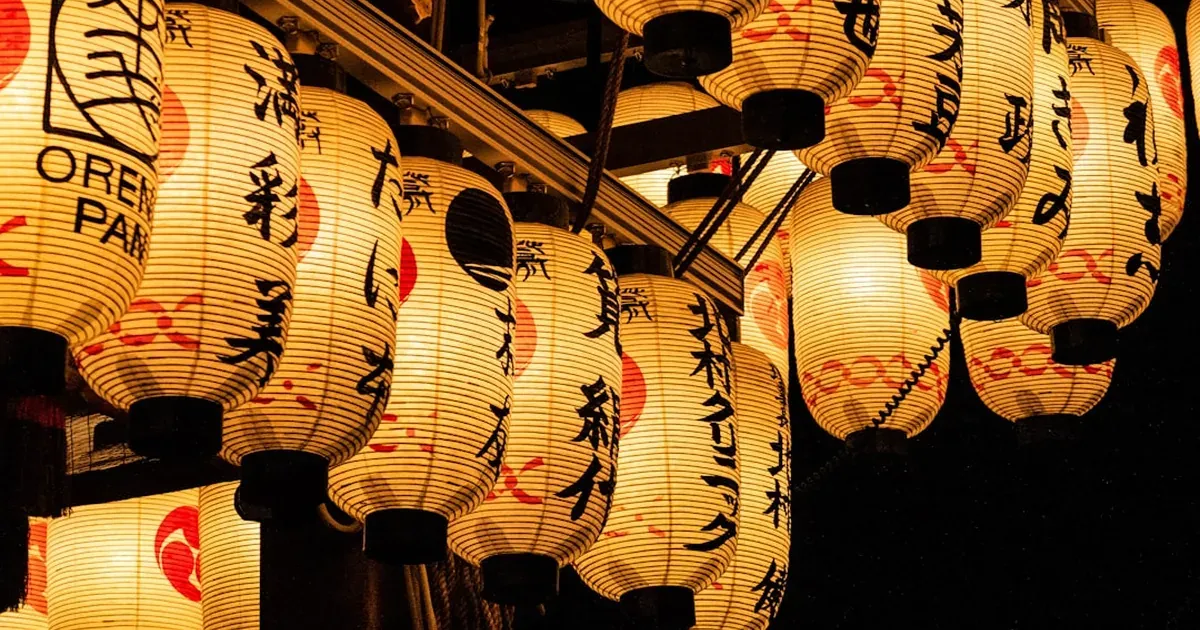
The short answer: Kyoto’s 7 essential neighborhoods for budget travelers are Higashiyama (the temple walk), Arashiyama (the bamboo grove and river), Gion (the geisha district), Pontocho (the lantern alley), Nishiki Market (the food artery), Kyoto Station area (the transit hub and cheapest beds), and Fushimi (the thousand torii). Stay near Kyoto Station for the cheapest beds (¥2,800–4,200 hostels) with the best transit access, in Higashiyama for the walk-out-the-door temple experience (¥5,500–9,000 ryokan), or in Kawaramachi/Pontocho for the central nightlife access (¥3,800–5,500 capsule). Avoid staying in Arashiyama — it’s a 30-minute train ride back from any evening activity.
Kyoto has 11 wards and well over 100 named neighborhoods. For a budget traveler with 3–7 days, only 7 of those neighborhoods earn their place on the itinerary. The rest are either residential, too far from the temples, or oriented toward luxury ryokan travelers. This guide covers the 7 that matter — where to stay, what to eat, what to skip, and how to combine them on a 3/5/7-day plan.
The Kyoto Neighborhood Decision Framework
Three trade-offs decide which neighborhood is right for you.
Trade-off 1: Budget vs. immersion. Staying near Kyoto Station saves 40–50% on accommodation compared to Higashiyama ryokan, but you lose the “wake up to a temple” experience that makes Kyoto different from any other city. If your budget is tight and you have 5+ days, base near the station and day-trip to the temples. If you have one splurge night, book a Higashiyama ryokan.
Trade-off 2: East vs. west. Kyoto is split by the Kamo River. Higashiyama, Gion, Pontocho, and Kiyomizu are east — the geisha, temple, and lantern side. Arashiyama is far west — bamboo and mountain. Kyoto Station and Nishiki Market straddle the center. Most travelers stay east and take the JR Sagano Line west as a half-day trip.
Trade-off 3: Early mornings vs. late nights. Higashiyama rewards dawn departures (Kiyomizu at 6am beats Kiyomizu at noon). Pontocho and Gion reward post-7pm dinners. If you’re a temple-first traveler, base east. If you’re a food-and-nightlife-first traveler, base in Kawaramachi or Pontocho. For most travelers with 4–5 days: stay near Kyoto Station for the value and central transit.
For the full cost of each neighborhood at a glance, see the Kyoto free things guide and the hotel booking guide.
1. Higashiyama — The Temple Walk
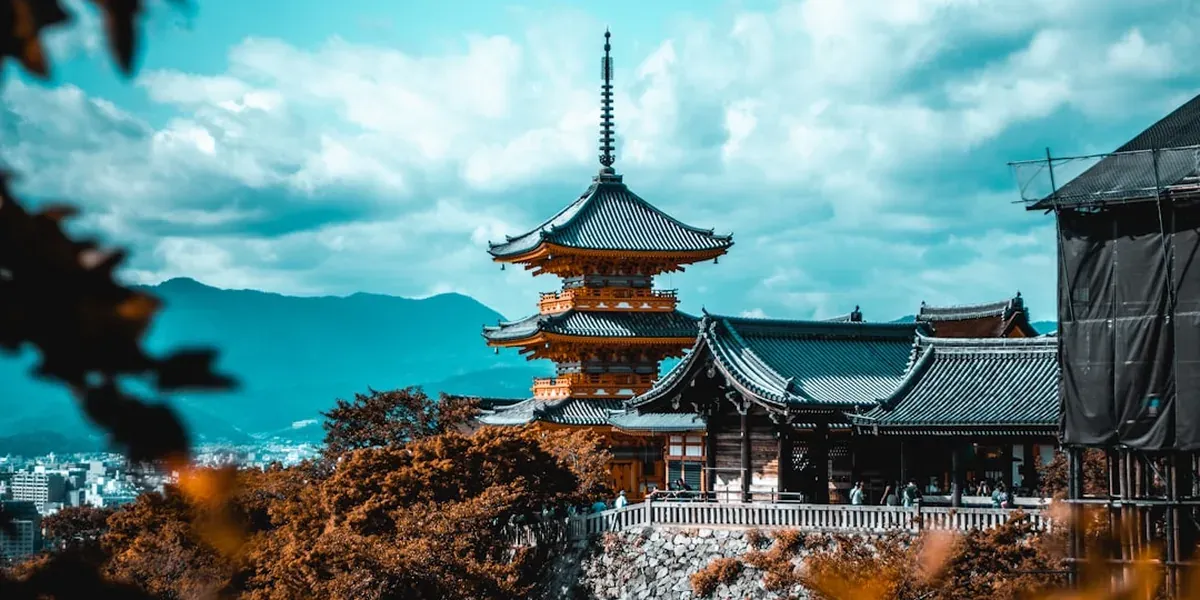
Higashiyama (“Eastern Mountains”) is the most atmospheric neighborhood in Kyoto — a 3km temple walk from Kiyomizu-dera north through Sanneizaka, Nene-zaka, Kodai-ji, Yasaka Shrine, and up to Gion. The entire route is essentially a museum without walls.
The vibe: Stone-paved alleys, wooden machiya (townhouses), preserved Edo-era architecture, lantern-lit at dusk. The crowds at Kiyomizu-dera during the day are crushing (10,000+ visitors between 10am and 3pm) but disappear before 7am and after 6pm.
Where to stay (mid to high budget):
- Hostels: Piece Hostel Sanjo — ¥3,500–5,500. Len Kyoto — ¥4,500–6,500.
- Ryokan (the splurge): Ryokan Shimizu — ¥9,000–14,000 with breakfast. Tawaraya Ryokan — ¥40,000+ (iconic but expensive). Kyoto Ryokan Hirata — ¥7,500–11,000.
- Mid-range hotels: Hotel Mume — ¥12,000–18,000 (boutique machiya-style).
For booking strategy and platform comparison, see the hotel booking guide.
Where to eat (under ¥1,500):
Higashiyama is the most expensive food district in Kyoto for tourists. Most restaurants on Sanneizaka charge ¥1,500–2,500 for a set lunch. The strategy: walk 3 blocks off the main alleys for the same meal at half the price.
- Yatsuhashi (green tea mochi) — ¥400–700 at any sweet shop on Sanneizaka
- Tofu cuisine at Saito or Tousuiro — ¥1,500–2,500 lunch set (Kiyomizu specializes in yudofu, hot tofu in broth)
- Convenience store breakfast — ¥350–500 (eat before you walk)
- Yoshikawa Inn tempura — ¥2,500–3,500 lunch set (Kiyomizu area, established 1781)
- Kagizen Yoshifusa — ¥800 for matcha and warabi mochi near Gion (founded 1657)
What to do for free:
- Kiyomizu-dera outer precinct and stage (¥500 for the inner hall, the famous veranda view is free)
- Yasaka Shrine (free, 24-hour)
- Maruyama Park (free, especially beautiful during cherry blossom)
- Hanamikoji Street walk in the evening (free, the lantern-lit geisha district)
- Walk Sanneizaka and Nene-zaka from end to end (free)
- Kodai-ji temple garden (¥600, sometimes free during festival events)
For the full free-things breakdown, see the free things to do in Kyoto guide.
The honest downsides: Higashiyama is the most expensive area in Kyoto for accommodation. The crowds on Sannenzaka between 10am and 4pm are dense enough to be unpleasant. The side streets (Sanneizaka north of the Kiyomizu approach) are dramatically less crowded and just as photogenic.
Best for: First-time visitors who want the “wake up to a temple” Kyoto experience, anyone with a splurge ryokan night, photographers chasing morning mist. Skip if you value budget accommodation or quiet.
For a vegan dinner in Higashiyama, see the Japan vegan budget guide — the area has 4–5 dedicated shojin ryori (Buddhist vegetarian) restaurants.
2. Gion — The Geisha District (Stay Once, Walk Through Often)
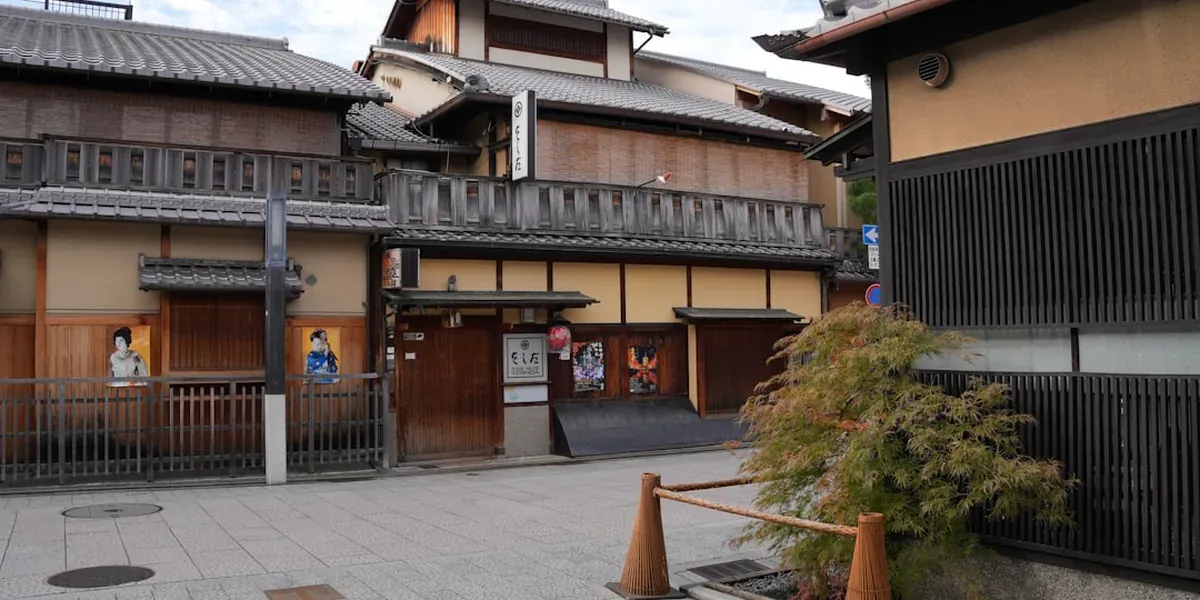
Gion is Kyoto’s most famous neighborhood — the geisha district, the preserved Edo-era streetscape, and the most photographed alleys in the city. But here’s the honest truth: most travelers should visit Gion, not stay in it.
The vibe: Wooden lattice fronts (called kōshi), ochaya (tea houses) with closed doors, the chance of seeing a maiko (apprentice geisha) hurrying to an evening appointment. Quieter than Higashiyama during the day, dramatically busier after 5pm. Hanamikoji Street (the main Gion thoroughfare) now charges a ¥3,500 “preservation fee” to enter during peak season to discourage overtourism.
Where to stay (you probably won’t):
Most Gion accommodation is either very expensive or very small. The exceptions:
- Hostels: Kyoto Eco Hotel 100 — ¥3,500–4,500 (basic but central).
- Ryokan: Yachiyo Hotel — ¥8,500–13,000 (mature garden, classic ryokan experience).
- Machiya rentals: Kyoto Machiya Stay — ¥12,000–22,000 per night for a full townhouse (best for groups of 4+).
Where to eat (under ¥2,000):
- Gion Koji Starbucks — yes, the most-photographed Starbucks in the world is in a traditional machiya. Get the matcha latte and a tatami seat upstairs (free to enter).
- Issen Yoshoku — ¥800 for a single-slab katsu sandwich (locals eat standing). 5-minute walk south of Hanamikoji.
- Gion Kappa — ¥1,200 standing sushi near Yasaka Shrine.
- Shirakawa area izakaya — the side streets along the Shirakawa canal south of Hanamikoji have cheaper local spots.
What to do for free:
- Walk Hanamikoji at dawn (6–8am, free, no crowds, geisha sometimes pass through)
- Yasaka Shrine (free, 24-hour, lit at night)
- Shirakawa canal walk (free, the willow-lined canal in northern Gion is one of Kyoto’s most romantic walks)
- Kennin-ji temple Zen garden (¥500, ¥700 combined with the art gallery)
- Maruyama Park (free, the giant cherry tree at Yasaka Shrine is the symbol of Kyoto spring)
The honest downsides: Gion’s main street is now tourist-dense in a way it wasn’t 5 years ago. The preservation fee has cut foot traffic but also reduced the “discovery” feel. Most geisha you see are now costumed tourists on photoshoots, not the real thing.
Best for: One-night splurge ryokan, photographers chasing the dawn light, anyone with a special-occasion dinner at a kaiseki restaurant. Skip for base accommodation — Kyoto Station is 30% cheaper.
For a deeper look at how to spot the real geisha vs. the tourists, see the free things to do in Kyoto guide.
3. Arashiyama — The Bamboo Grove (Day Trip, Not Base)
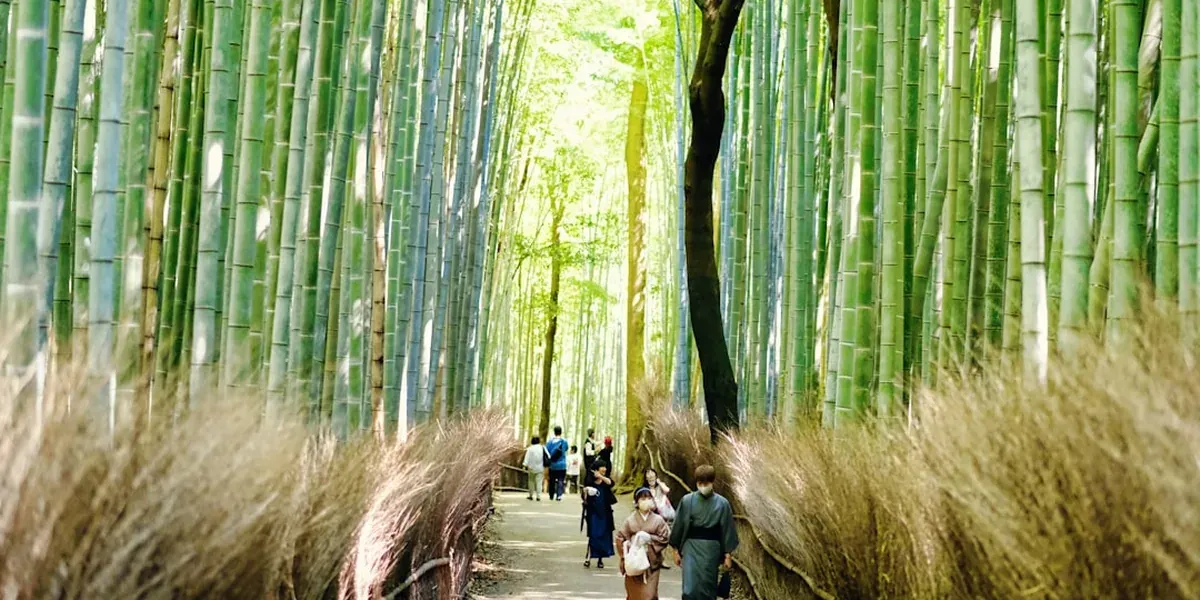
Arashiyama is Kyoto’s most popular day trip — the bamboo grove on the western edge of the city, the Togetsukyo Bridge over the Hozu River, the monkey park in the hills, and dozens of temples. It’s a 25-minute JR Sagano Line ride from Kyoto Station.
The vibe: Mountainous, river-side, day-tripper-town. The bamboo grove is free and one of the most atmospheric walks in Japan — but it’s become so popular that arriving after 10am means sharing the path with hundreds of other visitors.
Where to stay (don’t):
Arashiyama hotels are 30–40% more expensive than equivalent Kyoto Station options and you’re 30 minutes from any evening activity. The exceptions:
- Sumiya Ryokan — ¥9,500–14,000 (historic ryokan in the heart of Arashiyama)
- Kyoto Arashiyama Onsen Ryokan — ¥8,500–12,000 (the only onsen ryokan in Arashiyama)
If you’re spending one night in Arashiyama, do it for the morning bamboo walk before the day-trippers arrive. Otherwise, stay central.
Where to eat (under ¥1,500):
Arashiyama’s restaurant row charges tourist prices. The strategy: eat at the station food halls, not the main street.
- Arashiyama Yoshida-ya — ¥900 for yuba (tofu skin) set meal, family-run since 1912
- Shoraian — ¥1,500 for yudofu (hot tofu) lunch on the river
- Saga Tofu Ine — ¥1,200 lunch set with multiple tofu dishes
- Matsuya and Yoshinoya (in the station area) — ¥500 gyudon
What to do for free:
- Bamboo Grove path (free, before 8am or after 5pm)
- Togetsukyo Bridge walk (free)
- Hozu River banks (free, beautiful in autumn)
- Tenryu-ji temple outer garden (¥500, free outer grounds)
- Iwatayama Monkey Park (¥550, 20-minute uphill hike to see wild monkeys)
The honest downsides: The bamboo grove is now so crowded that arriving at peak hours is genuinely unpleasant. The monkey park is more strenuous than it looks — 20 minutes uphill on a paved path in summer heat. Most Arashiyama shops close by 6pm.
Best for: Half-day or full-day trip from Kyoto Station, anyone who wants the bamboo grove at dawn, autumn foliage visitors (Arashiyama is the best autumn neighborhood in the city). Skip for accommodation.
For more day trip options, see the Nara day trip guide and the Hiroshima budget guide.
4. Pontocho — The Lantern Alley (Eat Here, Don’t Stay Here)
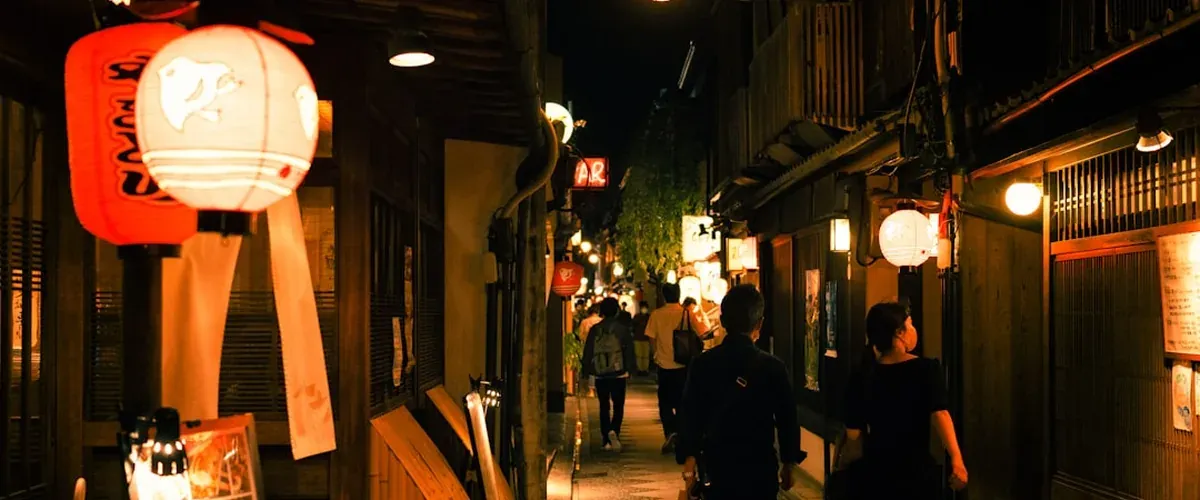
Pontocho is a single 500-meter stone-paved alley running parallel to the Kamo River between Sanjo and Shijo. It is one of the most atmospheric dining streets in Asia — and one of the most expensive. The trick: walk it for free, eat one meal there, stay elsewhere.
The vibe: Wooden machiya transformed into tiny restaurants, each with paper lanterns hanging over the entrance. The alley is closed to cars. In the evening, you can hear the Kamo River a block away and the smell of grilled food drifts from every doorway. The yuka (wooden platforms over the river) in May–September add a spectacular outdoor dining option.
Where to stay (you won’t):
Pontocho has almost no hotels. The closest base is Kawaramachi or Sanjo, both within 5 minutes’ walk. For budget stays in this area:
- Capsule hotels: First Cabin Kyoto Kawaramachi — ¥3,800–5,500
- Hostels: Hostel Mundo — ¥3,500–4,500 (basic, central)
Where to eat (under ¥2,500):
Pontocho is famously expensive, but there are budget options if you know where to look:
- Pontocho Yakiniku Alley — small standing-room yakiniku spots for ¥1,200–1,800 with drinks
- Issen Yoshoku — ¥800 for a single katsu sandwich (technically in nearby Gion but walking distance)
- Izakaya at the Shijo end — ¥1,500–2,000 nomihoudai (all-you-can-drink) for 90 minutes
- Yuka dining (May–September) — ¥3,500–5,000 for a kaiseki-style course over the Kamo River. The splurge meal in Kyoto.
- Mumokuteki Cafe — ¥1,200 vegan set lunch (slightly south of Pontocho on Sanjo)
What to do for free:
- Walk the full 500m of Pontocho at dusk (free, the lighting is the attraction)
- Kamo River embankment walk at sunset (free, especially beautiful in cherry blossom season)
- Sanjo Bridge crossing at night (free, classic Kyoto shot)
The honest downsides: Pontocho is genuinely expensive. Most restaurants require reservations in advance. The “tourist tax” applies — restaurants with English menus charge 30–50% more than the same caliber in the back streets.
Best for: One splurge kaiseki dinner, evening walks, the yuka season (May–September), photographers chasing the lantern light. Skip as a base unless you’re doing one luxury night.
For dinner strategy and what to expect at a kaiseki restaurant, see the free things to do in Kyoto guide.
5. Nishiki Market — The Food Artery (Walk Through, Eat Along the Way)
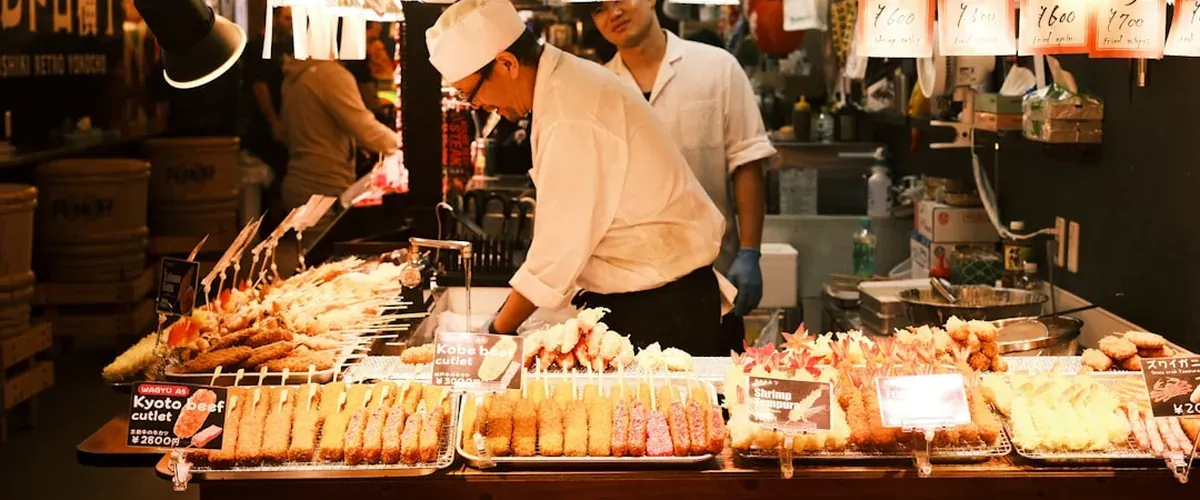
Nishiki Market is a 400-meter covered shopping street running north-south through central Kyoto. Locally called “Kyoto’s Kitchen,” it’s been operating in some form since the 14th century. For budget travelers, it’s the most cost-effective food experience in Kyoto.
The vibe: Narrow covered arcade packed with 130+ small food stalls — pickles, fresh tofu, mochi, grilled fish, takoyaki, matcha everything. Most stalls offer free samples. The market gets crowded between 11am and 3pm, but the side streets running parallel are dramatically quieter.
Where to stay (you won’t):
Nishiki Market has no hotels. The closest base is Karasuma or Kawaramachi, both within 5 minutes’ walk. For budget stays:
- Hostels: The Museum Hostel — ¥3,800–5,500 (Kyoto National Museum area)
- Capsule hotels: Capsule Ryokan Kyoto — ¥4,500–6,500
Where to eat (the entire market, under ¥1,000 per item):
- Tamai Nishiki Eel — ¥700 for grilled unagi on a stick (the most popular stall)
- Aritaya — ¥500 for fresh mochi samples
- Nishiki Tako Tako — ¥500 for takoyaki (8 pieces)
- Pickle stalls — ¥300–600 per container of Kyoto-style tsukemono
- Matcha soft serve — ¥400–600 at any of 6 stalls
- Yuba croquettes — ¥350 each (a Kyoto specialty)
What to do for free:
- Walk the full 400m of the market arcade (free, samples make it the cheapest food tour in Kyoto)
- Visit the small shrines and wells hidden in the side alleys (free)
- Photograph the fish vendors and pickle displays (free)
The honest downsides: The market closes progressively — most stalls shut by 6pm and the arcade is empty by 7pm. The side streets are more interesting than the main drag once you’ve seen the basic layout. Weekend afternoons are crowded enough to be difficult to navigate with luggage.
Best for: Lunch stop during a central Kyoto day, anyone who wants to try 10+ local foods for under ¥3,000, photographers of Japanese food culture. Skip if you’ve eaten at Osaka’s Kuromon Market — Nishiki is more refined but less loud.
For a deeper look at Kyoto food culture including kaiseki, obanzai, and yuba, see the free things to do in Kyoto guide.
6. Fushimi — The Thousand Torii (Half-Day Detour)
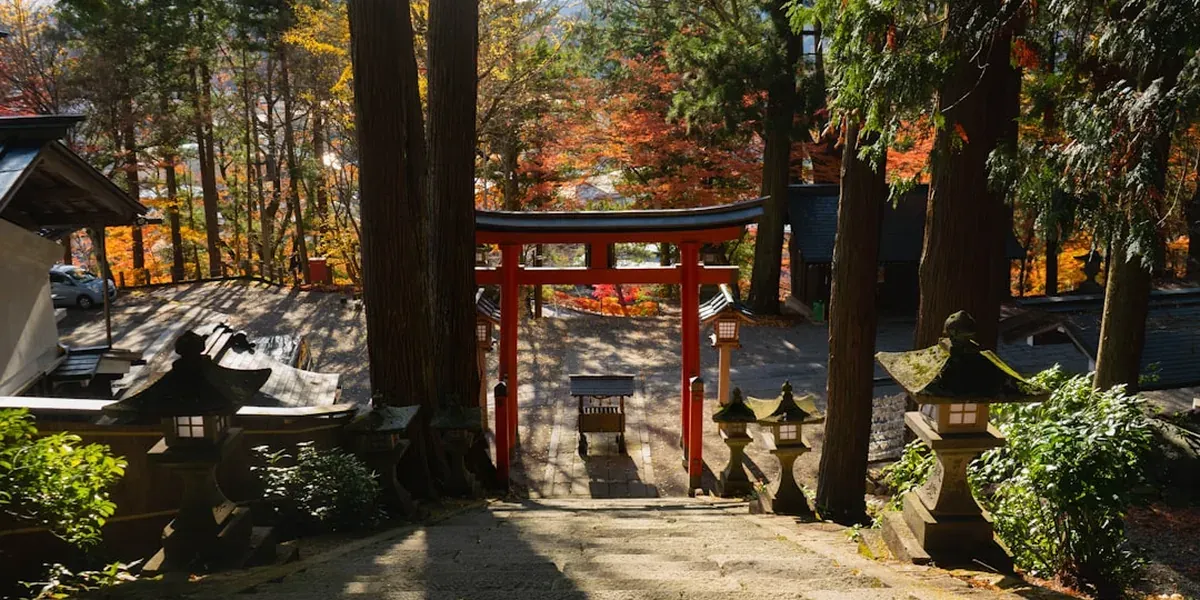
Fushimi Inari is Japan’s most visited shrine — 10,000+ vermillion torii gates winding up Mount Inari, dedicated to the god of rice and business. It’s in southern Kyoto, about 5 minutes from Kyoto Station on the JR Nara Line.
The vibe: Vermillion tunnels, fox statues (Inari’s messengers), a 4km uphill hike to the summit if you want it. The lower torii are crowded 24/7; the upper torii (after the Yotsutsuji intersection, 30 minutes in) are nearly empty.
Where to stay (you won’t):
Fushimi has minimal accommodation. Base in Kyoto Station area and take the 5-minute train. For a unique stay:
- Fushimi Sake District Breweries — some offer overnight stays for ¥6,500–9,000
- Kyoto Station hotels — ¥3,500–6,500 hostels and ¥5,500–9,000 mid-range
Where to eat (under ¥1,000):
- Inari area sushi — ¥800–1,200 for inari sushi (the fried tofu pouch is Inari’s symbolic offering)
- Vermillion-themed food — every shop near the shrine sells fox-shaped wagashi for ¥300–500
- Fushimi sake brewery tastings — ¥300–500 for 3 different sake samples
- Konbini at Fushimi-Inari Station — ¥500 meals
What to do for free:
- Walk the entire torii path (free, 2 hours round-trip to the summit)
- Lower shrine complex (free, 24-hour, lit at night)
- Fox statue trail (free, dozens of fox statues throughout)
- Side paths off the main torii (free, much quieter, equally atmospheric)
The honest downsides: The main torii corridor at the bottom is so crowded that it’s hard to photograph without people in the shot. The full mountain hike is steeper than it looks — 233 meters of elevation over 4km. Most visitors see 10% of the shrine and miss the best parts.
Best for: Half-day detour from Kyoto Station, anyone wanting the famous shot without the crowd (arrive at 6am), photographers, hikers who want an urban mountain. Skip for accommodation.
For the hiking version of Kyoto, see the Japan hiking budget guide — Fushimi is included as a half-day urban hike.
7. Kyoto Station Area — The Budget Traveler’s Default Base
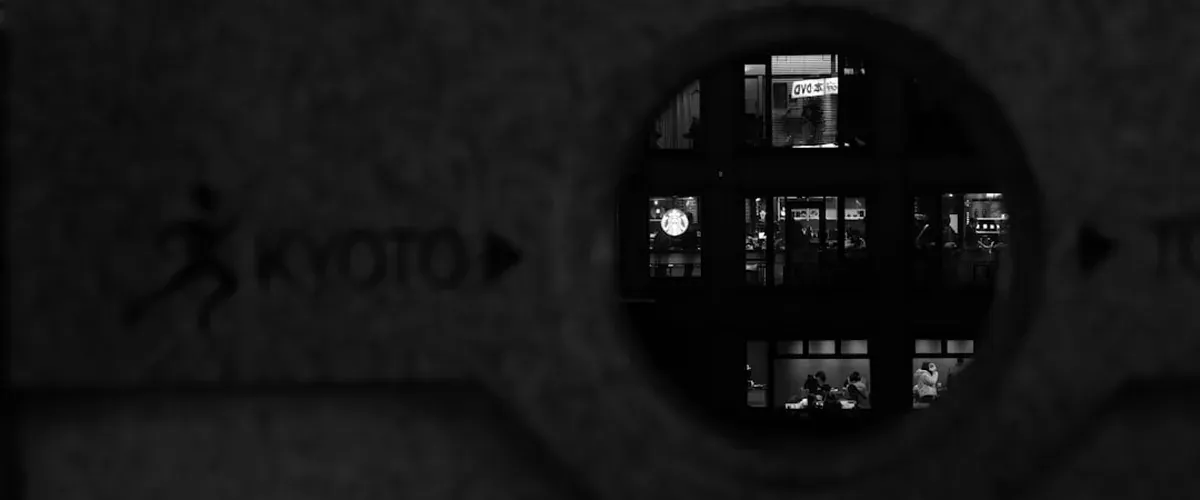
Kyoto Station area is the most underrated base for budget travelers. The station itself is a piece of striking modern architecture (designed by Hiroshi Hara, opened 1997), and the surrounding area has the cheapest central beds in the city.
The vibe: Modern, transit-oriented, surprisingly walkable. The station complex includes a 15-floor department store, a 200-step escalator, a rooftop garden with city views, and an underground shopping mall. The surrounding neighborhoods (Shimogyo, Minami) are local-feeling residential areas with cheap eateries.
Where to stay (the budget base):
- Hostels: Piece Hostel Kyoto — ¥3,000–4,500. K’s House Kyoto — ¥3,200–4,800 (excellent for solo travelers).
- Capsule hotels: Capsule Hotel Anshin Oyado Premier — ¥3,800–5,500 (with onsen and sauna).
- Business hotels: APA Hotel Kyoto Ekimae — ¥5,500–8,000. Hotel Granvia Kyoto — ¥11,000–16,000 (directly attached to the station).
- Budget chains: Toyoko Inn, Route Inn — ¥4,500–7,000.
Where to eat (under ¥1,000):
The station area is full of cheap eats, mostly in the basement food halls (depachika):
- Porta underground mall — ¥500–900 for set lunches at dozens of counters
- Isetan basement depachika — ¥600–1,500 for obanzai sets, sushi rolls, bento boxes
- Kyoto Ramen Koji (10th floor of the station) — ¥850–1,200 for regional ramen from across Japan
- Yodobashi Camera building restaurants — ¥700–1,500 across 6 floors of dining
What to do for free:
- Kyoto Station rooftop garden (free, 15th floor, city views)
- Station light installation at night (free, the stairs become a giant LED artwork)
- Higashi Honganji temple (free, 5-minute walk, one of Kyoto’s two largest Pure Land Buddhist temples)
- Nishi Honganji temple (free, 10-minute walk, UNESCO World Heritage)
- Kamo River walk south of the station (free, less crowded than the central stretch)
The honest downsides: The station area lacks the “Kyoto atmosphere” — it’s a modern transit hub with no machiya, no temples, and few stone alleys. You trade atmosphere for value and connectivity. Most budget travelers prefer this trade.
Best for: Budget travelers prioritizing value, anyone with a Japan Rail Pass arriving by shinkansen, transit-oriented travelers who want to day-trip to Nara, Osaka, and Arashiyama. Skip if you want the “wake up to a temple” experience.
For the complete Japan Rail Pass analysis, see the JR Pass 2026 worth it guide.
Cost Comparison Table — All 7 Neighborhoods
| Neighborhood | Hostel/night | Capsule/night | Standing lunch | Izakaya dinner | Vibe |
|---|---|---|---|---|---|
| Higashiyama | ¥3,500–5,500 | ¥4,500–6,500 | ¥800 | ¥2,500 | Temple, traditional, atmospheric |
| Gion | ¥3,500–4,500 | ¥4,500–6,500 | ¥1,000 | ¥3,500 | Geisha, preserved, expensive |
| Arashiyama | ¥6,500–9,000 | — | ¥900 | ¥2,000 | Bamboo, river, day-trip |
| Pontocho | (stay in Kawaramachi) | ¥3,800–5,500 | ¥1,200 | ¥3,000 | Lantern alley, dining, expensive |
| Nishiki Market | (stay in Karasuma) | ¥4,500–6,500 | ¥600 | ¥1,500 | Food market, central, walk-through |
| Fushimi | (stay in Kyoto Station) | — | ¥800 | ¥1,500 | Shrine, mountain, half-day |
| Kyoto Station | ¥3,000–4,500 | ¥3,800–5,500 | ¥500 | ¥1,500 | Modern, transit, value |
For comparison: a ryokan in Higashiyama starts at ¥7,500–9,000 with breakfast, and the iconic Tawaraya or Hiiragiya run ¥40,000+ per night. The cheapest beds in Kyoto are Kyoto Station hostels and Kawaramachi capsule hotels.
The 3-Day / 5-Day / 7-Day Neighborhood Combinations
| Day | 3-day itinerary | 5-day itinerary | 7-day itinerary |
|---|---|---|---|
| 1 | Fushimi Inari (early) → Nishiki Market lunch → Higashiyama walk → Kiyomizu sunset | Fushimi Inari (early) → Higashiyama full day | Fushimi Inari → Higashiyama walk → Kiyomizu |
| 2 | Arashiyama day trip | Arashiyama day trip | Arashiyama + Iwatayama Monkey Park |
| 3 | Gion morning → Pontocho evening | Nara day trip → Pontocho dinner | Day trip: Nara |
| 4 | — | Gion → Yasaka → Maruyama Park | Day trip: Osaka |
| 5 | — | Nishiki Market + Kyoto Station | Day trip: Hiroshima |
| 6 | — | — | Philosopher’s Path + Ginkaku-ji (northern Higashiyama) |
| 7 | — | — | Last shopping at Nishiki + departure |
The base strategy: Stay near Kyoto Station for 3-day and 5-day trips (cheapest central, best transit). Stay in Higashiyama for the 7-day trip (the immersion is worth the premium for a week).
For day trip options in detail, see the Nara day trip guide (essential, 39 minutes from Kyoto), the Osaka street food guide (15–30 minutes, ¥410 one-way), and the Hiroshima budget guide (worth the trip, 1h 30min by Shinkansen).
How to Get Between Neighborhoods
Kyoto’s transit is simpler than Tokyo’s or Osaka’s — three main systems cover the city:
-
JR Lines — Kyoto Station is the central hub. JR Sagano Line to Arashiyama (15 min, ¥240). JR Nara Line to Fushimi-Inari (5 min, ¥150). JR Tokaido/Sanyo Shinkansen for Osaka (28 min, ¥570), Hiroshima (1h 30min, ¥10,000), and beyond. Covered by the JR Pass if you have one.
-
Kyoto City Bus — ¥230 flat fare, ¥700 day pass. The bus reaches most central neighborhoods that the subway doesn’t. Less reliable than trains but necessary for some temples.
-
Kyoto Municipal Subway — 2 lines (Karasuma and Tozai). Useful for Karasuma → Kyoto Station runs and the Tozai Line east-west through central Kyoto.
-
Walking — Higashiyama, Gion, Pontocho, and Nishiki Market are all walkable from each other (10–20 minute walks). Walking is often faster than transit for central Kyoto.
-
IC card — ICOCA is the local card (Kansai equivalent of Suica). Works on all Kyoto bus, subway, and JR lines. Use the same card across all your Kansai travel. See the IC card comparison for the full inter-city card logic.
For navigation apps, see the Japan travel apps guide — Google Maps works but NAVITIME is better for Kyoto bus routing.
Frequently Asked Questions
Which Kyoto neighborhood is best for first-time visitors?
Kyoto Station area or Higashiyama. Kyoto Station is the cheapest and best-connected base. Higashiyama is the most atmospheric but costs 30–40% more. Most budget travelers stay near Kyoto Station and day-trip to the temples.
Where should I stay to be close to Gion?
Kawaramachi or Sanjo. Both are 5–10 minutes’ walk from Hanamikoji Street in Gion. For budget travelers: capsule hotels around Kawaramachi run ¥3,800–5,500. For a quiet alternative: stay in Higashiyama (closer but more expensive).
What’s the cheapest safe neighborhood in Kyoto?
Kyoto Station area. The hostels are ¥3,000–4,500, the area is well-lit, and it’s the busiest transit hub in the city with foot traffic 24 hours. For the safety breakdown, see the solo travel guide.
Is Arashiyama worth staying overnight?
Only if you want the bamboo grove at dawn. Otherwise, it’s a 30-minute train ride from any evening activity. The bamboo grove is beautiful at 6am with no one there, and the night-time Togetsukyo Bridge is unique. One night is the right amount.
Is Pontocho safe at night?
Yes. Pontocho is family-friendly and very busy with diners between 6pm and 11pm. The alley is closed to cars and well-lit. Some restaurants have hostess fees (¥500–1,000 cover charge) — ask before sitting down.
Is Nishiki Market worth visiting on a budget?
Yes — it’s the cheapest food experience in Kyoto. The samples alone are worth ¥500–1,000 if you walk the full arcade. Most stalls sell items for ¥300–700 and offer free tastes of everything from matcha to pickles.
Is Fushimi Inari crowded?
Yes, especially between 9am and 3pm. The lower torii are nearly impassable at peak. Arrive at 6am or after 5pm for the atmospheric experience. The upper torii (past the Yotsutsuji intersection) are dramatically less crowded at any time.
Can I walk between Higashiyama and Gion?
Yes — it’s a 15-minute walk from Kiyomizu-dera north through Sanneizaka to Yasaka Shrine, then 5 more minutes to Hanamikoji. This is the classic Kyoto walking route.
Is there a neighborhood that feels like “real Kyoto”?
Higashiyama side streets (north of Maruyama Park), Nishiki Market in the morning before 10am, and the back streets of Pontocho facing the Kamo River. The Higashiyama side streets are the consensus pick for “local Kyoto.”
What’s the best neighborhood for cherry blossom?
Maruyama Park (free, the giant weeping cherry at Yasaka Shrine is the symbol of Kyoto spring), Philosopher’s Path (free, the canal-side walk between Ginkaku-ji and Nanzen-ji), and Kiyomizu-dera (¥500, the temple veranda with cherry blossoms below). For complete sakura timing, see the cherry blossom budget guide.
What’s the best neighborhood for autumn foliage?
Tofuku-ji (¥1,000 for the Tsutenkyo Bridge, the most photographed autumn scene in Kyoto), Arashiyama (free, the bamboo grove in autumn colors), Kiyomizu-dera (¥500, the veranda with maple colors below), and Eikan-do (¥1,000, the most extensive maple gardens in the city). Full seasonal guide: autumn foliage budget guide.
What’s the best neighborhood for families?
Higashiyama for the walking exploration and Kyoto Station area for the family hotel options. For family-specific hotel strategy, see the family budget guide.
Can I do all 7 neighborhoods in one trip?
Yes — but you’ll spend half your time on trains and walking. The 7-day itinerary covers 6 of the 7 (you skip the “stay overnight in Arashiyama” advice). Most travelers do 4–5 neighborhoods per 5-day trip.
Do I need cash in Kyoto?
Most Nishiki Market stalls and the larger Pontocho restaurants accept IC cards (ICOCA). Smaller Higashiyama shops and most temples are cash-only. See the money in Japan 2026 guide for ATM access by neighborhood.
Where do locals actually eat in Kyoto?
Nishiki Market (the central food artery), Pontocho back streets (away from the main alley), and the Kyoto Station depachika (basement food halls). The chain restaurants in Higashiyama are 30–50% pricier than the same chain near Kyoto Station.
What’s the best neighborhood for vegan food?
Nishiki Market area has the most vegan options in central Kyoto (15+ dedicated spots within walking distance). For full breakdown: Japan vegan budget guide.
How much does an ICOCA card cost?
¥500 deposit + ¥1,500 minimum add = ¥2,000 total. The deposit is refundable. For Suica vs. ICOCA vs. Pasmo comparison: IC card guide.
Should I book accommodation in advance?
Yes, especially for cherry blossom (late March–early April), autumn foliage (mid-November), Golden Week (April 29–May 5), Gion Matsuri (July 17), and Jidai Matsuri (October 22). For platform strategy: hotel booking guide.
Can I send luggage between hotels?
Yes — Yamato Transport (black cat logo) and Sagawa do hotel-to-hotel luggage forwarding for ¥2,000–3,000 per bag. Standard for travelers moving between cities in Kyoto-Osaka-Nara.
How does Kyoto compare to Tokyo and Osaka for cost?
More expensive than Osaka for accommodation and food (15–25% higher). Similar to Tokyo for accommodation, but 30–40% cheaper for food if you eat at Nishiki Market and Kyoto Station depachika. For full Japan budget comparison: Japan trip cost 2026 guide.
Plan Your Kyoto Trip — The 5-Day Neighborhood Tour
Kyoto rewards travelers who pick a base and explore it deeply, then expand outward. The 5-day plan above covers Higashiyama, Gion, Pontocho, Nishiki Market, Fushimi, and 2 day trips — without rushing.
The 5-step recap:
- Stay near Kyoto Station — the cheapest central base with the best transit
- Use an ICOCA card — tap everywhere, see the IC card guide
- Buy a Kyoto City Bus day pass on Higashiyama days — ¥700 for unlimited rides
- Take 2 day trips — Nara (essential) and either Osaka or Arashiyama. See the Nara guide and the Osaka street food guide
- Skip Higashiyama for accommodation — visit for the temples and walk, but stay cheaper near the station
For the rest of the trip — where to eat, what to see for free, how to get to Osaka on a budget, and the broader Japan itinerary — see the Kyoto free things guide, the Osaka neighborhoods guide, the Tokyo neighborhoods guide, the Nara day trip guide, the Hiroshima budget guide, the Osaka street food guide, the hotel booking guide, the money in Japan 2026 guide, the convenience store food guide, the Japan travel apps guide, the best eSIM Japan guide, the JR Pass 2026 worth it guide, the cherry blossom guide, the autumn foliage guide, the hiking budget guide, the travel insurance guide, the vegan budget guide, the family budget guide, and the Japan trip cost 2026 guide.
Prices correct as of August 2026. Exchange rate approximately ¥150 = $1 USD.