Hiroshima Budget Guide 2026: Peace Memorial, Miyajima & Under ¥8,000/Day
Budget guide to Hiroshima 2026 — Peace Memorial free, Miyajima for ¥550, okonomiyaki from ¥1,200, and full daily costs under ¥8,000 including accommodation.
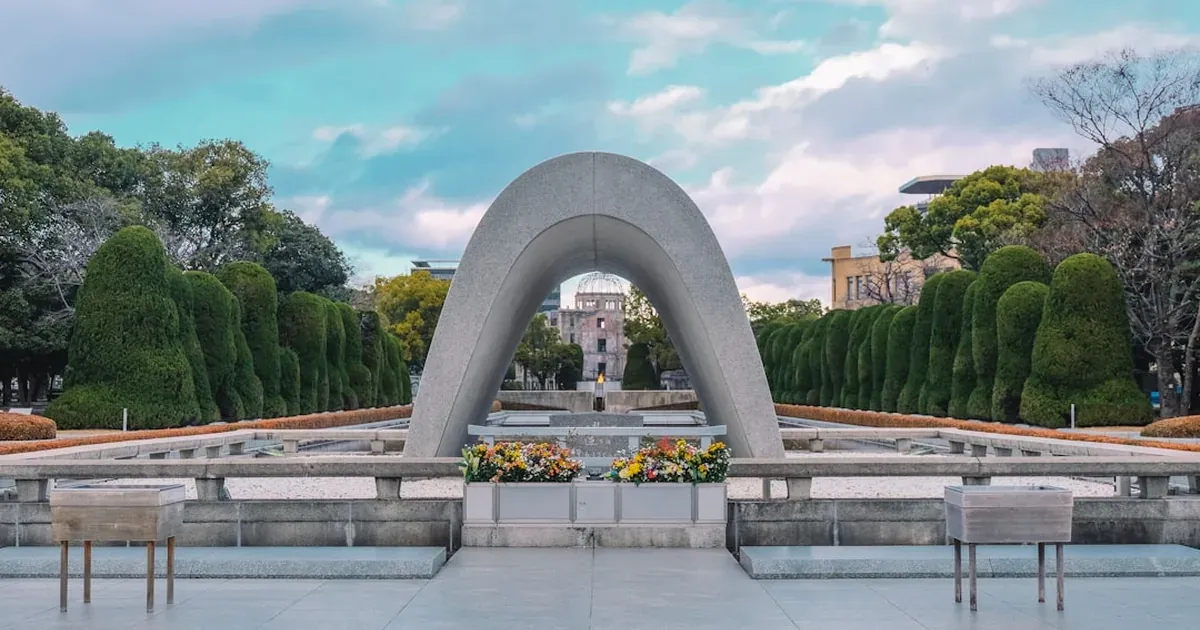
No Japan trip is complete without Hiroshima. It is one of the most emotionally significant and visually compelling destinations in the country — and one of the most affordable. Budget travelers can manage a full day including accommodation, Peace Memorial Museum, streetcar transport, okonomiyaki dinner, and snacks for ¥7,100–11,400 ($47–76) total. The Peace Memorial Park and A-Bomb Dome are free. Miyajima Island costs ¥550 return including the ferry. Hiroshima okonomiyaki runs ¥1,200 at the city’s famous multi-floor stall building.
2026 marks the 81st anniversary of the atomic bombing — the Peace Memorial Museum has updated its exhibits with new digital archives and survivor testimonies, making this a particularly meaningful year to visit.
This guide covers two days: one day for Hiroshima city itself, one day for the Miyajima Island day trip. Both are doable for under ¥8,000 per day including accommodation.
Hiroshima at a Glance
- Daily budget: ¥7,100–11,400 including accommodation
- From Osaka by Shinkansen: 1h 30min, ~¥10,000
- From Fukuoka by Shinkansen: 1h, ~¥5,940
- Streetcar day pass: ¥700
- Streetcar + ferry combo pass (for Miyajima): ¥840
- Peace Memorial Museum: ¥200
- Miyajima ferry: ¥275 each way + ¥100 visitor tax
- Days needed: 2 full days minimum
Getting to Hiroshima
From Osaka — the most common approach
Hiroshima is 1h 30min from Osaka by Shinkansen at approximately ¥10,000 one way on the Sakura or Nozomi service from Shin-Osaka Station to Hiroshima Station. This is the standard approach for travelers following the extended Kansai circuit covered in the 2-week Japan budget itinerary.
Budget alternative — the Kansai-Hiroshima Area Pass: The JR West Kansai-Hiroshima Pass costs ¥13,500 for 5 days covering Osaka, Kyoto, Hiroshima, and surrounding areas. If your itinerary includes multiple days of travel between these cities — including the Hankyu from Kyoto to Osaka and then onward to Hiroshima — this regional pass can save significant money over individual tickets. Unlike the nationwide JR Pass, this regional version is genuinely good value for the western Japan circuit.
Run the calculation: list every JR journey you’d take in western Japan, add up individual fares, compare to ¥13,500. If you’re spending 3–4 days moving between Osaka, Kyoto, and Hiroshima, it usually pays off.
From Fukuoka — the budget traveler’s second approach
Coming from Fukuoka to Hiroshima takes approximately 1 hour by Shinkansen for ¥5,940 — considerably cheaper than from Osaka and making Hiroshima a natural first or last stop if you’re flying in or out of Fukuoka Airport.
Hiroshima Station to city centre
The streetcar (tram) runs directly from Hiroshima Station to Peace Memorial Park in about 20 minutes for ¥200. Tap your IC card or buy a single-ride ticket from the machine at the tram stop. Hiroshima’s streetcar network is one of the oldest in Japan — riding it is part of the experience.
Day 1: Hiroshima City
The Peace Memorial — give it half a day
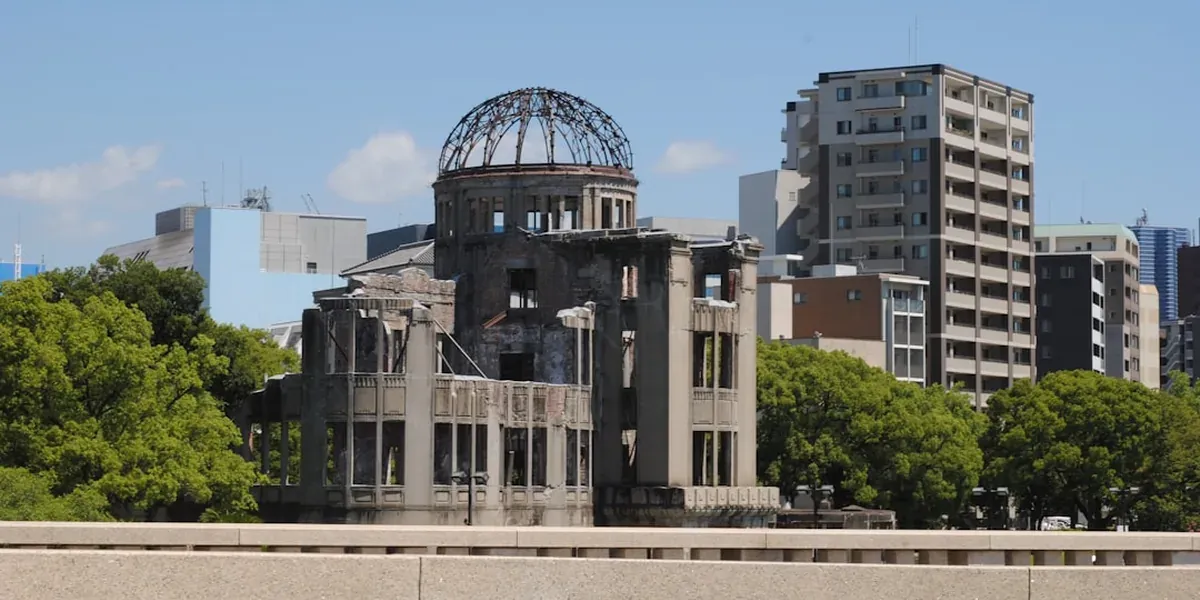
The Peace Memorial Park and Atomic Bomb Dome are free to visit — allow at least half a day, more if you enter the museum (¥200).
The A-Bomb Dome (Genbaku Dome): The skeletal remains of the Industrial Promotion Hall, preserved exactly as it stood when the bomb detonated almost directly above it on August 6, 1945. Designated a UNESCO World Heritage Site in 1996. Free to walk around and view from the riverside path — the most powerful free historical sight in Japan.
Peace Memorial Park: A 12-hectare park built on what was once the most densely populated neighbourhood in Hiroshima. Free to walk through. Key sites within the park: the Cenotaph for A-Bomb Victims (free), the Flame of Peace (free), the Children’s Peace Monument (free, surrounded by paper cranes sent from schools worldwide), and the Peace Bell (you can ring it — free).
Peace Memorial Museum (¥200): Advanced reservations are highly recommended for 2026 to avoid long wait times at the entrance. The museum recently updated its digital displays to provide more interactive historical context. Book online at hpmmuseum.jp before arriving — the ¥200 entry is the best-value museum ticket in Japan. Allow 1.5–2 hours inside. Go in the morning before tour groups arrive.
Timing for 2026: August 6th is the 81st Peace Memorial Ceremony — a deeply moving event but one that requires booking accommodation 3–6 months ahead as the city fills completely. Visiting in September, October, January, or February gives the same experience with a fraction of the crowd and significantly cheaper accommodation. Full seasonal timing guide: Cheapest Time to Visit Japan.
Hiroshima Okonomiyaki — the best cheap meal in the city
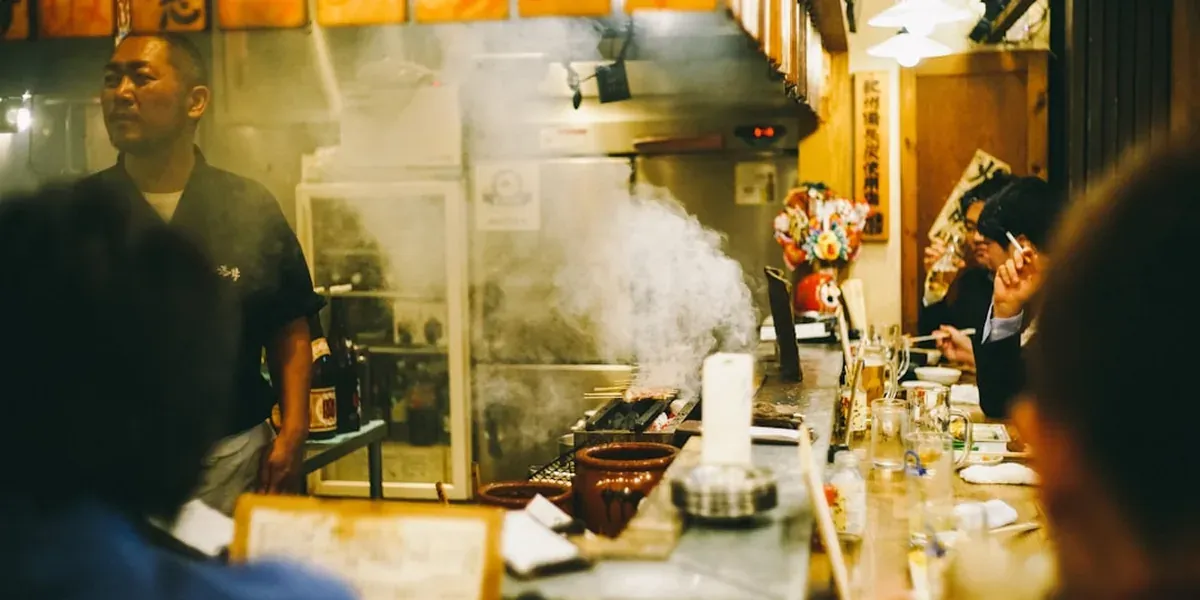
Hiroshima-style okonomiyaki differs from Osaka-style: it layers ingredients (batter, cabbage, noodles, protein) rather than mixing them. Okonomimura in central Hiroshima has 25 stalls on three floors — arrive at lunch or dinner and pick a counter with an open seat.
Okonomimura is the most practical option — it’s essentially a dedicated multi-floor building for okonomiyaki, every stall serves roughly the same dish at similar prices, and you eat watching your meal being prepared on a teppan griddle directly in front of you. Standard okonomiyaki with pork: ¥1,000–1,300. With extra toppings: ¥1,300–1,600.
The Hiroshima version is substantially more filling than Osaka-style because of the yakisoba noodle layer — one portion is usually a full meal. The egg on top and sweet-savory sauce finish make it one of the most satisfying cheap meals in Japan.
Budget okonomiyaki alternatives to Okonomimura: Neighbourhood teppan restaurants away from the tourist strip in Hondori are typically ¥200–300 cheaper per portion and more local in atmosphere. Ask your hostel for a recommendation — most can point you to where locals actually eat.
Getting Around Hiroshima
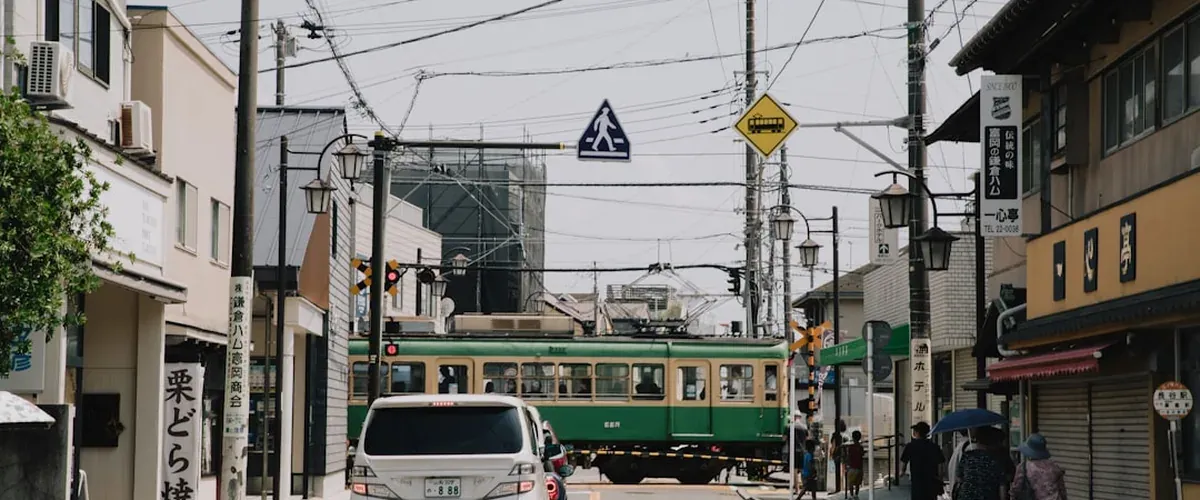
Within the city, the streetcar (tram) network covers all major sights for ¥200 per ride.
Streetcar day pass — ¥700: If you’re making 4+ streetcar trips in a day, the ¥700 day pass saves money. Buy at Hiroshima Station tourist information or from the driver. Covers all 8 streetcar lines including the route to Miyajimaguchi for the Miyajima ferry.
Streetcar + ferry combo pass — ¥840: In Hiroshima you can purchase a 1-day streetcar and ferry pass for ¥840 — a great option if you are doing Miyajima as a day trip. This covers all streetcar rides plus the Miyajima ferry return — saving you ¥560 versus paying separately. Essential if you’re doing Miyajima.
IC card: Your Suica or ICOCA works on all Hiroshima streetcars and city buses. Tap on boarding, tap off at destination. Single fare ¥200 charged automatically.
Walking: The Peace Memorial Park, A-Bomb Dome, Hondori shopping street, and Okonomimura are all within 15–20 minutes’ walk of each other. The streetcar is most useful for getting between Hiroshima Station and the Peace Memorial area (20 min walk versus 8 min by tram).
Free Things in Hiroshima City
Beyond the Peace Memorial Park, these cost nothing:
Mitaki-dera Temple: A hidden gem on the forested slopes of Mount Mitaki. The temple is named after three beautiful waterfalls found within its grounds. Peaceful moss-covered statues line the paths. Entry is free, making it an excellent choice for budget travelers. Take streetcar 1 to Mitaki Station (¥200), then a 15-minute uphill walk.
Shukkeien Garden: Technically charges ¥260 entry — the most beautiful traditional Japanese garden in Hiroshima, well worth it. Skip only if every yen counts.
Hondori Shopping Arcade: Covered shopping street running from Hiroshima Station towards the Peace Memorial area. Free to walk, pleasant in rain, good for affordable lunch at standing sushi counters (¥500–700).
Hiroshima Castle Grounds: The outer castle grounds are free to walk. The rebuilt castle keep charges ¥460 for entry and city views. The moat and stone walls are impressive from outside — worth the free walk even if you skip the interior.
Day 2: Miyajima Island
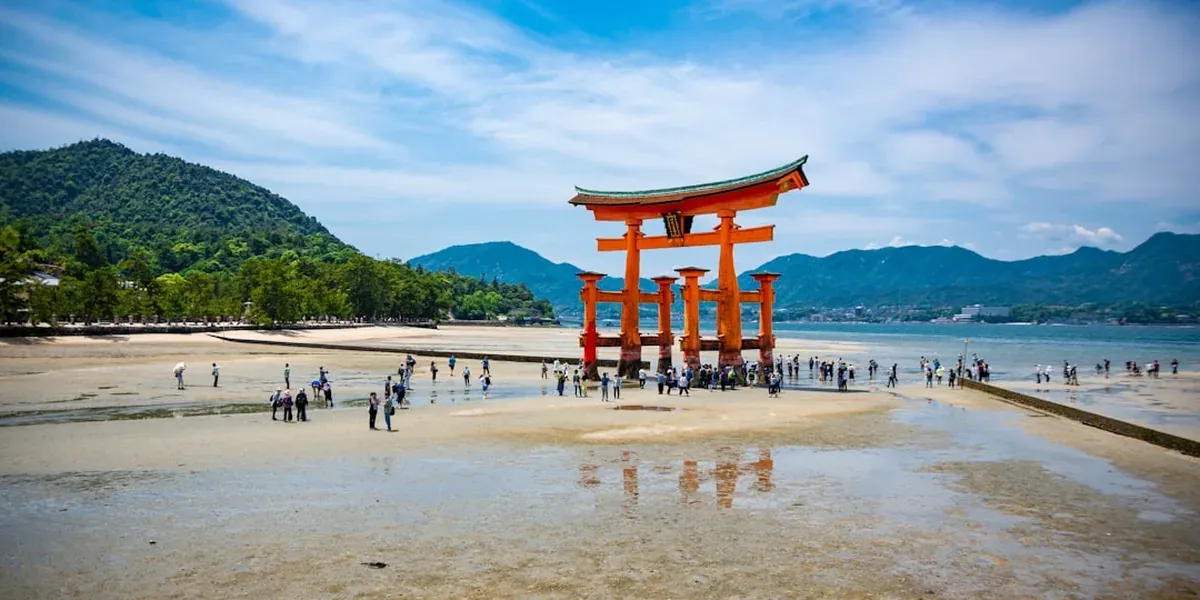
Miyajima Island is one of Japan’s three designated “scenic views” — and unlike many Japanese tourist highlights, the main draw (the floating torii gate) is visible for free from the ferry and the beach. The floating torii gate of Itsukushima Shrine appears to rise from the sea at high tide and stands on sand flats at low tide — check the tide schedule before you go.
Getting to Miyajima
From Hiroshima Station: Take streetcar 2 to Miyajimaguchi (about 25 minutes, ¥200 or covered by your day pass). Then the JR ferry to Miyajima (¥200 each way + ¥100 visitor tax). Total transport: ¥600 return or ¥840 on the combo pass.
Tide timing matters: The floating torii is most dramatic at high tide when it appears to rise from the sea. At low tide, you can walk up and touch it — a different but equally compelling experience. Check the Miyajima tide schedule (hiroshima-navi.jp) and plan your arrival accordingly. High tide photography is best in morning light.
Early morning advantage: Miyajima is extremely crowded between 10am and 4pm. Take the first or second ferry (departures from around 6:30am) for an almost empty island. The deer — yes, Miyajima also has free-roaming deer like Nara — are most active at dawn.
What Costs Money on Miyajima
Itsukushima Shrine entry — ¥300: The inner shrine including the famous floating stage and main hall. Worth it for the architecture — this is the structure that makes the torii famous, and you can only see the construction detail from inside. The torii itself is visible for free from the beach.
Mount Misen ropeway — ¥1,840 return:
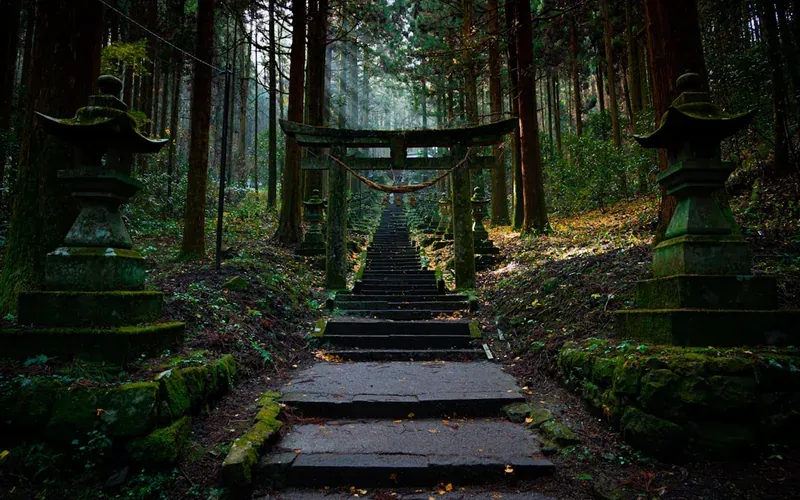
The island also offers hiking up Mount Misen (535m). The ropeway is ¥1,840 return. The hiking trail is completely free and takes 1.5–2 hours up through ancient forest and stone paths. The view from the summit over the Seto Inland Sea is one of the finest panoramas in Japan. Budget travelers: hike up, walk down. The trail is well-marked and manageable for anyone with reasonable fitness.
Momijidani Park (Maple Valley): Free to walk through. The ropeway base station is here — even if you skip the ropeway, the park itself is worth 30 minutes. In autumn (November), the maple leaves are spectacular.
What’s Free on Miyajima
- Walking the approach (Omotesando) shopping street — deer roam freely here
- Viewing the torii from the beach at any tide level
- Momijidani Park walk
- Hiking Mount Misen (free trail)
- Watching the deer interact with tourists (Miyajima’s deer are slightly less bold than Nara’s — less snack-oriented but photogenic)
Miyajima Food — Oysters and Maple Leaf Mochi
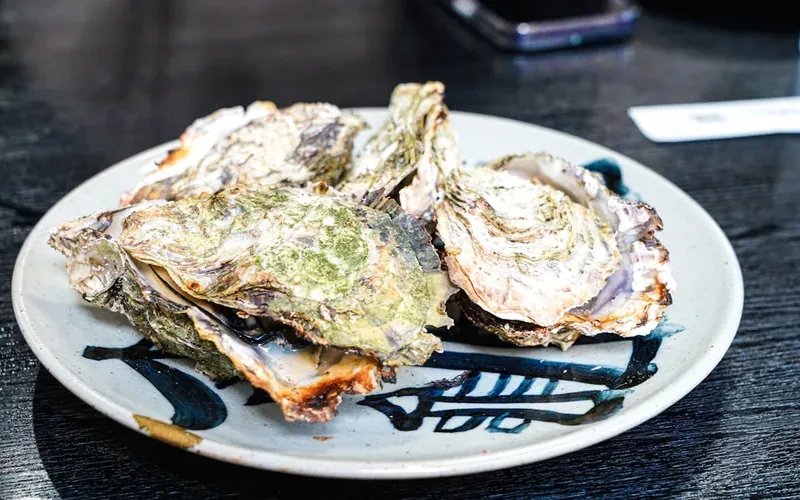
Hiroshima Prefecture produces over 60% of Japan’s oysters — grilled over charcoal, deep-fried, in oyster rice, and in steaming dotemiso stews.
Grilled oysters on Miyajima — ¥550–700 each: The single best food experience on Miyajima. Food stalls along the Omotesando street grill fresh oysters over charcoal, serve them with lemon and ponzu — eat two or three and it’s a full lunch. Budget ¥1,200–1,500 for a proper oyster meal on the island.
Momiji manju — ¥130–150 each: Miyajima’s excellent oyster and maple-leaf mochi snacks along the approach street are the iconic Miyajima souvenir food. Maple-leaf shaped cakes filled with red bean paste, custard, or chocolate. Buy them fresh from a shop with a viewing window showing the production process.
Konbini strategy for Miyajima: There are no konbini on Miyajima itself. Load up at the 7-Eleven near Hiroshima Station before boarding the streetcar. Bring onigiri and drinks for breakfast — you’ll arrive on the island before any food stalls open if you take the early ferry.
The Budget Hiroshima + Miyajima Breakdown
Day 1 — Hiroshima City
| Item | Cost |
|---|---|
| Hostel dorm bed | ¥2,700–3,600 |
| Streetcar day pass | ¥700 |
| Peace Memorial Museum | ¥200 |
| Konbini breakfast + drinks | ¥600 |
| Okonomiyaki dinner (Okonomimura) | ¥1,200 |
| Afternoon konbini snack | ¥200 |
| Day 1 total | ¥5,600–6,500 |
Day 2 — Miyajima Island
| Item | Cost |
|---|---|
| Hostel dorm bed | ¥2,700–3,600 |
| Streetcar + ferry combo pass | ¥840 |
| Itsukushima Shrine entry | ¥300 |
| Oyster lunch on Miyajima (3 oysters) | ¥1,500 |
| Momiji manju x3 | ¥450 |
| Konbini breakfast before departure | ¥400 |
| Day 2 total | ¥6,190–7,090 |
2-day Hiroshima total: ¥11,790–13,590 (~$79–91 USD)
How Hiroshima Fits Into Your Extended Japan Route
Hiroshima extends the western Japan circuit naturally from every direction:
Coming from Osaka: 1h 30min Shinkansen. Do Hiroshima as a 2-night stop after Osaka, before flying home from Hiroshima Airport or continuing to Fukuoka. Full Osaka guide: Kyoto to Osaka Budget Street Food Guide.
Coming from Fukuoka: 1 hour Shinkansen. A natural pair — spend 2 nights in Fukuoka, 2 nights in Hiroshima, then Shinkansen to Osaka or Kyoto for the final leg.
The complete extended western Japan route:
Tokyo (4 nights)
  ↓ Overnight bus ¥3,500
Kyoto (3 nights)
  ↓ Hankyu ¥410
Osaka (2 nights)
  ↓ JR/Kintetsu day trip ¥820 return
Nara (day trip)
  ↓ Shinkansen ¥10,000
Hiroshima (2 nights)
  ↓ Day trip ¥840 combo pass
Miyajima (day trip)
  ↓ Shinkansen ¥5,940
Fukuoka (2 nights)
  ↓ Fly home from Fukuoka Airport
Every leg of this route is covered by a dedicated BudgetYen article:
- Overnight bus Tokyo to Kyoto
- Free things in Kyoto
- Kyoto to Osaka and street food
- Nara day trip
- Fukuoka budget guide
Pack light for all of it: Japan budget packing list. Use your IC card everywhere: Suica vs ICOCA vs PASMO guide.
Frequently Asked Questions
How much does it cost to visit Hiroshima on a budget?
Budget travelers spend approximately ¥7,100–11,400 ($47–76) per day in Hiroshima including hostel accommodation, Peace Memorial Museum entry, streetcar transport, and meals. The Peace Memorial Park and A-Bomb Dome are free. The museum costs ¥200. A full okonomiyaki dinner runs ¥1,000–1,300.
Is the Peace Memorial Museum free?
No — the Peace Memorial Museum charges ¥200 entry (approximately $1.30 USD). The Peace Memorial Park and A-Bomb Dome surrounding it are completely free. The museum is one of the best-value paid experiences in Japan — book online at hpmmuseum.jp to avoid queue times.
How do I get from Osaka to Hiroshima cheaply?
The Sanyo Shinkansen from Shin-Osaka to Hiroshima takes 1h 30min and costs approximately ¥10,000 one way. The Kansai-Hiroshima Area Pass at ¥13,500 for 5 days covers this journey plus travel in Osaka and Kyoto — worthwhile if your itinerary uses it for multiple days.
Is Miyajima worth visiting from Hiroshima?
Yes — Miyajima is a 25-minute streetcar ride and a 10-minute ferry from Hiroshima. The floating torii gate of Itsukushima Shrine is one of Japan’s most iconic sights. Using the ¥840 streetcar and ferry combo day pass makes the trip extremely affordable. Allow a full day to include hiking Mount Misen.
What is Hiroshima okonomiyaki?
Hiroshima-style okonomiyaki is a layered savory pancake — thin batter base, shredded cabbage, yakisoba noodles, protein (usually pork), and a fried egg, finished with sweet-savory sauce. Unlike Osaka-style okonomiyaki which is mixed together, the Hiroshima version is built in distinct layers on a teppan griddle. Okonomimura in central Hiroshima has 25 stalls across three floors — standard portions cost ¥1,000–1,300.
How many days should I spend in Hiroshima?
Two full days is ideal — one day for the Peace Memorial area and city itself, one day for Miyajima Island. One day is possible if you skip Miyajima, but the island is one of Japan’s most worthwhile half-days and only adds ¥840 in transport cost.
Are there deer on Miyajima Island?
Yes. Like Nara, Miyajima has free-roaming sika deer throughout the island. They are slightly less food-aggressive than Nara’s deer but equally approachable for photography. Keep food in sealed bags — Miyajima’s deer are known for grabbing maps and brochures from unsuspecting tourists.
Prices correct as of May 2026. Exchange rate approximately ¥150 = $1 USD.