Japan Convenience Store Food Guide: What to Buy at 7-Eleven, Lawson & FamilyMart (2026)
The complete budget traveler's guide to eating at Japanese convenience stores — best food at 7-Eleven, Lawson, and FamilyMart, what everything costs, and how to eat well in Japan for under ¥1,500 a day.
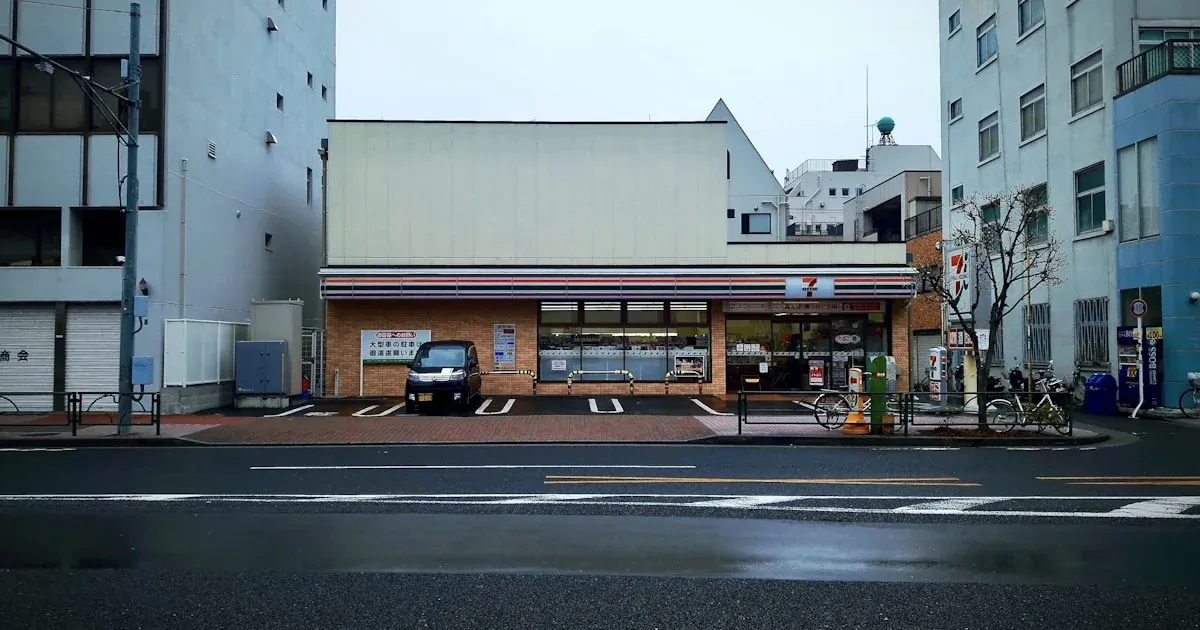
Walk into any Japanese convenience store expecting a petrol station snack selection and you’ll walk out genuinely confused — in the best possible way. Japan’s konbini have become a culinary cultural cornerstone with a near-cult following among travellers, and once you understand what to actually buy, they become your most powerful tool for eating well on a tight budget.
There are over 56,000 konbini across Japan — roughly one for every 2,200 people. You will never be more than a few minutes from one. On every trip covered in this guide — the overnight bus from Tokyo to Kyoto, early mornings at Fushimi Inari in Kyoto, and street food nights in Osaka — a konbini was part of every single day. This is your complete guide to using them properly.
Why Japanese Convenience Stores Are Different
Before the food guide, a quick explanation for first-timers. Japanese convenience stores are not like convenience stores anywhere else. The gap comes down to three things: food quality, service range, and reliability.
The food is prepared fresh daily, restocked multiple times throughout the day, and held to quality standards most supermarkets in other countries don’t match. Staff train specifically on food preparation. Seasonal menus rotate every few months. Limited-edition products drop regularly and sell out within days.
The three dominant chains — 7-Eleven, FamilyMart, and Lawson — manage around 90% of convenience stores in Japan, and each has a distinct personality worth understanding before you decide which one to prioritize.
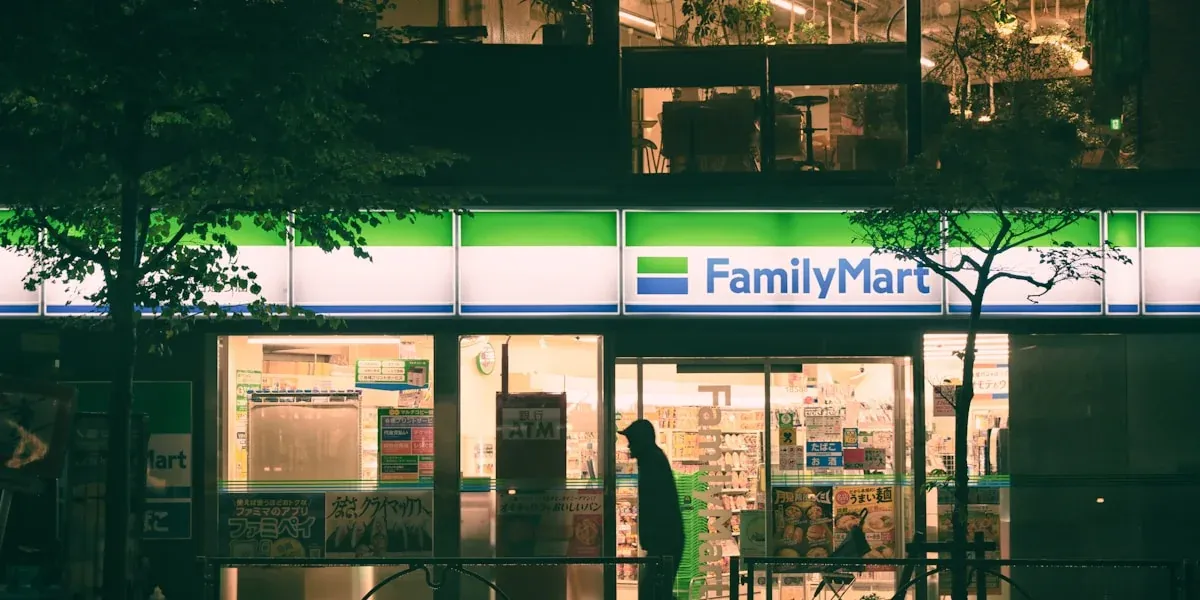
The Big Three — Which Konbini to Choose
7-Eleven Japan — Best Overall Quality
Japan’s 7-Eleven is completely separate from Western 7-Eleven franchises — it was acquired by a Japanese company and rebuilt from the ground up. 7-Eleven was the first konbini to open in Japan in 1974 and has since evolved into a full-service hub where locals pay utility bills, check email on free Wi-Fi, and pick up bento boxes after long days at the office.
Best for: Premium private-label products, egg sandwiches, onigiri quality, desserts Signature item: 7-Premium label — their house brand consistently outperforms name brands on taste tests ATM: Most reliable for foreign cards — 7-Eleven ATMs accept virtually all international cards 24/7
FamilyMart — Best Hot Food
FamilyMart comes in second with around 16,000 stores and is known for its warm feel, strong baked goods, and a significant presence inside train stations and airports.
Best for: Hot food, fried chicken (Famichiki), baked goods fresh from the oven Signature item: Famichiki — their fried chicken has a devoted following and consistently wins blind taste tests Budget tip: FamilyMart’s hot food counter usually has the best variety of items under ¥200
Lawson — Best Desserts and Budget Sub-brand
Lawson has built a reputation for slightly more adventurous food offerings and a strong dessert game — the Uchi Cafe series of sweets has earned genuine praise from food critics, not just convenience store fans. Lawson also operates Lawson 100, a sub-brand targeting budget travelers.
Best for: Desserts, seasonal sweets, Lawson 100 locations for cheapest prices Signature item: Premium Roll Cake — a genuine cult item, sells out most mornings Budget tip: Lawson 100 stores sell everything for ¥110 including tax — an entire meal under ¥500 is possible
The Complete Budget Buying Guide by Category
Onigiri (Rice Balls) — ¥130–200 each
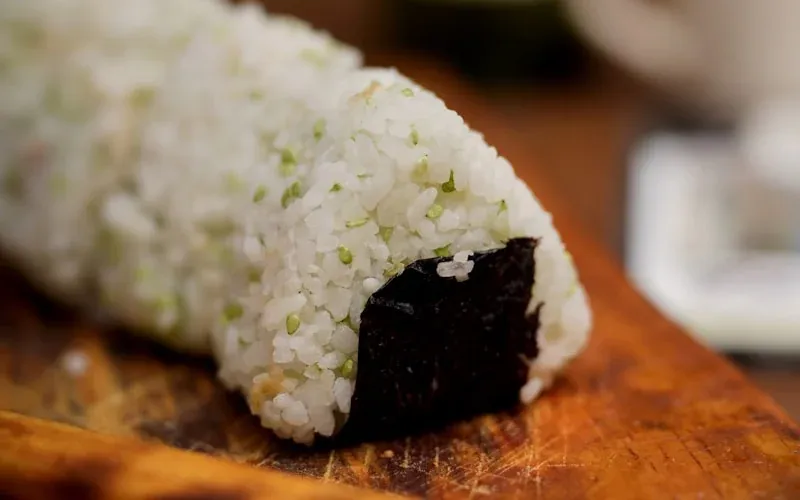
The single best value food in Japan. A triangular rice ball wrapped in nori seaweed with a filling in the center — tuna mayo, salmon, pickled plum (umeboshi), or dozens of others. One onigiri is a snack. Two or three is a full meal.
Best fillings for first-timers:
- Tuna mayo (ツナマヨ) — the most popular, creamy and familiar
- Salmon (サーモン) — mild, widely liked
- Grilled salmon (焼き鮭) — saltier, more traditional
- Natto (納豆) — fermented soybeans, an acquired taste but cheap and filling
Budget strategy: Two onigiri + canned coffee = ¥400 breakfast. Hard to beat anywhere in Japan.
Bento Boxes — ¥400–600
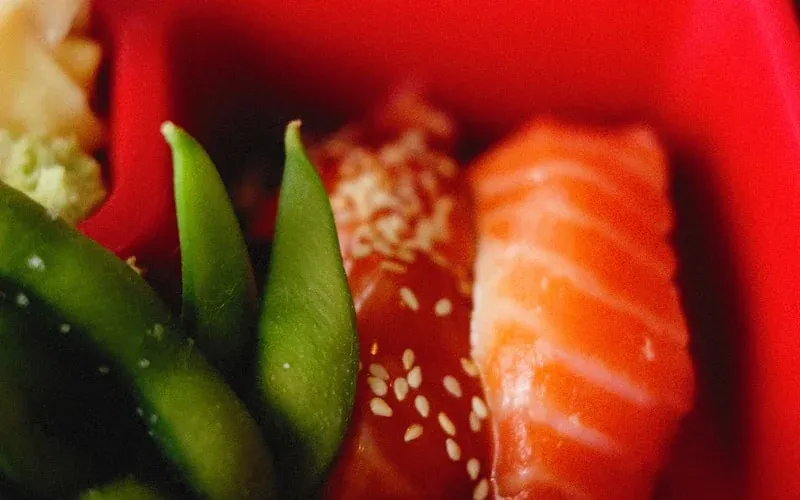
A full meal in a box — rice, a protein (chicken karaage, beef, pork cutlet), vegetables, and pickles. Heated in-store in about 90 seconds. At ¥400–600 for a complete meal, it’s cheaper than almost any restaurant in Japan.
Best options:
- Chicken karaage bento (唐揚げ弁当) — the safe, universally good choice
- Mapo tofu rice (麻婆豆腐丼) — spicy, filling, usually under ¥500
- Beef bowl (牛丼) — Yoshinoya-style, rich and hearty
The 8pm rule: After 8pm, many bento boxes get a yellow “discount” sticker reducing the price by ¥50–100. Ask staff if you don’t see stickers — they sometimes apply them on request when close to the evening cutoff.
Hot Food Counter — ¥100–280 per item
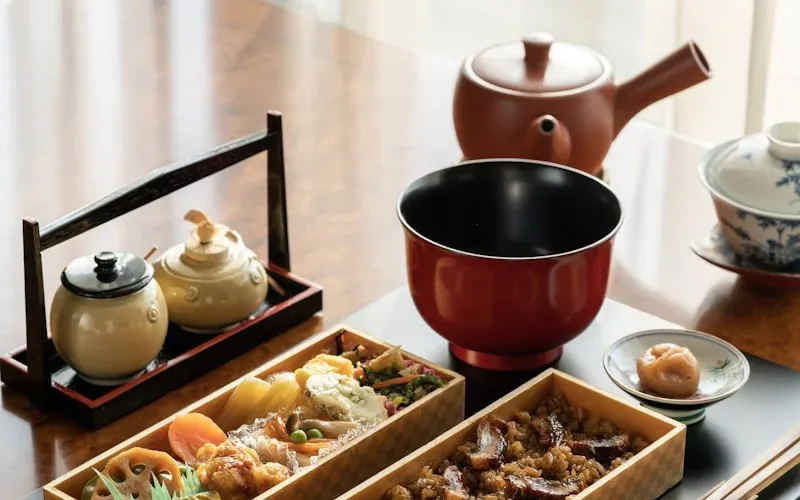
The heated glass cabinet near the register is one of the most overlooked sections for tourists. Everything here is made fresh throughout the day and held at serving temperature.
Best items:
Fried chicken (karaage): Every chain has their version. FamilyMart’s Famichiki (¥220) is widely considered the best. Lawson’s Karaage-kun (¥260 for 5 pieces) are bite-sized and great for snacking. 7-Eleven’s Nana-chiki is lighter and less greasy — good if Famichiki feels too heavy.
Nikuman (steamed pork bun) — ¥150–180: A white steamed bun filled with pork and vegetables. Common in autumn and winter. One of the best ¥150 snacks in Japan — filling, hot, and genuinely good.
Corn dog / fish sausage — ¥100–130: The cheapest hot food option. Fine as a snack, no more.
American dog (corn dog) — ¥130: Japanese-style corn dogs are slightly sweeter than American versions. A quick hunger fix for ¥130.
Sandwiches and Bread — ¥150–280
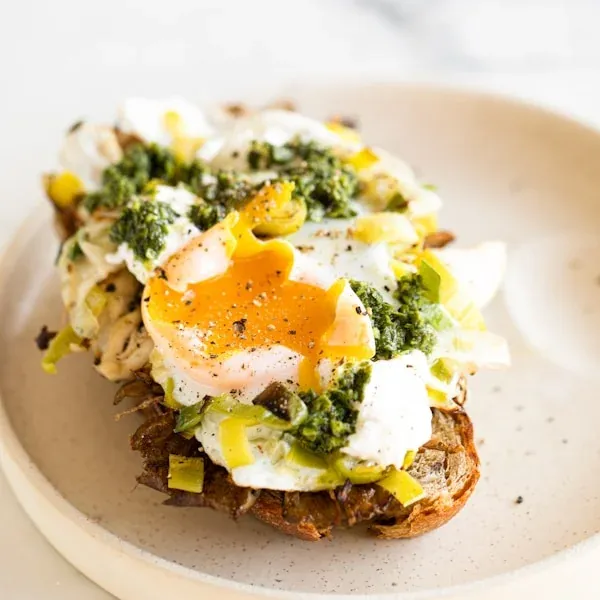
Japan’s convenience store sandwiches are made on soft, slightly sweet white milk bread (shokupan) — a completely different texture from Western sandwich bread. They’re a legitimate food experience, not a backup option.
Must-try:
Tamago sando (egg sandwich) — ¥200–250: Thick egg salad on milk bread, light mayo. This has gone viral internationally and for good reason — it’s genuinely excellent. FamilyMart’s egg sandwich stood out in taste tests for being “fluffy and thick, with a vibrant yellow color” — but eat it immediately after opening, the texture degrades within minutes.
Katsu sando (pork cutlet sandwich) — ¥250–280: Breaded pork cutlet with tonkatsu sauce on milk bread. A more substantial option if you need something filling.
Cup Ramen and Instant Noodles — ¥180–350
Hot water dispensers are available at every konbini register — free to use when you buy instant noodles. Japan’s cup ramen selection is extraordinary compared to what’s available in other countries, with regional varieties and limited-edition flavors cycling constantly.
Best value options:
- Nissin Cup Noodle Seafood — ¥200, the original and still one of the best
- Maruchan Seimen series — ¥220, fresh-texture noodles that actually cook properly
- Regional konbini exclusives — keep an eye out for city-specific flavors in Kyoto and Osaka
Budget meal hack: Cup ramen + onigiri + canned drink = complete meal for ¥500–600. This is genuinely how many Japanese students and budget travelers eat regularly.
Drinks — ¥110–200
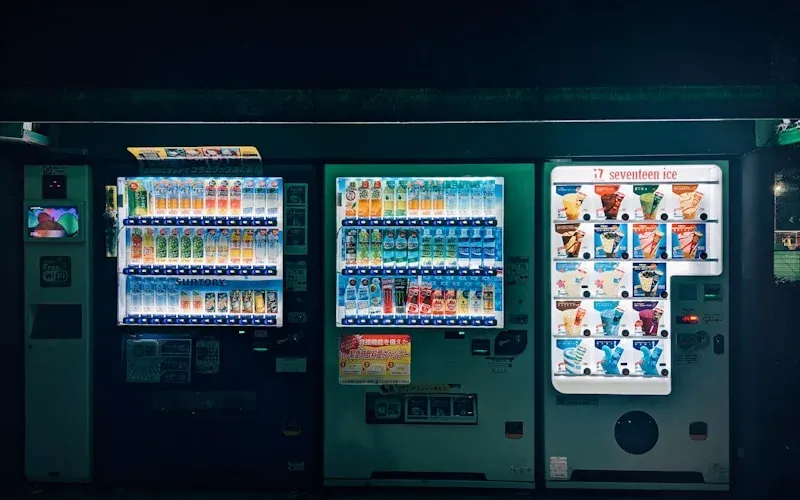
Canned coffee — ¥110–150: Boss, Georgia, and UCC are the main brands. Cold or hot (the hot ones are kept in a heated section near the register). Incredibly good value — a solid espresso-style coffee for ¥120.
Green tea — ¥110–150: Ito En and Ayataka are the most common. Unsweetened is the default — check the label for 無糖 (muto) if you want no sugar. Completely calorie-free, genuinely refreshing, and tastes nothing like green tea outside Japan.
Sports drinks — ¥120–160: Pocari Sweat and Aquarius are the Japanese hydration standards. In summer heat, especially in Kyoto and Osaka, these are worth buying over water.
Avoid: Fruit juices are often mostly sugar with minimal actual juice. The ingredient percentages are listed on the label — look for 100% juice if that matters to you.
Desserts and Snacks — ¥100–350
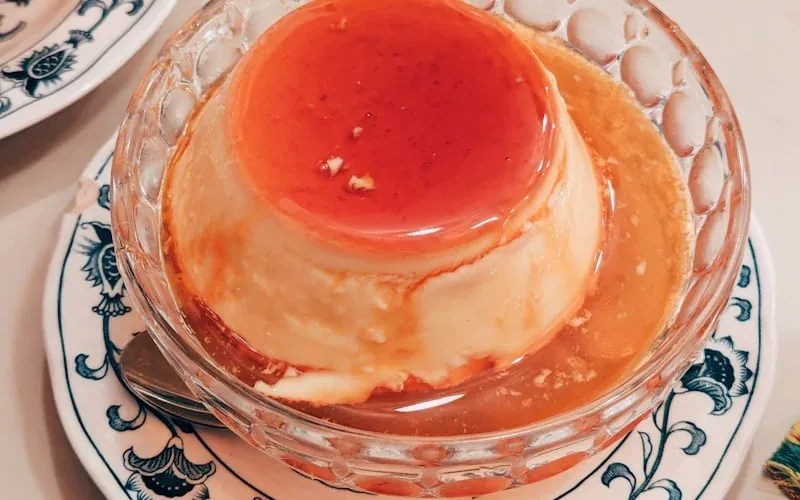
This is where Japanese convenience stores genuinely surprise people. The dessert section is better than most bakeries in other countries.
Worth buying:
Lawson Premium Roll Cake — ¥270: Light sponge rolled around whipped cream. Sells out most mornings. If you see it, buy it.
Purin (custard pudding) — ¥130–180: A silky, slightly caramelized custard pudding. Every chain makes their own version. 7-Eleven’s is widely considered the best.
Chocolate-covered almonds / Pocky / KitKat Japan editions — ¥130–200: Japan’s KitKat flavors are famous worldwide — matcha, sakura, sake, and dozens of regional varieties. Good as souvenirs as well as snacks.
Soft serve from FamilyMart — ¥200–250: Available at select locations, seasonal flavors. Among the best fast-food ice cream in Japan.
The Konbini Survival Guide for Budget Travelers
How to heat your food
Every konbini has a microwave near the register — it’s free to use for anything you bought in-store. Hand your bento or onigiri to the cashier and say “atatamete kudasai” (温めてください) — “please heat this up.” They’ll do it automatically for anything with a heating symbol on the packaging.
Paying at the register
All major konbini accept IC cards (Suica, ICOCA, PASMO) — just tap and go. Credit cards are accepted at most locations now. Cash always works. IC cards used on trains can also be tapped to pay at all major konbini chains — you only need one card for both transport and shopping.
The discount timing window
Evening discounts on prepared food: 7–9pm is when most stores apply reduction stickers. Morning discounts on previous day’s packaged goods (rare but exists at some locations): 6–8am. For the 8pm window specifically — if you’re eating dinner on a budget, timing your konbini run to 7:45pm can shave ¥50–150 off your meal.
Services most tourists don’t know about
Konbini offer ATMs, photocopy machines, postal drop-off, bus and concert ticket reservation machines, and even utility bill payments — you can handle all of that without waiting in line. Practically, for travelers, the most useful are:
- ATM: 7-Eleven ATMs are the most reliable for foreign cards, available 24/7
- Printing: If you need to print a document, boarding pass, or photo — bring it on a USB and print at the in-store machine (¥10–60 per page depending on size)
- Luggage forwarding (takuhaibin): Drop off your suitcase at any konbini and it’ll be delivered to your next hotel by the following morning. Game-changing for travel days between cities. Full details on how to use it: Japan Budget Packing List.
The Budget Day Meal Plan Using Konbini Only
This is what a full day of konbini eating costs when done right:
| Meal | Items | Cost |
|---|---|---|
| Breakfast | 2x onigiri + canned coffee | ¥380–430 |
| Mid-morning snack | Nikuman or almonds | ¥150–200 |
| Lunch | Bento box + green tea | ¥530–750 |
| Afternoon | Pocky or KitKat | ¥130–200 |
| Dinner (8pm discount) | Bento + miso soup cup | ¥450–580 |
| Daily total | ¥1,640–2,160 |
That’s ¥1,640–2,160 (~$11–14 USD) for a full day of eating. Nothing in Japan comes close to this value. Even ramen shops and gyudon chains cost more per meal.
How Konbini Fit Into Your Wider Japan Budget Trip
Japanese convenience stores are the backbone of budget travel in Japan. They’re not a compromise — they’re a strategy. Here’s how they tie into every part of your trip:
Before the overnight bus from Tokyo to Kyoto: Stock up at the 7-Eleven in Shinjuku Station — grab onigiri, a bento for the bus, a drink, and snacks. Everything you need for an 8-hour journey for under ¥1,000. Full transport guide: Cheapest ways from Tokyo to Kyoto.
Early morning at Fushimi Inari: At 5:30am nothing is open except konbini. Grab onigiri and canned coffee before heading to the shrine — the perfect silent breakfast before sunrise at the torii gates. Full Kyoto guide: Free things to do in Kyoto.
Budget days in Osaka: Konbini meals fill the gaps between Osaka’s world-class street food. Use Dotonbori and Kuromon for special meals, konbini for everything else. Full Osaka guide: Kyoto to Osaka budget street food guide.
Budget days in Fukuoka: Grab mentaiko onigiri — a Fukuoka regional speciality you won’t find as fresh anywhere else. Konbini breakfasts pair perfectly with yatai dinners to keep daily food costs under ¥2,000. Full city guide: Fukuoka budget guide.
Frequently Asked Questions
What is a konbini in Japan?
Konbini (コンビニ) is the Japanese word for convenience store, shortened from the English word “convenience.” The three main chains are 7-Eleven, FamilyMart, and Lawson. Unlike convenience stores in most countries, Japanese konbini serve high-quality fresh food, operate 24/7, and offer services including ATMs, printing, and luggage forwarding.
What is the best food to buy at a Japanese convenience store?
For budget travelers, the best value items are onigiri (¥130–200 each), bento boxes (¥400–600), and hot food counter items like Famichiki fried chicken (¥220). For a memorable food experience, try the tamago sando egg sandwich, Lawson’s Premium Roll Cake, and Japanese-exclusive KitKat flavors.
Are Japanese convenience stores open 24 hours?
Yes. Most convenience stores in Japan are open 24 hours a day, 7 days a week. This makes them particularly useful for early morning temple visits, late-night arrivals, and overnight bus journeys.
Which Japanese convenience store is best — 7-Eleven, Lawson, or FamilyMart?
7-Eleven has the best overall food quality and most reliable ATMs for foreign cards. FamilyMart has the best hot food, particularly their Famichiki fried chicken. Lawson has the best desserts and operates Lawson 100 stores with everything at ¥110. All three are excellent — visit whichever is closest.
How much does it cost to eat at Japanese convenience stores for a day?
A full day of konbini meals — breakfast, lunch, dinner, and snacks — costs approximately ¥1,640–2,160 (~$11–14 USD). This is the cheapest realistic way to eat well in Japan without cooking yourself.
Can I use foreign cards at Japanese convenience store ATMs?
Yes. 7-Eleven ATMs accept foreign credit and debit cards 24/7 and are the most reliable option for international travelers. Japan Post and some Lawson ATMs also accept foreign cards. Avoid relying on other ATMs as acceptance rates vary.
Planning what to bring? See our Japan budget packing list — including exactly what to buy at konbini instead of packing.
Prices correct as of May 2026. Exchange rate approximately ¥150 = $1 USD.