Japan Trip Cost 2026: How Much Money Do You Actually Need?
Real Japan trip costs for 2026 — budget ¥8,000/day, mid-range ¥18,000/day. Includes flights, 2026 new taxes, JR Pass update, and full breakdown by category.

The short answer: budget ¥8,000–12,000 per person per day ($50–80 USD) excluding flights. That’s the honest, realistic floor for a comfortable budget trip in 2026.
Japan’s reputation for being expensive is half true and half outdated. The weak yen has effectively given foreign visitors a 25–30% discount on everything compared to 2022 prices — accommodation, food, transport, and activities all cost significantly less in your home currency than they did before the yen weakened. A meal that cost $15 a few years ago now costs closer to $10. A hostel that ran $50/night can now be found for $35.
But there are new costs in 2026 that most guides haven’t caught up with yet — a tripled departure tax from July, another JR Pass price increase in October, dual pricing at major attractions, and changes to tax-free shopping from November. This guide covers all of it with real numbers, so you can plan without surprises.
The Quick Answer by Budget Type
| Budget level | Daily cost (excl. flights) | Who it’s for |
|---|---|---|
| Shoestring | ¥5,500–7,500 (~$37–50) | Hostels, konbini only, free sights |
| Budget | ¥8,000–12,000 (~$53–80) | Hostel/capsule, mix of meals, some paid sights |
| Mid-range | ¥15,000–25,000 (~$100–167) | Business hotel, restaurants, attractions |
| Comfortable | ¥30,000–50,000 (~$200–333) | Ryokan, dining out daily, tours |
BudgetYen readers typically budget ¥8,000–12,000/day — this covers a hostel dorm or capsule hotel, breakfast and lunch from konbini, one proper restaurant meal per day, IC card transport, and one paid attraction. It’s not roughing it. It’s how experienced budget travelers experience Japan fully without stress.
The 5 Categories That Make Up Your Japan Budget
1. Flights — Your Biggest Fixed Cost
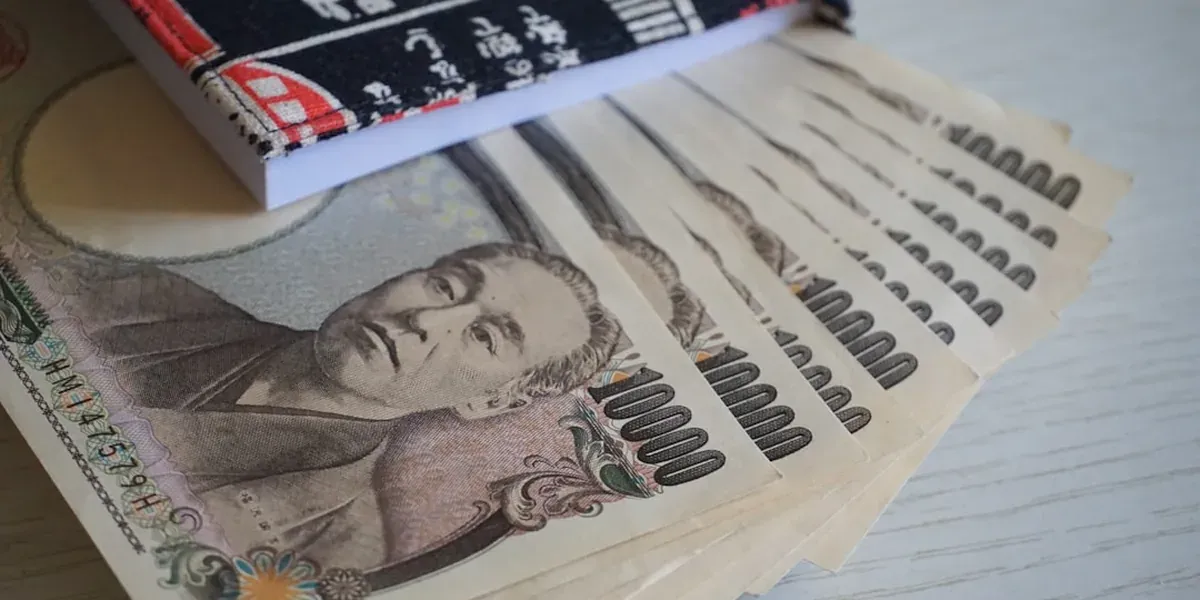
Flights are the single largest fixed cost of a Japan trip and the one factor that varies most dramatically by origin country, departure city, and booking timing.
Rough flight cost ranges (return, economy, 2026):
| Departure region | Budget | Mid | Peak season premium |
|---|---|---|---|
| North America (West Coast) | $600–900 | $900–1,200 | +$300–500 |
| North America (East Coast) | $900–1,200 | $1,200–1,600 | +$300–500 |
| Canada | $800–1,100 | $1,100–1,500 | +$300–500 |
| UK / Ireland | £450–650 | £650–950 | +£200–400 |
| Europe (varies) | €400–700 | €700–1,000 | +€200–400 |
| Australia | A$800–1,200 | A$1,200–1,600 | +A$300–500 |
How to find the cheapest flights to Japan:
Book 3–5 months ahead for the best prices on most routes. Cherry blossom season (late March–April) and Golden Week (late April–early May) add 30–50% to flight costs regardless of when you book — the demand is structural. January, February, and June flights are consistently cheapest.
Set Google Flights price alerts 6 months before your travel date. Enable “Track prices” on your search and Google emails you when prices drop. West Coast US to Tokyo routes regularly drop below $650 return in January–February and June.
New departure tax — July 2026: Japan’s departure tax triples from ¥1,000 to ¥3,000 per person from July 2026. This is automatically included in your outbound flight ticket price — you won’t pay it separately at the airport, but it will appear as a line item in your ticket breakdown. For a 2-person trip, this adds ¥4,000 ($27) to your total costs if travelling from July onwards.
2. Accommodation — Where Your Daily Budget Goes
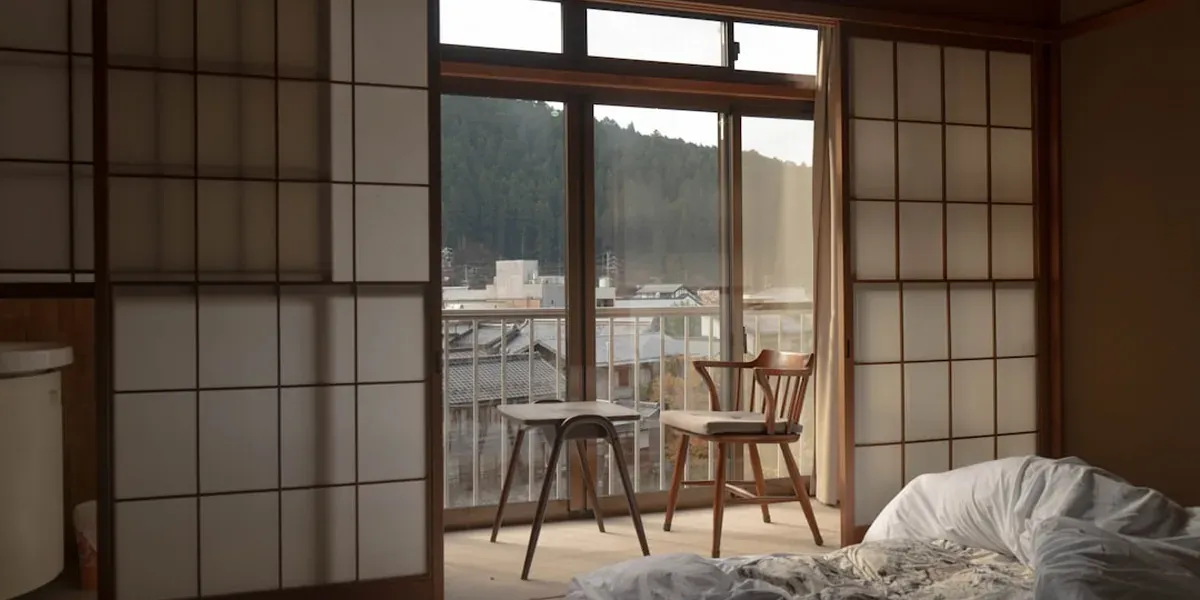
Accommodation is the most controllable part of your Japan budget — the difference between a ¥2,800 hostel dorm and a ¥12,000 business hotel room is ¥9,200 every single night. Over 14 nights that’s ¥128,800 ($860) in your pocket.
Budget accommodation costs by city (per person per night, 2026):
| City | Hostel dorm | Capsule hotel | Private hostel room | Budget business hotel |
|---|---|---|---|---|
| Tokyo | ¥2,700–3,500 | ¥3,000–4,500 | ¥5,500–9,000 | ¥7,000–12,000 |
| Kyoto | ¥2,800–4,000 | ¥3,200–5,000 | ¥6,000–10,000 | ¥8,000–14,000 |
| Osaka | ¥2,300–3,200 | ¥2,500–4,000 | ¥5,000–8,000 | ¥6,000–10,000 |
| Fukuoka | ¥2,200–3,000 | ¥2,500–3,800 | ¥4,500–7,500 | ¥5,500–9,000 |
| Hiroshima | ¥2,500–3,500 | ¥2,800–4,200 | ¥5,000–8,000 | ¥6,000–10,000 |
The Kyoto accommodation tax — new tiers in 2026: Kyoto implemented a tiered accommodation tax system in 2026. Budget travelers in dorms and capsule hotels typically pay ¥200–500 per person per night on top of the listed room rate. Mid-range hotels pay ¥500–1,000. This is separate from the room price and charged at check-out — factor it into your Kyoto nights specifically.
Peak season premium: Cherry blossom season (late March–mid April) and autumn foliage (November) in Kyoto can push hostel dorm prices to ¥5,500–7,000 — nearly double the off-season rate. The same room. Book 2–3 months ahead for peak season, or visit in January/February and June for the cheapest rates.
Full accommodation guide covering every type — capsule hotels, hostels, manga cafes, guesthouses: Japan Budget Accommodation Guide.
3. Food — Japan’s Best Budget Surprise
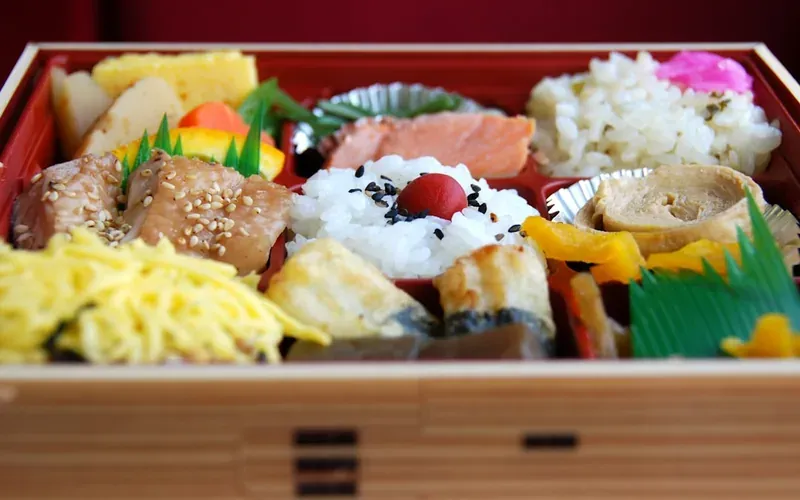
Food is where Japan consistently surprises budget travelers. The quality-to-price ratio is genuinely exceptional — better than most countries in the $50–100/day range.
Budget food cost breakdown per day:
| Meal | Option | Cost |
|---|---|---|
| Breakfast | 2× onigiri + canned coffee (konbini) | ¥400–500 |
| Lunch | Bento box + green tea (konbini) | ¥550–750 |
| Dinner | Ramen / gyudon chain / yakitori | ¥700–1,200 |
| Snacks and drinks | Konbini + vending machines | ¥200–400 |
| Daily food total | ¥1,850–2,850 |
The budget food strategy in practice:
Use convenience stores for breakfast and lunch — the quality is genuinely high and the cost is low. A konbini bento costs ¥500–600. A sit-down restaurant lunch costs ¥900–1,500 for similar quality. That ¥400–800 daily difference adds up to ¥5,600–11,200 over a two-week trip.
Eat one proper meal per day at a real restaurant. Ramen shops: ¥700–1,100 for a full bowl. Standing sushi counters: ¥800–1,200 for a full meal. Teishoku (set meal) lunch at any restaurant: ¥800–1,200 — the same restaurant charges ¥1,500–2,000 at dinner.
Full konbini strategy including what to buy, what to skip, and the 8pm discount window: Japan Convenience Store Food Guide.
City-specific food budgets:
- Osaka: cheapest street food in Japan — takoyaki ¥600, ramen ¥750, okonomiyaki ¥1,000
- Fukuoka: most affordable major city — ramen ¥700–980, yatai dinner ¥2,000–2,500
- Okinawa: distinct cuisine with US military influences — taco rice ¥700, Okinawa soba ¥600, fresh seafood at Makishi Market
- Tokyo: most expensive but still manageable — gyudon from ¥400, ramen from ¥750
- Kyoto: tourist premium in obvious areas — eat at Nishiki Market or konbini to avoid it
4. Transport — The Category Everyone Gets Wrong
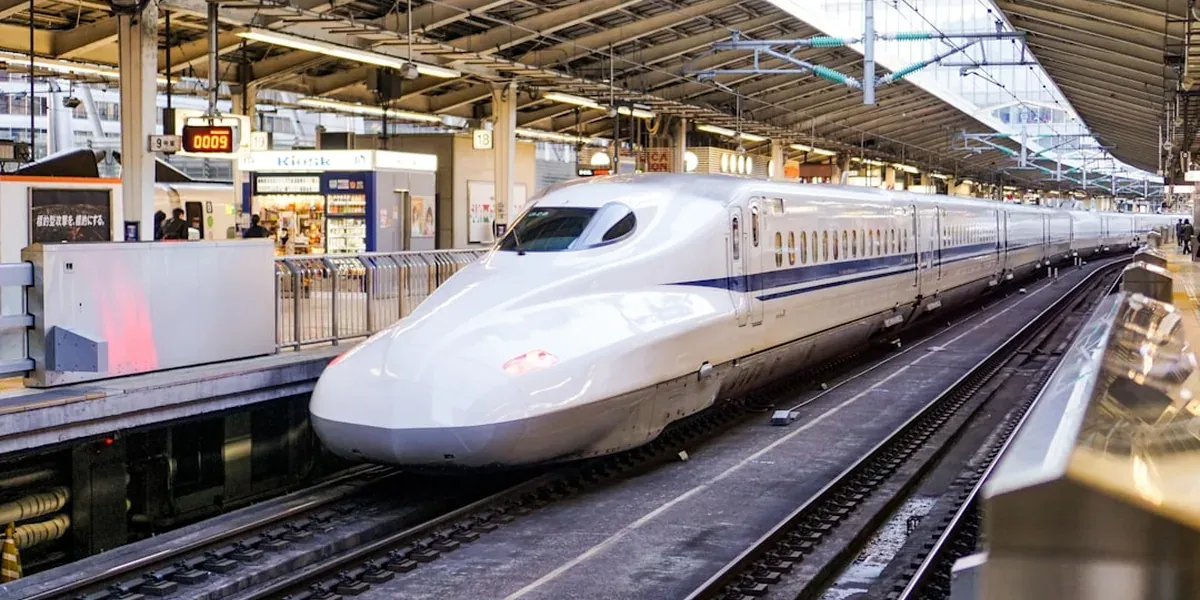
Transport is the category where most Japan budgets go wrong — either over-spending on the JR Pass when it’s not needed, or under-estimating the IC card daily spend.
Daily city transport (IC card):
| City | Light day | Heavy sightseeing day |
|---|---|---|
| Tokyo | ¥400–600 | ¥800–1,200 |
| Kyoto | ¥300–500 | ¥600–900 |
| Osaka | ¥300–500 | ¥600–900 |
| Fukuoka | ¥200–400 | ¥500–700 |
Your IC card (Suica or ICOCA) covers all of these. Load ¥3,000–5,000 when you arrive and top up as needed.
Intercity transport costs (one way):
| Route | Budget option | Fastest option |
|---|---|---|
| Tokyo → Kyoto | ¥3,500 (overnight bus) | ¥13,650 (Nozomi) |
| Kyoto → Osaka | ¥410 (Hankyu) | ¥570 (JR) |
| Osaka → Nara | ¥410 (Kintetsu) | ¥570 (JR) |
| Osaka → Hiroshima | ¥10,000 (Shinkansen) | ¥10,000 |
| Hiroshima → Fukuoka | ¥5,940 (Shinkansen) | ¥5,940 |
The JR Pass question — 2026 update:
The JR Pass increases again from October 1, 2026 — the 7-day Ordinary pass rises from ¥50,000 to ¥53,000, and the 14-day from ¥80,000 to ¥84,000. At ¥53,000 for 7 days, the pass needs to justify over ¥7,570/day in JR travel to break even.
For the standard Tokyo–Kyoto–Osaka circuit, individual tickets are almost always cheaper than the JR Pass. Full route-by-route breakdown: JR Pass 2026: Is It Worth It? Traveling Tokyo–Hakone–Nagano–Kanazawa–Kyoto–Nara–Hiroshima–Osaka cost ¥50,000 with individual tickets versus ¥80,000 for a 14-day pass — individual tickets won by ¥30,000.
The JR Pass makes sense if your route includes: Tokyo → Hiroshima → Fukuoka → return to Tokyo within 7 days, or multiple legs across the whole country within 14 days. For anything less, buy individual tickets.
Full transport breakdown for the Tokyo–Kyoto route with every option priced: Cheapest Ways from Tokyo to Kyoto.
5. Activities — Mostly Free, Occasionally Not
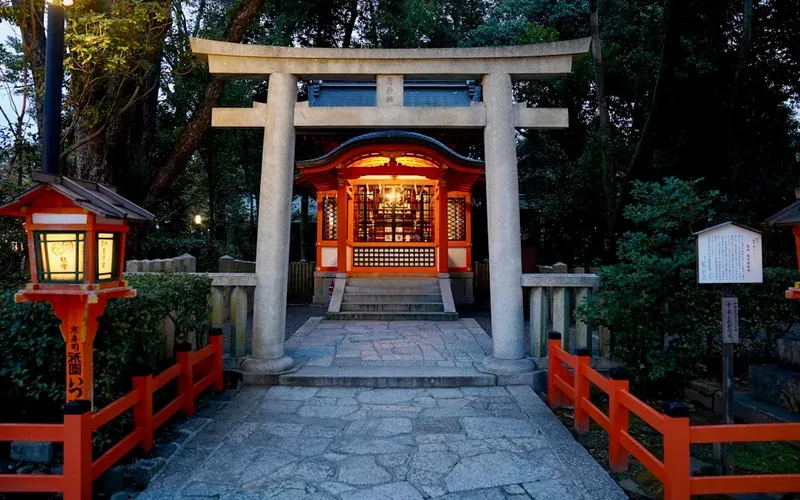
Japan’s activity costs are lower than most developed-country destinations because the majority of shrines, temples, and parks are free or charge minimal entry.
Free forever:
- All major shrine grounds (Meiji, Fushimi Inari, Yasaka, Itsukushima approach)
- Most national parks and forests
- Tokyo Metropolitan Government Building observation deck
- Ohori Park Fukuoka, Ueno Park Tokyo, Shinjuku Gyoen (¥500 — almost free)
- Every neighbourhood in this guide: Yanaka, Shimokitazawa, Dotonbori and Shinsekai (Osaka)
Paid but worth it:
- Peace Memorial Museum Hiroshima: ¥200 — best value in Japan
- Todai-ji Nara: ¥800
- Kinkaku-ji Kyoto: ¥500
- Hakone Ropeway: ¥1,800 return
Budget activities target: ¥0–1,000/day on most days, with 2–3 paid entries spread across a 14-day trip totalling ¥2,500–5,000 for the whole trip.
New dual pricing — 2026: Major attractions are implementing dual pricing for international versus domestic visitors — Himeji Castle was the first confirmed site from March 1, 2026. This trend is expected to expand across other popular sites. The price difference is typically 2–3× the domestic rate. BudgetYen will update specific sites as they announce pricing changes.
The New 2026 Costs — What’s Changed
A summary of every cost change affecting Japan travel budgets in 2026:
July 2026 — Departure tax increases: From ¥1,000 to ¥3,000 per person. Included in outbound flight ticket price — you’ll see it in the fare breakdown but don’t pay it separately.
October 2026 — JR Pass price increase: 7-day Ordinary: ¥50,000 → ¥53,000. 14-day: ¥80,000 → ¥84,000. Book and activate your pass before October 1 if you were planning to buy one.
November 2026 — Tax-free shopping changes: The instant 10% discount at point of sale ends. From November 1, you pay full price including consumption tax, then claim a refund at the airport departure desk. Allow extra airport time and keep all receipts. If shopping is a major part of your trip, visit before November 1.
2026 ongoing — Kyoto accommodation tax: Tiered system now fully in effect. Budget travelers add ¥200–500 per person per night for Kyoto stays. Mid-range add ¥500–1,000.
2026 ongoing — Dual pricing at attractions: Starting with Himeji Castle, more attractions expected to follow. Budget for the international rate rather than the domestic price when researching entry fees.
Complete Budget Scenarios — Real Numbers
Scenario A: Shoestring 14 Days
Using overnight buses instead of Shinkansen, konbini for all meals, free activities only
| Category | Total |
|---|---|
| Flights (example: UK return) | £550 |
| Accommodation (hostel dorm, 12 nights) | ¥36,000 |
| Overnight buses (2 nights saved) | ¥7,000 |
| Food (konbini + cheap meals) | ¥25,200 |
| Transport (IC card + intercity) | ¥18,000 |
| Activities (mostly free, 3 paid) | ¥2,500 |
| Buffer (misc, SIM, toiletries) | ¥8,000 |
| Japan total excl. flights | ¥96,700 (~$645) |
Scenario B: Budget Comfortable 14 Days
From the 2-week Japan budget itinerary — hostel/capsule + mix of meals + day trips
| Category | Total |
|---|---|
| Accommodation (12 nights) | ¥36,900 |
| Transport (IC + intercity) | ¥18,340 |
| Food (konbini + restaurants) | ¥33,600 |
| Activities | ¥2,500 |
| Buffer | ¥10,000 |
| Japan total excl. flights | ¥101,340 (~$676) |
Scenario C: Mid-Range 14 Days
Business hotel, restaurant meals, mix of Shinkansen and overnight bus
| Category | Total |
|---|---|
| Accommodation (business hotel, 12 nights) | ¥108,000 |
| Transport (IC + some Shinkansen) | ¥45,000 |
| Food (restaurants + konbini mix) | ¥56,000 |
| Activities | ¥15,000 |
| Japan total excl. flights | ¥224,000 (~$1,493) |
How Much Cash to Bring
Japan is increasingly cashless but cash remains essential — many small restaurants, local temples, vending machines, and some train systems are cash-only. Carrying some cash remains essential, but credit cards and IC cards cover many expenses — 7-Eleven ATMs accept international cards and don’t charge excessive fees, so withdraw larger amounts less frequently to minimise transaction charges.
Recommended cash strategy:
- Arrive with ¥20,000–30,000 ($130–200) cash for the first day
- Withdraw ¥30,000–50,000 at a time from 7-Eleven ATMs to minimise per-transaction fees
- Keep ¥5,000–10,000 cash as a float at all times for cash-only situations
- Load your IC card digitally (iPhone Mobile Suica) or at ATMs — keep ¥3,000–5,000 balance for daily transport
Full IC card guide: Suica vs ICOCA vs PASMO — Which Card to Get.
The Single Biggest Budget Decision
If you make one budget decision right, make it this: choose your season before you book flights.
The real secret is that Japan’s travel cost depends more on timing and travel style than on the country itself — pick peak dates and bounce between cities on Shinkansen and Japan feels expensive. Travel in the shoulder season, stay longer in fewer places, and plan transport smartly and your budget drops fast.
January and February flights and accommodation cost 25–40% less than cherry blossom season. The country is the same. The temples are the same. The food is the same. Only the price and the crowd are different.
Full month-by-month price breakdown with accommodation ranges by season: Cheapest Time to Visit Japan.
Where Every Budget Article Links From Here
This guide is the cost overview. Every category has a dedicated BudgetYen deep-dive:
Transport: Cheapest Ways from Tokyo to Kyoto — overnight bus vs Shinkansen full comparison
IC card: Suica vs ICOCA vs PASMO — which card, how to use it, mobile options
Accommodation: Japan Budget Accommodation Guide — capsule hotels vs hostels vs manga cafes, best properties by city
Food: Japan Convenience Store Food Guide — the full konbini strategy with what to buy and when
Free activities:
Day trips:
Other cities:
Planning:
Frequently Asked Questions
How much does a 2-week trip to Japan cost?
A 2-week Japan trip for a budget traveler costs approximately ¥100,000–130,000 ($667–867) excluding international flights. This covers hostel or capsule hotel accommodation, mostly convenience store meals with one restaurant meal per day, IC card and intercity transport (using overnight buses where possible), and mostly free activities. Adding flights from North America adds $600–1,500; from Europe £450–950.
Is Japan expensive to travel in 2026?
Less expensive than its reputation suggests. The weak yen gives foreign visitors a 25–30% effective discount compared to 2022. Budget travelers can manage ¥8,000–12,000 ($53–80) per day excluding flights — comparable to or cheaper than equivalent budget travel in Western Europe. Mid-range travelers spend ¥15,000–25,000 ($100–167) per day.
Should I get the JR Pass in 2026?
For the standard Tokyo–Kyoto–Osaka itinerary, no — individual tickets are cheaper since the 2023 price increase, and the JR Pass increases again from October 1, 2026. The pass makes sense for multi-city itineraries covering Tokyo, Hiroshima, and Fukuoka within 7 days, or comprehensive 14-day trips covering most of Japan. Calculate your specific route at hyperdia.com before buying.
What is the new Japan departure tax in 2026?
Japan’s International Tourist Tax increases from ¥1,000 to ¥3,000 per person from July 2026. It is automatically included in your outbound flight ticket price — you will not pay it at the airport. For a couple travelling from July onwards, this adds ¥6,000 ($40) to total costs.
How much cash should I bring to Japan?
Arrive with ¥20,000–30,000 ($130–200) in cash for your first day. Withdraw larger amounts from 7-Eleven or Japan Post ATMs throughout your trip to minimise per-transaction fees. Keep ¥5,000–10,000 in cash at all times for cash-only restaurants, vending machines, and small temples. Your IC card handles most transport and convenience store payments.
What is the cheapest way to travel between cities in Japan?
The overnight highway bus is the cheapest intercity transport — Tokyo to Kyoto from ¥3,500, travelling while you sleep and effectively saving a night’s accommodation. For shorter routes, the Hankyu railway from Kyoto to Osaka (¥410) is much cheaper than the JR alternative. Full options and prices: Cheapest Ways from Tokyo to Kyoto.
Prices correct as of May 2026. Exchange rate approximately ¥150 = $1 USD. JR Pass prices valid until September 30, 2026 — new prices from October 1, 2026.