Osaka Neighborhoods Guide 2026: Where to Stay, Eat & Explore in Namba, Shinsekai, Umeda & 4 More
A 2026 neighborhood-by-neighborhood guide to Osaka on a budget — Namba (Dotonbori), Shinsekai, Tennoji, Umeda, Den Den Town, Nakatsu. Where to stay, what to eat, what to skip, and a 3/5/7-day combination plan.
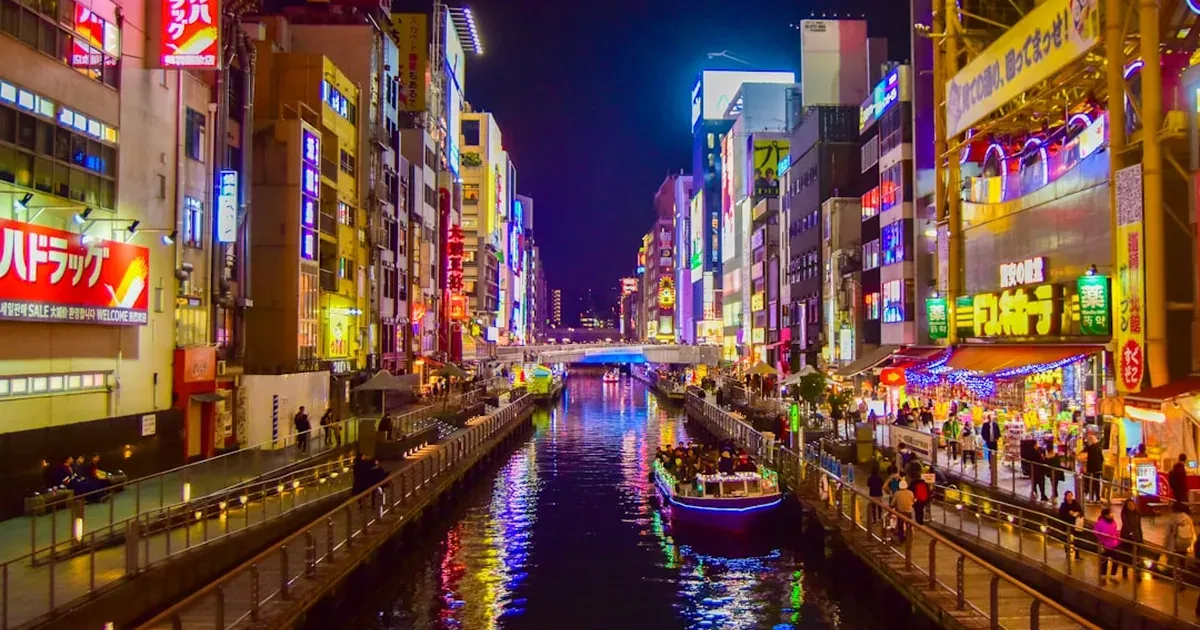
The short answer: Osaka’s 6 essential neighborhoods for budget travelers are Namba (Dotonbori — the food capital), Shinsekai (the cheapest street food), Tennoji (the local base), Umeda (the transit hub and Kita-side dining), Den Den Town (the electronics/anime district), and Nakatsu (the cheapest, local-feel base). Stay in Tennoji for the best budget hotel-to-food ratio (¥3,500–5,000 hostels, walking distance to Shinsekai), Namba for the central Dotonbori access (¥4,500–6,500 capsule), or Nakatsu for the cheapest private rooms (¥4,500–7,000). Avoid staying in Umeda unless you have a JR Pass — the hotels are 20–30% more expensive than equivalent Tennoji options.
Osaka has 24 wards and well over 100 named neighborhoods. For a budget traveler with 3–7 days, only 6 of those neighborhoods matter. The rest are either too residential, too far from the food action, or oriented toward luxury travelers. This guide covers the 6 that earn their place on every Osaka itinerary — where to stay, what to eat, what to skip, and the cheapest way to experience each.
The Osaka Neighborhood Decision Framework
Three trade-offs decide which neighborhood is right for you.
Trade-off 1: Budget vs. central. Staying in Tennoji or Nakatsu saves 30–40% on accommodation compared to Namba, but adds 5–10 minutes per transit trip to Dotonbori. If you’re spending more than 4 hours per day outside the hotel, Namba wins. If you’re at the hotel by 9pm nightly, Tennoji wins.
Trade-off 2: Tourist vs. local. Namba (specifically Dotonbori), Shinsekai, and Den Den Town are heavily touristed. Tennoji (south of the station), Nakatsu, and parts of Umeda’s “Ura-Umeda” area are where locals actually eat. The first category has better English signage; the second has lower prices and more authentic food. See the free things to do in Osaka guide for activities in both types.
Trade-off 3: Night vs. day. Namba, Dotonbori, and Shinsekai come alive at night (izakaya, takoyaki stalls, karaoke). Tennoji, Nakatsu, and Umeda are functional during the day and quieter by 9pm. If nightlife matters, base yourself near Namba. If early mornings and quiet nights matter, Tennoji.
For most first-time visitors with 4–5 days: stay in Tennoji for the value, take the JR loop to Namba/Dotonbori by train. For repeat visitors on a tight 3-day itinerary: stay in Namba for the walk-to-everything convenience. For slow travelers and families: stay in Nakatsu for a local base.
For the full cost of each neighborhood at a glance, see the Osaka budget guide and the hotel booking guide.
1. Namba — Dotonbori, Shinsaibashi, and the Food Capital
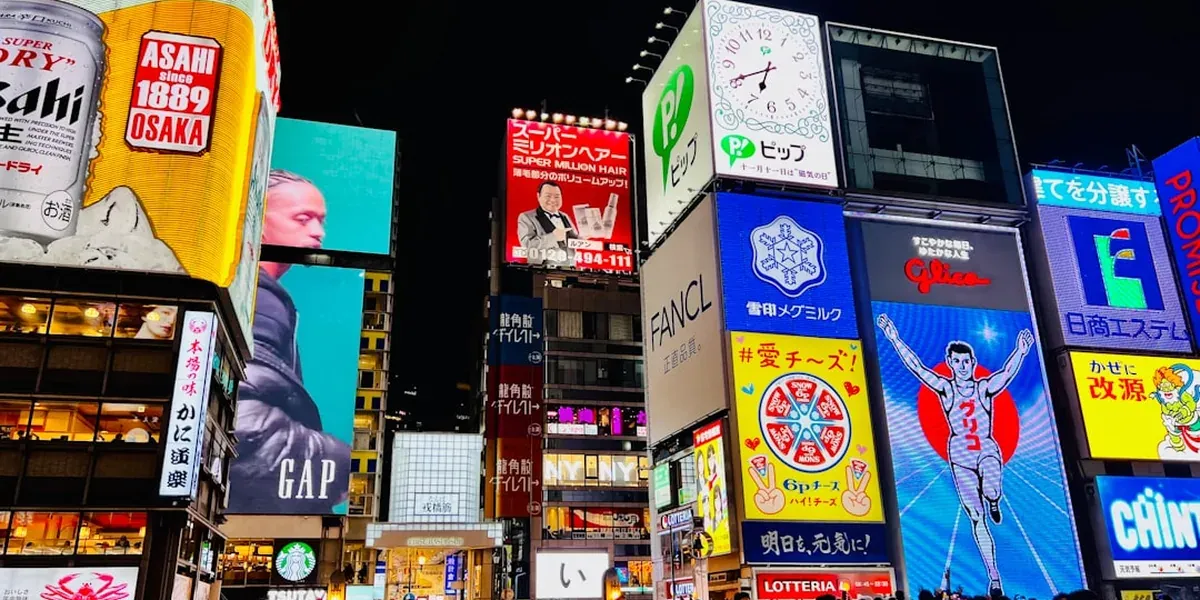
Namba is the most touristed neighborhood in Osaka, and the right base for first-time visitors who want to walk to everything. The area is really three sub-districts that are conflated:
- Dotonbori — the neon canal strip with the famous takoyaki and okonomiyaki restaurants
- Shinsaibashi — the covered shopping arcade (one of the longest in Japan)
- Nipponbashi (Den Den Town) — the electronics/anime district, covered separately below
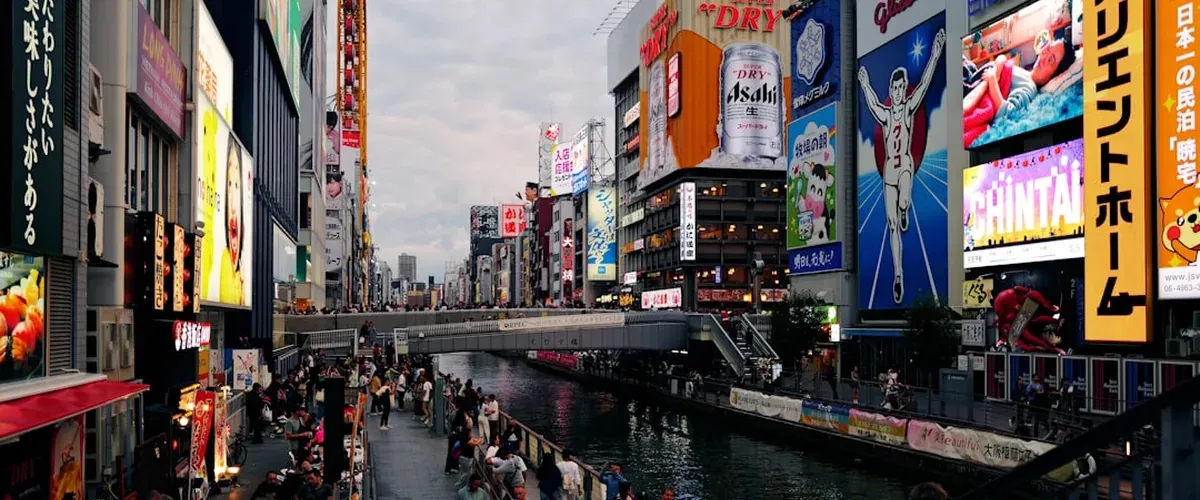
The vibe: Loud, neon-soaked, tourist-dense by day and night. The Glico Running Man sign is here. The Osaka icon is here. The 24-hour takoyaki stall is here. The 6-story Don Quijote is here. It’s also the easiest transit connection to Kansai International Airport (Nankai Railway from Namba Station).
Where to stay:
- Hostels: The Stay Osaka Namba — ¥3,800–5,000. Hostel Mizuha — ¥3,500–4,500.
- Capsule hotels: Sauna & Capsule Hotel Spadio — ¥3,500–4,500 (older but central). First Cabin Namba — ¥4,500–6,000.
- Mid-range: Hotel Granvia Osaka (Namba-adjacent) — ¥12,000–18,000.
For booking strategy and platform comparison, see the hotel booking guide.
Where to eat (under ¥1,500):
The full Dotonbori food breakdown is in the Kyoto to Osaka street food guide. Quick picks under ¥1,500:
- Takoyaki at any queue — ¥500–800 for 8 pieces
- Kushikatsu (skewers) — ¥100–200 per skewer at Daruma or Hankyu
- Okonomiyaki — ¥700–1,200 at Mizuno or Fukutaro
- Kani Doraku (the crab restaurant with the moving crab sign) — overpriced, skip
- Ichiran Ramen — ¥980 for solo-booth ramen, multiple Namba branches
What to do for free:
- Walk the Dotonbori canal at night (free, neon reflections are the activity)
- Shinsaibashi Arcade (covered shopping street, free to walk)
- Kuromon Market — free to browse, samples on offer from most stalls
- Dotonbori street performances (some buskers, free to watch)
The honest downsides: Namba is the most expensive area in Osaka for hotels. The Dotonbori restaurants with English picture menus and aggressive “irasshaimase!” hosts are tourist-marked-up by 30–50%. The side streets off Dotonbori are 50% cheaper. For safety on busy nights, see the solo travel guide and the Japan budget mistakes guide.
Best for: First-time visitors, anyone with 4+ nights, food-focused travelers, anyone flying into KIX airport (the Nankai Railway from KIX terminates at Namba). Skip if you value quiet.
For vegan food in Namba, see the vegan budget guide — Namba has 8+ dedicated vegan spots plus izakaya with vegan options.
2. Shinsekai — The Cheapest Street Food in Japan
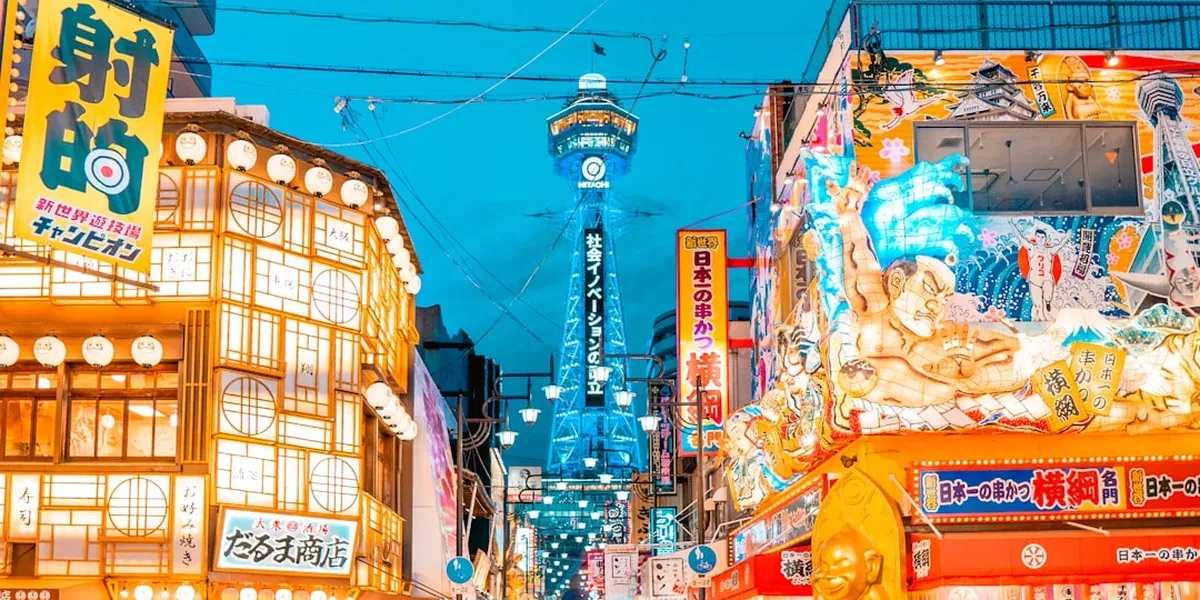
Shinsekai (“New World”) is the most underrated neighborhood in Osaka for budget food. It’s a 100-year-old retro district built around the Tsutenkaku Tower, with more street food stalls per square meter than anywhere else in the Kansai region.
The vibe: Dilapidated, nostalgic, locals-only by day and a working-class izakaya district by night. Tsutenkaku Tower is the visual anchor (built in 1912, rebuilt in 1956 with a Japan-exclusive retro-elegant aesthetic). The neon is sparse compared to Dotonbori — this is the older, cheaper Osaka.
Where to stay (you probably won’t):
- Most Shinsekai hotels are aging business hotels with thin walls. The exception: Hotel & Spa Resort Tenshino — ¥6,500–9,000. Better to base in Tennoji (1 stop away) and visit Shinsekai on foot.
Where to eat (under ¥1,000):
This is the chapter’s why-visit. Specific to Shinsekai:
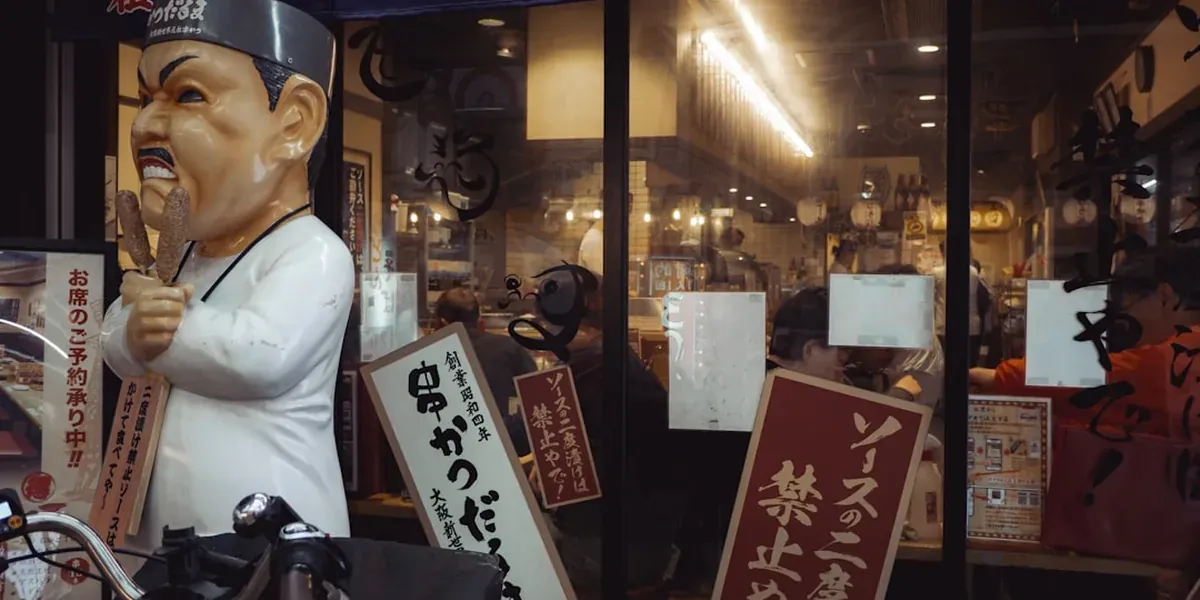
- Kushikatsu at Yaekatsu or Daruma — ¥100 per skewer. The 1970s-vibe shops along the main street charge less than the Dotonbori branches. Order: tsukune (chicken), hire (pork loin), and quail egg.
- Takoyaki at Yamachan — ¥600 for 10 pieces. Cash only.
- Bottled beer with the dancing TV hosts — small bars at night, ¥500–800 covers entry plus a beer. The “drinking on the street” culture here is more relaxed than Dotonbori.
- Tennoji Park food stalls (cross the bridge at dusk) — ¥300–600 items.
Most meals here come in at ¥500–800 with a drink. The same Dotonbori meal costs ¥1,500–2,500.
What to do for free:
- Tsutenkaku Tower observation deck (¥900 — skip if not interested, the photo from below is the better shot)
- Walk the main strip and the parallel alley — pure street photography
- Billiken shrine (the strange squat deity statue near Tsutenkaku, “rub his foot for luck”)
- Tennoji Park at dusk (free, peaceful despite being central)
The honest downsides: Shinsekai looks worn down. This is part of its charm, but travelers used to polished Shibuya-style Tokyo may feel underwhelmed. Aggressive touts near Tsutenkaku at night. Closed earlier than Dotonbori (most stalls close by 10pm).
Best for: Budget travelers prioritizing food over accommodation, anyone on a tight daily budget, street photography fans. Skip if you need modern hotels or quiet.
For a deeper dive into Shinsekai’s takoyaki/kushikatsu culture compared to Dotonbori, see the Kyoto to Osaka street food guide — the same meal costs half the price here.
3. Tennoji — The Budget Traveler’s Default Base
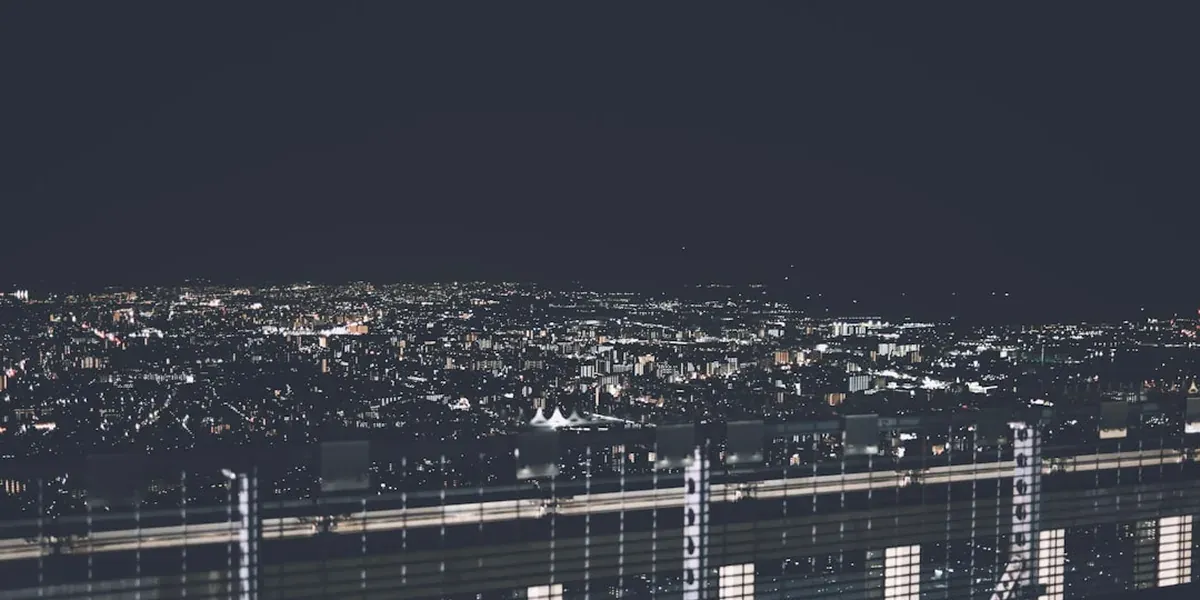
Tennoji is the most underrated base in Osaka. It’s a 5-minute walk from Shinsekai (over the JR tracks), has the cheapest business hotels in central Osaka, and includes Abeno Harukas — Japan’s tallest building (300m).
The vibe: Working-class Osaka. Tennoji Park (the second oldest park in Japan, after Kitanotenjin Park), the Tennoji Zoo, and a dense local street-food scene. The neighborhood is what Shinjuku is to Tokyo before tourism: dense, functional, locals-only.
Where to stay (the cheapest chain business hotels in central Osaka):
- APA Hotel Tennoji — ¥5,500–7,500
- Hotel & Spa Resort Tenshino (Shinsekai/Tennoji border) — ¥6,500–9,000
- Hostel & Cafe East57 — ¥3,200–4,500
- Hotel Trust Tennoji — ¥6,000–8,500
Where to eat (under ¥1,000):
- Shinsekai on the north side — see above, walk across the tracks
- Tennoji Miyakoshita — covered shopping arcade with cheap lunch sets ¥700–1,000
- Abeno Harukas food court (16th floor) — 30+ options, ¥700–1,500 per meal
- Tennoji Ramen — 6 ramen shops within 5 minutes, all under ¥1,000
What to do (mostly free or under ¥1,000):
- Abeno Harukas observation deck — ¥1,500, the highest view in Osaka (60F)
- Tennoji Park — free, beautiful in cherry blossom season (early April — see the cherry blossom guide)
- Tennoji Zoo — ¥500, the oldest zoo in Japan (1915)
- Osaka City Museum of Fine Arts (inside the park) — ¥500
The honest downsides: Less “iconic Osaka” than Dotonbori. The area north of the station has rougher streets at night than Namba.
Best for: Budget travelers who want central access without Dotonbori prices. Cherry blossom travelers — Tennoji Park has 800 cherry trees and is one of the 5 best sakura spots in Osaka.
For night-trip strategy from Tennoji (Kansai night bus terminal is at Tennoji), see the Tokyo to Kyoto budget guide — the cheapest Tokyo-Kyoto-Osaka loops run through here.
4. Umeda — The Transit Hub (Kita-side)
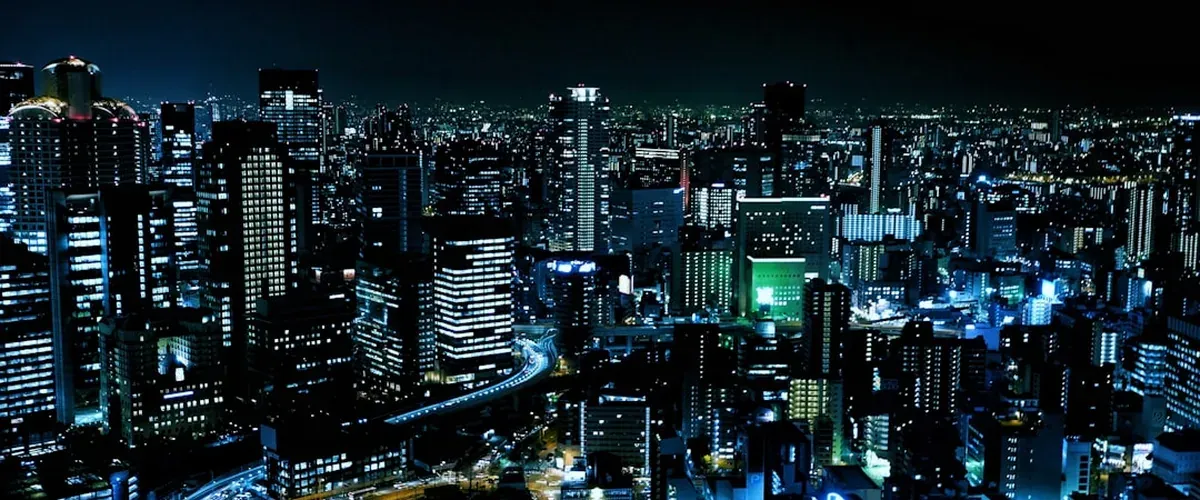
Umeda is Osaka’s Kita (north) side and the JR/shinkansen hub. Most travelers go through Umeda Station without realizing it’s its own neighborhood. The Umeda Sky Building (one of the world’s most distinctive skyscrapers) is here.
The vibe: Modern, glass-tower, business district. Less neon than Namba, more polished. The “newer” Osaka — corporate skyscrapers, department store food halls (depachika), and the most expensive hotel rooms in the city.
Where to stay:
- Hotel Granvia Osaka (directly attached to JR Osaka Station) — ¥12,000–18,000
- The Ritz-Carlton Osaka — ¥35,000+ (not budget, listed for context)
- Capsule Hotel & Spa Umeda — ¥4,000–5,500
For most budget travelers, Umeda’s hotel premium isn’t worth it. Cheaper to stay in Tennoji and JR-loop into Umeda.
Where to eat (under ¥1,500):
- Hep Five Ferris wheel restaurants — ¥800–2,000 in the basement restaurants
- Umeda Sky Building dining — same range, better view
- Whisky bars in the Jun Kushii district — ¥700–1,500 per drink, old-school Japanese whisky culture
- Ura-Umeda (back streets) — cheaper local restaurants, ¥700–1,500
What to do:
- Umeda Sky Building observation deck — ¥1,500, the best panoramic view of northern Osaka
- Hep Five Ferris wheel (red, distinctive) — ¥600, 15-minute ride
- Grand Front Osaka — the modern shopping mall/lifestyle complex
- Osaka Station City — the rebuilt JR Osaka Station, with a large roof garden (free)
The honest downsides: The most expensive area in Osaka. Most “old Osaka” character is in the south side (Namba/Tennoji). Families and slow travelers may find Umeda sterile.
Best for: Business travelers, anyone with a JR Pass staying central, anyone who wants the Umeda Sky Building view.
For transport optimization through Umeda, see the IC card guide — the JR Osaka Station is one of the busiest transfer hubs in Japan.
5. Den Den Town — Electronics, Anime, and Otaku Osaka
Den Den Town (Nipponbashi) is Akihabara’s smaller sibling, southwest of Namba. It’s the electronics/anime district of Osaka and runs parallel to Dotonbori (one street west).
The vibe: Smaller and less dense than Akihabara, more focused on secondhand manga, models, and anime collectibles. For most travelers it’s a half-day visit, not a base.
Where to stay (you probably won’t):
- Most visitors day-trip from Namba (one stop on the JR loop line). If you insist: First Cabin Nipponbashi — ¥4,000–5,500.
Where to eat:
- Super Sentai Cafe — themed menu, ¥1,000–1,500
- Den Den Town street food — less concentrated than Dotonbori but harder to mess up
- Matsuya / Sukiya / Yoshinoya — gyudon chains, ¥400–600
What to do:
- Mandarake — the used manga store chain (6 floors of secondhand manga)
- Jankara Den Den — themed karaoke, ¥500 per hour per person
- Vintage retro game stores — multiple shops along the main street
The honest downsides: Less variety than Akihabara, English is less common. Most visitors come for 3–4 hours, not overnight.
Best for: Anime fans, anyone with a half-day between Dotonbori and Shinsaibashi. Skip if you’re not interested.
6. Nakatsu — The Cheapest Local Base
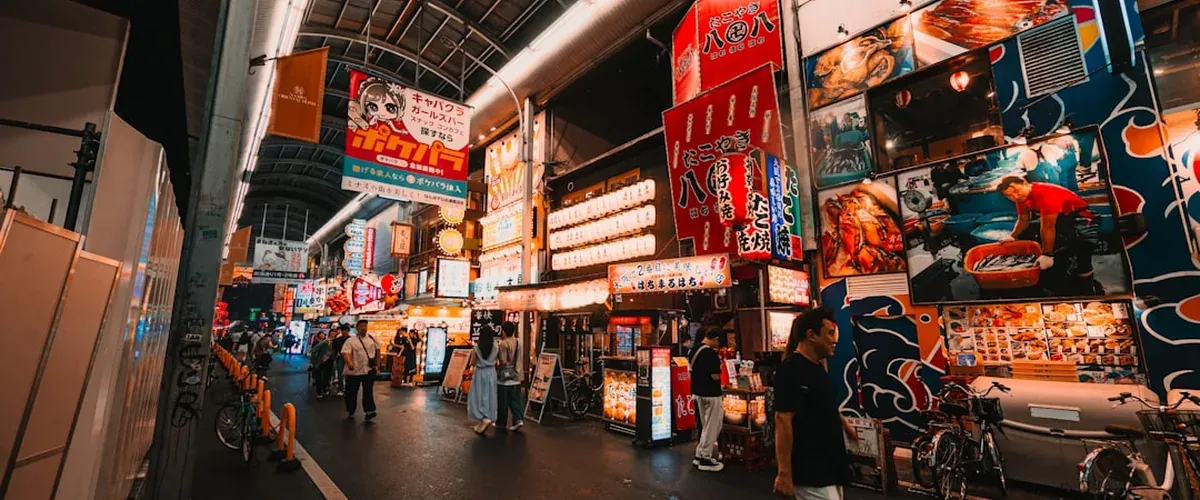
Nakatsu is what Tennoji would be without the tourist attention. It’s a working-class neighborhood 2 stops north of Tennoji on the JR Osaka Loop Line, with the cheapest apartment-style accommodation in central Osaka.
The vibe: Local. Residential. No major sights. Cheaper than Tennoji by 30–40%. The closest thing to a real neighborhood in this guide — almost no tour groups visit here.
Where to stay:
- Weekly & Monthly Apartment Rentals — ¥4,500–7,000 for a private studio. The Airbnb / vacation rental density is high here.
- Hotel Live Max Nakatsu — ¥6,000–8,000
- Hostels are limited — this is mostly a private-apartment market.
For full apartment-rental strategy, see the hotel booking guide.
Where to eat (under ¥1,000):
- Nakatsu Ramen Kōraku — one of Osaka’s best, ¥800
- Nakatsu Hozenji Yokocho — small alley off the main street, ¥500–1,200 izakaya
- Local okonomiyaki shops — ¥700–1,000, family-run, cash only
What to do (limited):
- Walk the local shopping arcade
- Nakatsu Park — free, peaceful, local-feel
- Head south to Tennoji for actual sightseeing (2 stops)
The honest downsides: Almost zero in-neighborhood sightseeing. Requires a 25-minute JR ride to reach Dotonbori. Limited English. Best for travelers who have done Osaka’s main sights already.
Best for: Long-stay travelers (5+ nights), digital nomads, slow travelers, families wanting apartment-space for less than a Namba hotel.
For Tokyo-neighborhood equivalents, see the Tokyo neighborhoods guide — Shimokitazawa is the Tokyo equivalent of Nakatsu.
Where NOT to Stay in Osaka
Three areas look reasonable on a map but waste time or money:
1. Universal Studios Japan area. Bay area, far from downtown. Fine for a USJ day but adds 30 minutes each way to any non-USJ activity. Hotel prices inflate during USJ off-peak days. For USJ-specific budget strategy, see the Japan family budget guide.
2. Far suburbs (Sakai, Hirakata, Suita). A ¥5,000 hotel in Sakai plus ¥1,500 round-trip JR per day costs more than a ¥8,000 hotel in central Osaka with no transit cost. The only reason to stay here is conference attendance in those suburbs.
3. Kansai Airport waterfront. Cheap airport hotels (¥5,000–7,000) but a 50-minute train ride to Namba. Only worth it for a 1-night pre-flight stay. For transit from KIX, take the Nankai Railway to Namba (¥1,490, 45 minutes).
Cost Comparison Table — All 6 Neighborhoods
| Neighborhood | Capsule/hostel/night | Standing lunch | Izakaya dinner | Vibe |
|---|---|---|---|---|
| Namba | ¥4,500–6,500 | ¥600 | ¥2,500 | Tourist, central, neon |
| Shinsekai | ¥6,500–9,000 | ¥500 | ¥1,500 | Cheap food, retro, lively |
| Tennoji | ¥3,500–5,500 | ¥500 | ¥1,500 | Local, transit, parks |
| Umeda | ¥4,000–5,500 | ¥700 | ¥2,500 | Modern, transit, business |
| Den Den Town | ¥4,000–5,500 | ¥500 | ¥1,500 | Anime, dense, niche |
| Nakatsu | ¥4,500–7,000 (apartments) | ¥500 | ¥1,500 | Local, residential, cheap |
For comparison: a “premium” capsule hotel in Umeda costs ¥6,500–9,000 and isn’t a budget option. The cheapest beds in Osaka are in Tennoji hostels and Nakatsu apartment rentals.
The 3-Day / 5-Day / 7-Day Neighborhood Combinations
| Day | 3-day itinerary | 5-day itinerary | 7-day itinerary |
|---|---|---|---|
| 1 | Namba + Dotonbori (food walk — see Kyoto to Osaka guide) | Namba + Dotonbori + Kuromon Market | Namba + Dotonbori + Kuromon |
| 2 | Shinsekai + Tennoji Park | Shinsekai lunch → Umeda Sky Building | Shinsekai + Tennoji Park + Abeno Harukas |
| 3 | Day trip: Nara | Day trip: Nara | Day trip: Hiroshima |
| 4 | — | Den Den Town + Sumiyoshi Taisha Shrine | Umeda (Sky Building + JR loop) |
| 5 | — | Day trip: Kyoto | Day trip: Kyoto |
| 6 | — | — | Umeda (sunset) → Nakatsu dinner |
| 7 | — | — | Last-minute shopping + departure |
The base strategy: Stay in Tennoji for 3-day and 5-day trips (cheapest central, walking distance to Shinsekai). Stay in Namba for 7-day trips (the central access is worth the premium).
For day trip options in detail, see the Nara day trip guide (essential), the Hiroshima budget guide (worth the trip), and the Kyoto free things guide (one day minimum).
How to Get Between Neighborhoods
Osaka’s transit is simpler than Tokyo’s — three rail systems split the city:
-
Osaka Metro — 8 lines covering most of central Osaka. ¥230–280 per ride. The Metro 24-hour ticket (¥820) is worth it after 3 rides per day.
-
JR Osaka Loop Line — ¥180–240 per ride. The “central loop” hits Osaka Station → Tennoji → Shin-Imamiya → Nishi-kujo → back to Osaka Station. One MRT ticket per trip.
-
Hankyu Railway & Hanshin Railway — private rail that connects Umeda to Kyoto (via the Hankyu Kyoto Line) and Kobe (via Hanshin). Cheapest way to get from Osaka to Kyoto is the Hankyu Kyoto Line for ¥410 — see the Kyoto to Osaka street food guide for full breakdown.
-
IC card — ICOCA is the local card (Kansai equivalent of Suica). Use it on Metro, JR, Hankyu, and most buses. Use the same card across all your Kansai travel. See the IC card comparison for the full inter-city card logic.
For navigation apps, see the Japan travel apps guide — Google Maps works but NAVITIME is better for Osaka Metro.
Frequently Asked Questions
Which Osaka neighborhood is best for first-time visitors?
Tennoji or Namba. Tennoji is the cheapest and most “local” base. Namba is the most central for Dotonbori. Most budget travelers stay in Tennoji and JR-loop into Namba for the night food walk.
Where should I stay to be close to Dotonbori?
Namba. The Namba station complex is the closest hub to Dotonbori (5-minute walk). For budget travelers: hostels and capsule hotels around Namba run ¥4,500–6,500. For a quieter alternative: stay in Tennoji (1 stop on JR, ¥5,500–9,000 hostels).
What’s the cheapest safe neighborhood in Osaka?
Tennoji. The hostels are ¥3,500–5,500, the area is well-lit, and it’s the busiest “working-class” neighborhood with foot traffic all day. For the safety breakdown, see the solo travel guide.
Is Shinsekai safe at night?
Yes. The neighborhood is family-friendly and locals walk through nightly. The touts near Tsutenkaku can be aggressive but not dangerous.
Is Dotonbori worth visiting on a budget?
Yes — but eat at the street stalls, not the sit-down restaurants with picture menus. The same takoyaki is ¥500 from a stall and ¥1,200 from a tourist restaurant with English menus. Full Dotonbori strategy: Kyoto to Osaka street food guide.
Can I walk between Namba and Tennoji?
Yes — it’s a 25-minute walk through Shinsekai. Most people take the JR loop (3 minutes, ¥180), but the walk through Shinsekai is part of the experience.
Is there a neighborhood that feels like “real Osaka”?
Tennoji, Nakatsu, and the Ura-Umeda back streets. Tennoji is the consensus pick for “local Osaka.”
What’s the best neighborhood for cherry blossom?
Tennoji Park (800 trees, free), Osaka Castle Park (3,000 trees, free), Sumiyoshi Taisha Shrine (free). For complete sakura timing, see the cherry blossom budget guide.
What’s the best neighborhood for autumn foliage?
Osaka Castle Park (mid-November, free) and Minoo Park (45 minutes by train, free hiking — see the hiking budget guide).
What’s the best neighborhood for families?
Namba for the central access (kids love Dotonbori lights) and Tennoji for the park + zoo combo. For family-specific hotel strategy, see the hotel booking guide.
Can I do all 6 neighborhoods in one trip?
Yes — but you’ll spend half your time on trains. The 7-day itinerary covers 6 of the 6. Most travelers do 3–4 neighborhoods per 5-day trip.
Do I need cash in Osaka?
Most restaurants, street food stalls, and Dotonbori vendors accept IC cards (ICOCA). Smaller okonomiyaki shops and some izakaya are cash-only. See the money in Japan 2026 guide for ATM access by neighborhood.
Where do locals actually eat in Osaka?
Shinsekai, Nakatsu, and Ura-Umeda (the back streets of Umeda away from the skyscrapers). The chain restaurants in Namba are 30–50% pricier than the same chain in Nakatsu.
What’s the best neighborhood for vegan food?
Namba (8+ dedicated vegan spots) and Umeda (3–4 spots). Full breakdown: Japan vegan budget guide.
How much does an ICOCA card cost?
¥500 deposit + ¥1,500 minimum add = ¥2,000 total. The deposit is refundable. For Suica vs. ICOCA vs. Pasmo comparison: IC card guide.
Should I book accommodation in advance?
Yes, especially for cherry blossom (late March–early April) and autumn foliage (mid-November), Golden Week (April 29–May 5), and the Osaka Sumo Tournament (3 sessions per year). For platform strategy: hotel booking guide.
Can I send luggage between hotels?
Yes — Yamato Transport (black cat logo) and Sagawa do hotel-to-hotel luggage forwarding for ¥2,000–3,000 per bag. Standard for travelers moving between Kansai cities.
How does Osaka compare to Tokyo for cost?
Cheaper than Tokyo for food (street food density drives prices down). Slightly cheaper for accommodation (Tennoji runs 20–30% under equivalent Tokyo hostels). For full Japan budget comparison: Japan trip cost 2026 guide.
Plan Your Osaka Trip — The 5-Day Neighborhood Tour
Osaka rewards travelers who pick a base and explore it deeply, then expand outward. The 5-day plan above covers Namba, Shinsekai, Tennoji, Umeda, Den Den Town, and 2 day trips — without rushing.
The 5-step recap:
- Stay in Tennoji or Namba — the two best budget bases
- Use an ICOCA card — tap everywhere, see the IC card guide
- Buy the Osaka Metro 24-hour ticket on busy days — ¥820 for unlimited rides
- Take 2 day trips — Nara (essential) and Kyoto or Hiroshima. See the Nara guide and the Kyoto free things guide
- Skip Umeda for accommodation — visit for the Sky Building once, but stay cheaper
For the rest of the trip — where to eat, what to see for free, how to get to Kyoto on a budget, and the free things to do across Kansai — see the Osaka budget guide, the free things to do in Osaka guide, the Kyoto to Osaka street food guide, the hotel booking guide, the money in Japan 2026 guide, the convenience store food guide, the vegan budget guide, the cherry blossom guide, the autumn foliage guide, the hiking budget guide, the travel insurance guide, the best eSIM Japan guide, the JR Pass 2026 worth it guide, the Nara day trip guide, the Hiroshima budget guide, the Tokyo neighborhoods guide, and the Japan trip cost 2026 guide.
Prices correct as of August 2026. Exchange rate approximately ¥150 = $1 USD.